A blocked deck drain can impose a disproportionate cost on a bridge. Water held at joints, scuppers, and bearing shelves accelerates corrosion, damages protective systems, and carries de-icing salts into details that are difficult to inspect or repair. Clearing drainage paths during routine visits costs little; replacing corroded bearings or repairing reinforced concrete beneath leaking joints does not. Effective maintenance often starts with the small details that govern deterioration rates.
The aim is not simply to reduce annual maintenance spending. Condition evidence, risk, and whole-life consequences should guide intervention before deterioration reaches primary members, foundations, or traffic-critical components. Deferring work can be economically reasonable where a defect is stable and monitored. It becomes false economy when a localized repair develops into major renewal work or causes an unplanned closure.
Establish an asset-specific maintenance baseline
A useful maintenance plan begins with reliable asset information, not a generic checklist. The baseline should bring together original drawings, where available, previous inspection records, repair history, traffic and load restrictions, environmental exposure, and known operational constraints. Engineers should identify the bridge elements whose failure or loss of function would have the greatest consequences for safety, serviceability, or the wider network.
Element-level records are especially useful. Rather than describing a bridge as being in “fair” condition, records should distinguish deck surfacing, waterproofing, expansion joints, drainage, parapets, bearings, steelwork, concrete members, foundations, and approaches. For each defect, record its location, extent, severity, likely mechanism, photographs with scale, and the date observed. Consistent records reveal developing crack patterns, recurring leakage points, and corrosion that is advancing over time.
Prioritize by consequence and deterioration mechanism
Visible condition alone is not a sufficient basis for prioritization. A small defect in a bearing, fracture-critical detail, pier cap, or scour-sensitive foundation may warrant a faster response than widespread but superficial coating degradation. A practical screening process considers:
- Safety consequence: potential effects on structural capacity, containment, falling debris, or inspection access.
- Service consequence: disruption to rail, road, waterway, emergency routes, or freight operations.
- Rate of change: whether the defect is stable, seasonal, or actively worsening.
- Exposure: chlorides, freeze-thaw cycles, standing water, industrial pollutants, abrasion, or flood action.
- Repair escalation: the added cost of deferring treatment by one or more maintenance cycles.
- Access opportunity: a planned possession, lane closure, or adjacent works that could reduce mobilization costs.
This directs limited resources toward work that preserves function and prevents consequential failures, rather than simply addressing the most visible defects.
Control water before repairing damaged materials
Water management is one of the highest-value maintenance activities because moisture drives several deterioration mechanisms. Inspect deck falls, drains, downpipes, outlet protection, joints, kerbs, and drainage paths after heavy rainfall as well as in dry conditions. Sediment, vegetation, road debris, and ice can obstruct drainage even where the original design was adequate.
Recurring leakage should be traced to its source. Repairing concrete beneath a leaking joint without restoring joint performance, waterproofing continuity, or drainage may merely conceal the symptom. Similarly, repainting steel that remains exposed to persistent runoff or trapped moisture is likely to result in a short coating life. Address the deterioration mechanism first, then repair the damaged material.
Approach drainage matters as well. Water entering behind abutments can contribute to erosion, settlement, saturated backfill, and deterioration of bearing seats or wing walls. Ponding, staining, displaced fill, clogged outlets, or cracking at the transition should prompt investigation of drainage and ground conditions. Foundation-related actions require site-specific engineering assessment, particularly where scour, instability, or settlement is suspected.
Use inspections as decision tools, not isolated events
Routine visual inspections remain essential, but their value increases when inspection intervals and methods reflect risk. A stable, low-risk component may require only standard observation. A defect with uncertain progression may justify targeted follow-up, close-up access, nondestructive testing, or limited monitoring. The purpose is to reduce uncertainty before committing to costly work or accepting avoidable risk.
Inspection planning should cover difficult-to-see locations: the underside of decks near joints, bearing zones, drainage outlets, hidden faces of diaphragms, interfaces between old and new repairs, and areas behind protective cladding. Drones, under-bridge inspection units, rope access, and remotely operated cameras can reduce access costs where suitable. They do not remove the need for competent interpretation or hands-on verification when material condition must be confirmed.
Defects affected by cyclic loading require particular care. Cracking in steel details, connections, and certain reinforced-concrete elements may have implications beyond surface appearance. The principles described in Material Fatigue in Transport Infrastructure: Assessment, Inspection, and Repair are relevant when assessing crack geometry, load history, inspection intervals, and the need for specialist evaluation.
Make data comparable over time
Consistent digital records often provide more value than sophisticated technology used inconsistently. Repeatable photo points, standardized defect codes, dimensions, annotated drawings, and a clear distinction between observation and diagnosis improve trend analysis. For monitored cracks, movement, tilt, or scour-related exposure, define a datum, measurement method, reading frequency, and trigger protocol. One reading rarely establishes a trend.
| Maintenance activity | Cost-control value | Common limitation |
|---|---|---|
| Drain and joint cleaning | Reduces moisture retention and chloride transport | Must be repeated and linked to source inspection |
| Localized protective repair | Arrests small defects before adjacent material is affected | Fails early if moisture or contamination remains |
| Targeted testing | Helps avoid unnecessary broad replacement | Sampling and results require engineering interpretation |
| Condition monitoring | Supports intervention based on observed change | Cannot substitute for repair of known critical defects |
| Bundled access works | Reduces traffic management and mobilization costs | Scope must not be expanded without technical justification |
Plan repairs around access, traffic management, and compatibility
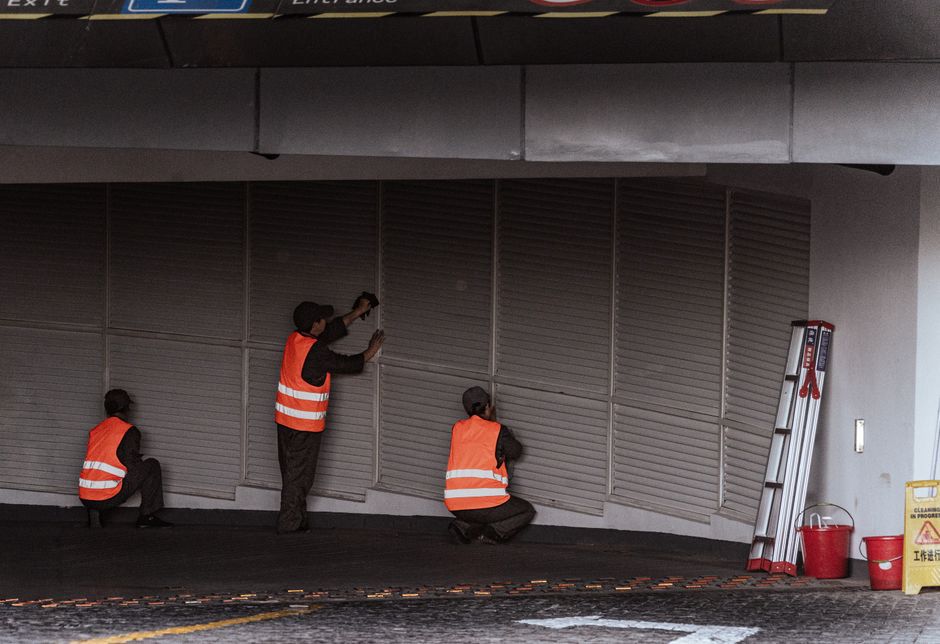
For many bridge repairs, access arrangements, traffic control, possession time, environmental protection, and mobilization account for a large share of the total cost. Coordinating compatible tasks within one closure can be efficient. Drainage cleaning, joint inspection, localized concrete repairs, coating touch-ups, and bearing observations may be completed during the same access period. The work should be a planned package, however, not an excuse for poorly defined tasks simply because access is available.
Repair specifications must account for material compatibility and site exposure. A mortar, sealant, coating, or cathodic protection approach that performs well in one arrangement may be unsuitable in another because of substrate condition, chloride contamination, moisture, movement, temperature range, or bond requirements. Premature repair failure consumes access windows and can make later diagnosis more difficult. Trial areas, surface-preparation controls, curing checks, and acceptance criteria are often less costly than repeated remedial work.
Manage scour and foundations as part of maintenance
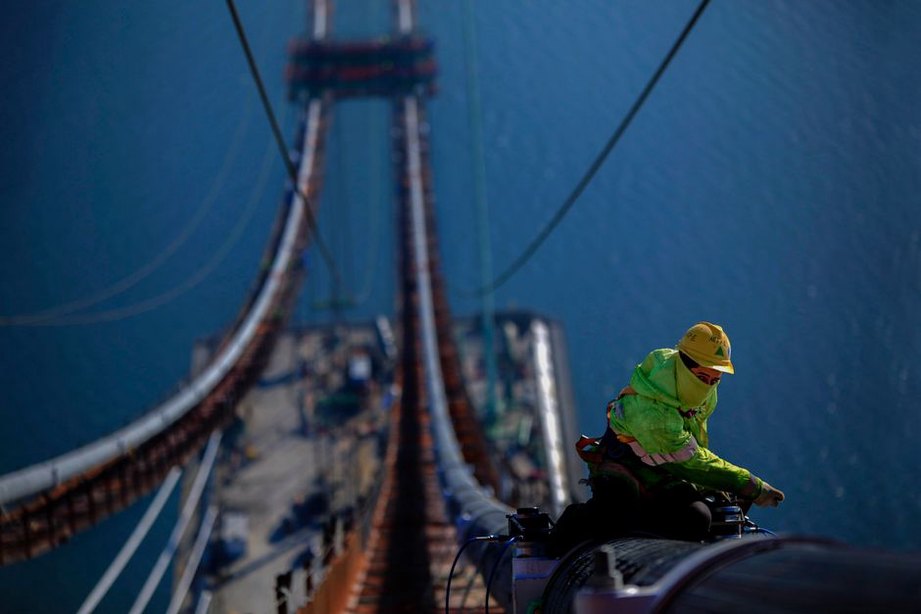
Foundation risks can remain hidden until a flood, channel migration, debris accumulation, or bank erosion exposes their significance. Maintenance teams should retain records of water levels, flood observations, channel changes, exposed footings, protection damage, and post-event inspections. Comparing these observations with baseline surveys helps distinguish ordinary seasonal variation from potentially significant change.
Scour countermeasures, bank protection, and foundation repairs should be designed using verified hydraulic, geotechnical, and structural information. Adding material around a pier without understanding local flow patterns can transfer erosion elsewhere or create debris traps. Where ground movement is suspected at abutments or approaches, investigations should consider drainage, fill condition, retaining elements, and the bridge–embankment interface rather than treating pavement distress as an isolated surface issue.
Procure for lifecycle value and verify outcomes
The lowest initial tender price is not necessarily the lowest overall cost. Maintenance contracts benefit from clearly defined defect limits, access assumptions, quality hold points, documentation requirements, and responsibilities for identifying additional defects. Uncertainty should be visible in the scope so decisions on contingencies are made deliberately, rather than through expensive changes during construction.
After each intervention, record what was repaired, why it was selected, the materials used, surface preparation, environmental conditions, test results, photographs, quantities, and any remaining concerns. These records support later warranty review and allow the owner to compare expected and actual performance. Where a joint has leaked repeatedly, the next inspection should explicitly examine the repaired joint, adjacent drainage, underside staining, bearing shelf, and nearby concrete—not merely note that the joint was renewed previously.