
A road can carry traffic loads without providing dependable wet-weather grip. Its structure may be sound while the exposed aggregate has polished smooth. Load resistance depends on the material beneath the surface; braking friction depends heavily on the texture of the top few millimetres and how readily water escapes from the tyre contact area. Assessing one property cannot establish the other.
Most paved roads use either asphalt mixtures, where bitumen binds mineral aggregate, or concrete, where hydrated cement binds aggregate. Aggregate selection, air voids, bond quality and construction conditions matter in both. Their behaviour under repeated loads, however, is not the same as their behaviour at the tyre interface.
The surface is a composite, not a coating
In asphalt, coarse particles contribute to a load-carrying skeleton. Finer aggregate and mineral filler fill spaces between them, while bitumen coats and bonds the particles. Particle-size grading affects how tightly the aggregate packs. The mixture needs enough binder for cohesion and durability, but too much can leave it prone to deformation or excess binder at the surface.
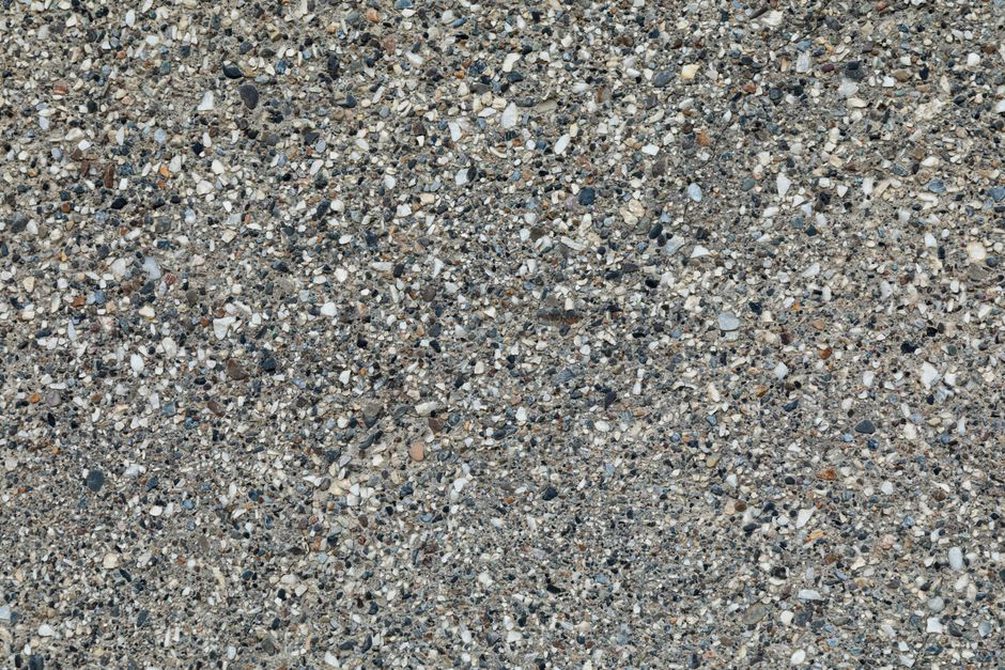
Aggregate properties extend beyond strength. Shape and angularity affect interlock, mineralogy influences polishing resistance, and clean, compatible surfaces help bitumen adhere. Water can weaken that adhesion when it reaches the binder–aggregate interface under repeated tyre loading. Laboratory moisture-sensitivity tests probe the risk, though they cannot reproduce every combination of drainage, traffic and temperature in service.
Concrete gains its binding phase through cement hydration: cement reacts with water to form products that hold aggregate in a hardened matrix. Water content, curing and air-void characteristics affect strength and durability. Surface texture can be formed while the concrete is workable or restored later. Even a hard slab may need attention to its friction.
Why asphalt changes with temperature and time
Bitumen is viscoelastic: its response depends on temperature and the duration of loading. It generally deforms more readily when warm and becomes stiffer, with less capacity to accommodate movement, when cold. Vehicle loads are brief but repeated, so the mixture must resist permanent deformation without becoming too susceptible to cracking.
A rut forms when unrecovered strain accumulates in a wheel path, but the deformation may lie deeper than the wearing course. The visible rut alone does not identify the faulty layer. Cracks can be just as ambiguous: repeated bending, thermal contraction and movement in underlying layers may leave similar surface patterns. Cores, layer-thickness measurements and crack mapping help distinguish the causes.
Asphalt binder can oxidise and stiffen over time, particularly near an exposed surface. Greater stiffness may improve resistance to some deformation while reducing tolerance for strain. Mixture design is therefore a balance, not a search for the hardest binder. The relationship between repeated heavy loads and pavement distress is developed further in the assessment of heavy-traffic damage to roads.
Friction depends on texture at two scales
Microtexture is the fine roughness of exposed aggregate. It contributes to grip where the tyre contacts individual particles, especially when the surface is damp. Macrotexture describes the larger spaces and relief in the wearing surface. These give water routes out from beneath a rolling tyre and also affect noise and spray. Visible grooves do not guarantee good wet friction if the exposed stone has polished smooth.
Neither scale remains constant. Traffic abrades particles, binder films wear away, and contamination can temporarily alter the contact surface. Polishing resistance matters alongside initial texture. More texture is not always better, either: an unnecessarily coarse surface can increase tyre noise or raise other durability concerns. A friction reading needs its test method, speed and surface condition to be meaningful; it is not a universal material constant.
Water connects surface behaviour to material durability
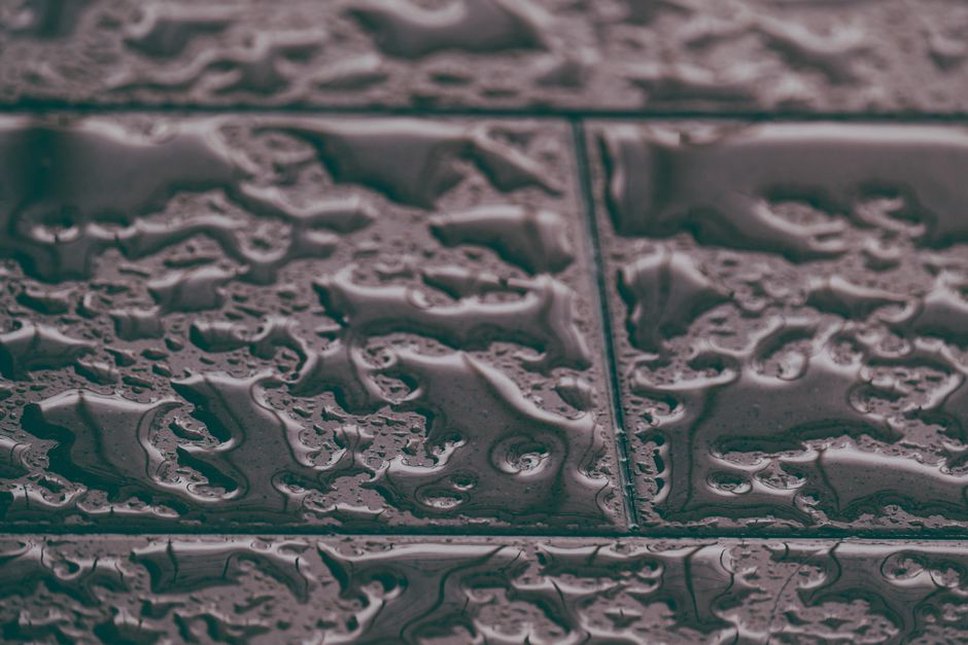
On the road, water reduces direct tyre contact unless texture and drainage give it somewhere to go. Inside asphalt, water can instead weaken adhesion or cohesion, leading to particle loss and raveling. In concrete, water entering pores and cracks can contribute to deterioration, particularly where freezing and thawing or aggressive chemicals are relevant.
Permeability depends partly on how voids connect, not just how much void space exists. Some asphalt wearing layers have connected voids so water can drain through them. They need an appropriate outlet, and fine material can clog the pores over time. Dense surfaces aim to limit ingress, but joints, cracks and poorly compacted areas can still provide local pathways. Poor surface drainage does not, on its own, prove that the surface material has failed.
What material tests can—and cannot—establish
No single test establishes friction, deformation resistance, cracking tolerance and water durability. The useful test depends on the suspected failure mechanism:
- Aggregate tests examine grading, abrasion resistance and polishing behaviour.
- Asphalt mixture tests investigate air voids, moisture sensitivity, stiffness, fatigue response or resistance to permanent deformation.
- Concrete tests assess strength, air-void characteristics and resistance to relevant exposure conditions.
- Field measurements check the constructed surface through texture, friction, density or thickness measurements, depending on the question.
Laboratory specimens may not reproduce field compaction, curing or segregation; temperature and loading conditions can also change the result. A reported value is most useful when the method, specimen preparation and test conditions are recorded. Field cores can show whether the placed material has the structure assumed in the laboratory, although a small number may miss local defects.
Reading a low-friction result
A low wet-friction reading starts an investigation; it does not diagnose the material. Check whether the result is confined to wheel paths, whether water drains from the surface, and whether the exposed aggregate is polished or the texture is obscured by binder or contamination. Intact macrotexture with polished stone points to a different problem from water lingering on a nearly smooth surface. Record the surface condition and recent weather alongside the measurement so that distinction remains clear when the results are reviewed.