A bridge can survive an earthquake and still leave a route impassable. Its approach embankment may settle, or a nearby tunnel may remain closed. Seismic rehabilitation therefore begins with a service question: which routes must carry emergency vehicles, freight and passengers, and how quickly must each function return? Strengthening the bridge alone may not answer it.
That corridor view changes which projects take priority. A modest crossing on the only access route to a hospital may be more important to early recovery than a larger bridge with several alternatives. What matters is whether the route can be inspected, opened under restrictions and restored without exposing users or crews to unresolved hazards.
Define performance at network scale
Life safety and continuity of service are different objectives. Preventing collapse does not establish that trains can pass, a road can carry heavy vehicles or a tunnel can be occupied. A route may move through several operating states: closed pending inspection, open to controlled emergency use, running at reduced capacity and, eventually, fully restored.
Before selecting work, an infrastructure owner can map critical destinations, alternative routes, repair-crew access and the consequences of losing each link. That map needs to show dependencies as well as physical assets. A bridge may need power for movable equipment; a tunnel may need ventilation and communications; a rail segment may depend on a nearby turnout or traction-power supply. One failed dependency can keep an otherwise intact route closed.
Traffic volume alone is a poor guide to priority. Detour length, network redundancy, seasonal access and the time needed to verify safety also matter. The rehabilitation brief should state the expected service level under the selected earthquake scenarios, along with its assumptions about inspection capacity, utilities and adjacent assets.
Diagnose the corridor before choosing repairs
Drawings and repair records are a starting point, not a complete picture of current capacity. Alterations, corrosion, drainage changes, buried utilities and undocumented fill can change seismic response. Establish a baseline through structural inspection, ground investigation and an inventory of equipment needed to operate the route.
Locate the controlling failure modes
Assess shaking and earthquake-induced ground deformation. A component may withstand inertial forces but fail when its supports move relative to one another. The mechanisms differ along a corridor:
- Bridges and viaducts: loss of support, inadequate restraint, vulnerable columns or connections, and movement at abutments and approach fills.
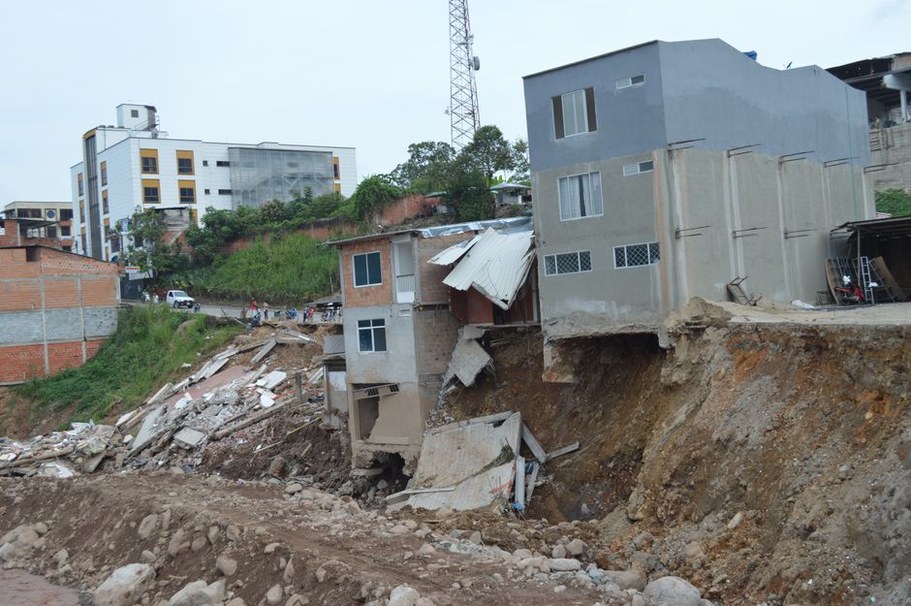
- Road and rail earthworks: liquefaction-related settlement, lateral spreading, slope displacement and differential movement at transitions to rigid structures.
- Tunnels: deformation across faults or unstable ground, damage at portals and cross-passages, and loss of drainage or operational systems.
- Stations and interchanges: falling nonstructural elements, damaged stairs or platform interfaces, and interrupted power or communications.
Investigations should focus on mechanisms that could prevent the intended level of service. Checking bridge superstructure strength will not establish route availability if lateral spreading could displace an approach. Nor does a sound tunnel lining establish safe operation without emergency lighting and ventilation. Ground conditions can vary over short distances, so consequential decisions need site evidence alongside broad hazard maps.
Make uncertainty visible
Older corridors often have sparse subsurface data and incomplete records of buried foundations. Rather than assign false precision, assess plausible ranges of ground properties and construction details, then test whether the proposed approach holds across those ranges. Targeted investigation is particularly useful when an unknown could reverse a decision—for example, whether a retaining structure rests on competent ground or potentially deformable fill.
Inspection access matters too. If a rapid-reopening plan depends on checking inaccessible bearings immediately after an earthquake, the target may be unrealistic. Where uncertainty cannot economically be removed, options include accessible observation points, conservative operating restrictions or an alternative route.
Combine interventions across structural and ground systems
No single retrofit addresses every seismic failure mode. Measures must deal with the controlling mechanism and work with connected assets. Adding stiffness in one place, for example, can concentrate displacement at the next joint or transition. Designers need to check where forces and movements go across the route segment.
Bridges, approaches and interfaces
Bridge work may improve continuity or restraint, increase deformation capacity, protect supports, or address foundation and ground movement. The choice depends on the existing load path, available movement, expected ground deformation and whether damaged components can be inspected or replaced. Approach fills and expansion joints need explicit attention: a sharp step at either end can block traffic even if the main span survives.
If an approach is exposed to permanent ground displacement, strengthening the deck does not remove the cause of lost access. Ground treatment, embankment modification or a transition detail may need evaluation alongside structural work. Each has different construction constraints and residual risks; a generic hazard label is not enough to specify one.
Earthworks, track and pavement
For roads and railways, the serviceability problem is often geometric. Settlement or lateral displacement can create an abrupt change in grade, distort track alignment or interrupt drainage. Options may include improving susceptible ground, stabilizing slopes, changing embankment geometry or making affected sections easier to inspect and restore. Their value depends on the depth and extent of susceptible material, groundwater conditions, adjacent property and the closure period the route can tolerate.
Repairability matters along long linear assets. Even a surface able to tolerate limited deformation needs a planned way to measure alignment and restore it. Reopening a railway requires verification of track geometry and support, not merely a visual check that the rails remain continuous. On a road, temporary surfacing may allow limited access while deeper movement is investigated.

Tunnels and operating systems
Tunnel planning should distinguish structural deformation from its operational consequences. Portals, cut-and-cover sections and connections to surface structures may respond differently from a deeper bored section. Lining repairs or local strengthening need assessment against expected ground movement and water pathways. Inspection and recovery plans must also cover ventilation, drainage, fire protection, lighting and communications: damage to these systems, or loss of their supply, may delay reopening.
Where a tunnel crosses a zone of expected permanent displacement, shaking demand alone is an incomplete basis for planning. Engineers must assess how much distortion the structure can accommodate, where damage may concentrate and whether crews can reach and repair that location. Those questions require site-specific geological and structural evidence.
Prioritize projects by avoided disruption, not component count
Once feasible interventions are identified, compare them at corridor level. For each candidate project, a screening record can link the failure mechanism to its expected service benefit, construction disruption and strength of supporting evidence. It should also show whether another project must be completed before that benefit is available.
- Set the service target: specify which traffic must pass and when restricted operation would be acceptable.
- Find the limiting link: identify the structure, ground section or operating dependency most likely to prevent that service.
- Compare packages: evaluate combinations of rehabilitation, inspection provisions, operating restrictions and route redundancy.
- Test dependencies: check whether utilities, access and neighboring assets would permit the proposed reopening sequence.
- Record residual risk: state what may remain closed or require detailed inspection after the work is complete.
This avoids concentrating spending on a visible structure while an untreated embankment or single substation still controls route availability. It also clarifies staged investment: an early project may improve emergency access, while later work addresses capacity and longer-term resilience.
Build verification and reopening into the rehabilitation plan
A finished retrofit needs evidence that it was built as intended. Construction verification may include confirming hidden reinforcement or connections before concealment, checking ground-treatment coverage, documenting material properties and surveying completed interfaces. Acceptance criteria should follow the design assumptions. A record showing that work was installed does not, by itself, show that the assessed failure mechanism has been addressed.
Pre-earthquake baseline measurements give later inspections a point of comparison. Survey marks, photographs of joints, track-geometry records and documented operating conditions help crews judge what has changed. Monitoring instruments are useful when their readings inform a defined decision, but sensors cannot replace access, inspection or a plan for interpreting ambiguous data. For complementary methods, the discussion of choosing non-destructive tests for bridge inspection explains why each test should be matched to a specific defect and inspection decision.
Set reopening criteria before an event, then apply them to the damage actually observed. A tiered procedure might start with remote reports and rapid visual screening, followed by targeted measurement where settlement, cracking or equipment failure is suspected. Restricted operation should be considered only when the relevant authorities have enough evidence for the proposed loads and speeds. Aftershocks, unstable slopes, damaged drainage and continuing ground movement may call for repeated checks after an initial opening.
The corridor record should name who can authorize each operating state and where crews will take the required measurements. At a bridge-to-embankment transition, for example, a pre-event survey line across the joint and approach gives inspectors a defined place to check for a new step or offset before deciding whether controlled traffic can pass.