
A bridge inspection report, a research paper and an asset manager’s briefing might all describe the same corrosion finding. The inspector needs to record its location and extent consistently. The researcher needs to know how it was observed and how uncertain the measurement is. The asset manager needs to know what further assessment the finding calls for, and how soon. An assignment labelled simply “bridge corrosion” may serve none of them well.
Audience research helps an infrastructure publication identify those differences before assigning a topic. It is not a way to substitute reader preferences for technical judgment. It establishes who will use the information, what task they face, what evidence they can interpret and where a published explanation must stop short of a project-specific engineering judgment.
Research the task, not just the job title
“Engineer” is too broad a category to guide an assignment. A pavement designer comparing rehabilitation approaches, a maintenance engineer logging recurring surface defects and a student learning how distress develops may all read the same piece. Their questions differ in scale, available data and consequence. Record the task alongside the reader’s role.
For each proposed topic, editors can investigate four points:
- Trigger: What observation, project stage or responsibility prompts the search for information?
- Decision: Is the reader defining an investigation, interpreting results, comparing approaches or explaining a finding?
- Available evidence: Does the reader have site measurements, historical records, a preliminary report or only a general description?
- Boundary: Which conclusions require local standards, specialist review, additional testing or project-specific design?
Consider an article on settlement near a rail embankment. Someone responding to a measured change in track geometry may need to understand possible ground-related mechanisms and the limits of surface observations. A designer evaluating a future alignment needs a different account of site investigation and uncertainty. Treating both as a single “soil movement” audience risks making background explanation sound like diagnostic advice.
Use evidence from the work itself
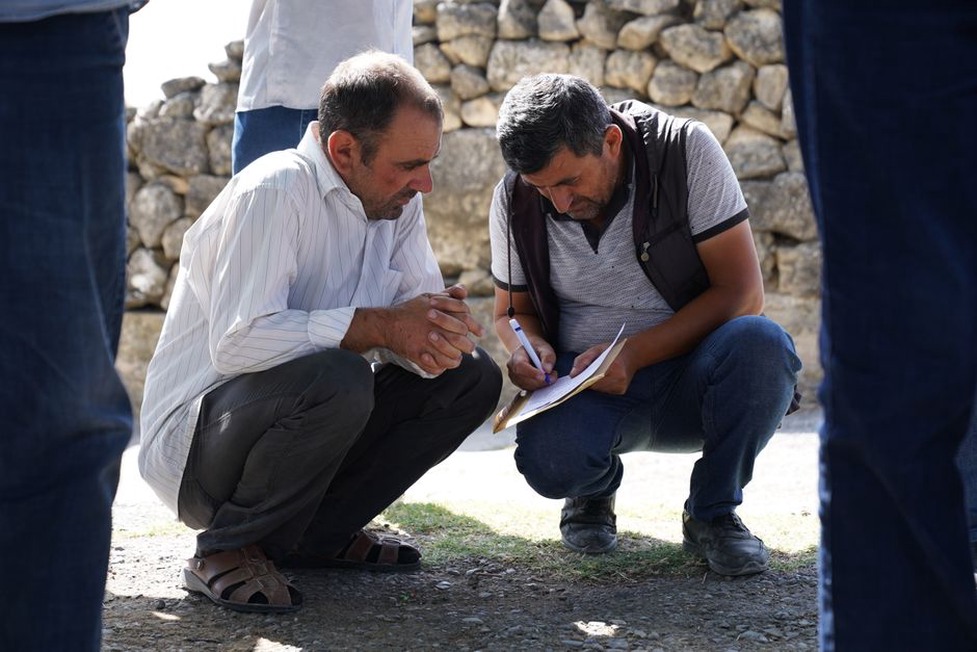
Search terms and page views show what attracts attention, but seldom explain why a technical reader arrived or whether the page helped. Accounts of actual work provide more context. Editors can ask engineers, researchers and operations staff about recent information needs; review anonymized questions sent to technical teams; and look for recurring points of confusion in training notes, inspection forms or published explanations.
Ask about a completed task rather than soliciting article titles. “What information did you need before interpreting that monitoring result?” is more revealing than “What should we publish about monitoring?” Follow-up questions can identify which data the person trusted, which terms caused confusion and when they consulted a specialist. Such accounts describe experience; they do not prove that a method works everywhere.
Be careful about whose experience is represented. A few frequent correspondents can make their concerns seem typical of an entire discipline. Speak to people at different project stages and with different responsibilities. Keep students’ requests for conceptual explanations separate from practitioners’ questions about actual assets. Record the context of each response, and do not publish identifiable site details or confidential project material without permission.
Turn findings into editorial choices
Distinguish recurring needs from isolated requests
Keep a simple research log with the reader’s role, task, question, available evidence, the consequence of misunderstanding and the source of the observation. Similar questions can reveal a shared need. Questions about what a sensor reading means, whether a threshold was crossed and why two instruments disagree might call for an explanation of measurement uncertainty. They do not, by themselves, justify an article prescribing alarm thresholds.
A topic deserves priority when the need recurs, confusion has material consequences and the publication can answer with defensible evidence. A narrow safety-related question may matter even if few people search for it. A popular search phrase, meanwhile, may be a poor assignment if a responsible answer depends on site data a general publication cannot have.
Choose the form that fits the decision
The task should shape the format. Someone comparing ground investigation methods may benefit from a table showing what each method can and cannot establish. A reader learning to interpret a bridge inspection finding may need annotated terminology and a clear separation of observation, inference and recommended follow-up. A maintenance team may need a short explanation for a shift briefing, with its assumptions still visible.
Suppose readers routinely confuse a hazard map with a site-specific risk assessment. An article could explain how map scale, exposure and asset vulnerability differ. It should not turn the map into a universal design rule. If a graphic would help, ask what relationship it needs to clarify; the approach in Choosing Visuals for Transport Infrastructure Decisions is relevant here.

Keep research separate from engineering validation
Audience research identifies questions and barriers to understanding. It cannot establish structural capacity, ground behavior or the safety of an intervention. Technical claims still need appropriate sources, stated assumptions and review by someone competent in the subject. The distinction matters especially when interviewees describe practices that differ between organizations or sites.
An editor may hear repeated requests for a “standard” interval for inspecting a retaining structure after heavy rainfall. The requests demonstrate uncertainty, not that one interval is suitable. An assignment could instead explain what factors affect inspection planning, how observations are documented and why local procedures and qualified judgment govern the response. Reader language can guide the explanation without serving as its technical authority.
Check whether the content answered the intended question
After publication, ask a small group of relevant readers to find a specific answer, explain how they would use it and flag any statement that sounds more certain than the evidence allows. Conflicting interpretations may reveal an undefined term or a missing boundary condition. Follow-up questions from operations teams and the search queries that lead to the page can add context.
Interpret metrics cautiously. A short visit to a concise definition may mean the reader found what they needed; a long visit to a complex article may indicate difficulty. A better check is whether the intended readers can distinguish general principles from decisions requiring site-specific review.
For an assignment on tunnel water ingress, start with three recent, anonymized questions from inspection, design and operations staff. Mark which call for an observable description, which ask about possible mechanisms and which require a project-specific assessment. Use those distinctions to test the brief before writing a headline or outline.