
A kitchen counter can sit in shadow beneath a bright ceiling fixture: the person preparing food stands between the light and the worktop. Light beneath the cabinets may help more than a brighter ceiling bulb. The useful question is where the light lands, not just how much the fixture produces.
Most rooms need general light for moving around, task light for activities, and softer light when brightness is unwelcome. The balance depends on layout, daylight, finishes and the people using the space. A desk by a window, for instance, needs different lighting at noon and after dark. Before buying fixtures, note where people actually read, cook, dress, wash and walk.
Start with the task, then choose the fixture
Lighting labels describe different properties. Lumens indicate how much visible light a lamp emits; watts describe electrical power use, not brightness. Lumens help when comparing bulbs, but they cannot tell you how well a fixture will light a counter or desk. Shade shape, mounting height, beam direction and nearby surfaces all affect the result.
Lux describes light reaching a surface: one lux is one lumen per square metre. It can help when assessing a worktop or reading position, though a home need not be designed around a single target number. A phone light-meter app may be useful for comparing positions, but its readings cannot replace those of a calibrated meter. In practice, the surface should be easy to see without a bright source shining into your eyes.
Correlated colour temperature, measured in kelvin (K), describes whether white light appears warmer or cooler. Lower numbers generally look warmer; higher numbers look cooler or more bluish. Warm light often suits an evening living space, while a more neutral white may help with food preparation or grooming. The choice depends on the task and the occupants’ preferences, not a fixed setting for each room.
Colour rendering describes how colours appear under a light source. The colour rendering index, or CRI, is a common rating; a higher CRI can help where people judge food, clothing or makeup. It does not capture every aspect of colour quality. If subtle differences matter, compare bulbs in the room where they will be used.
Make a short plan for each room:
- Identify surfaces that need light: worktops, books, mirrors, steps and storage interiors.
- Check whether a person or an open cabinet door could block it.
- Decide which lights should work independently, particularly when bright task lighting is unnecessary in the evening.
- Look for glare at seated and standing eye levels, and for reflections in screens and mirrors.
- Check fixture, bulb and dimmer compatibility before purchase.
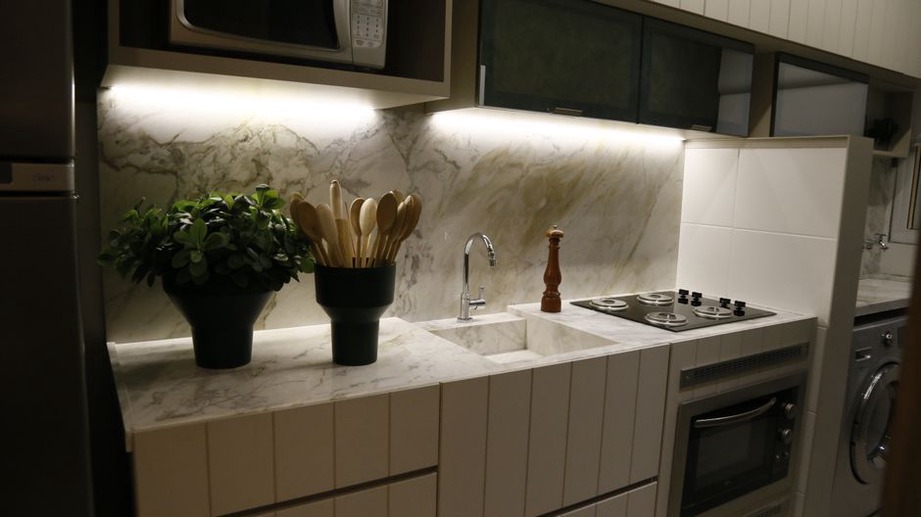
Kitchen: put light where the work happens
Chopping areas, the hob and the sink need dependable light. Ceiling fixtures can provide general visibility, but wall cabinets often cast shadows over counters. Under-cabinet fixtures can address that problem if their light reaches the work surface without leaving a bright strip exposed to someone seated nearby.
Check the proposed position while using the room. Stand at the counter with a board in the usual preparation spot and see whether your hands obscure the task. Look for reflections in glossy worktops and splashbacks too: light aimed straight down may work on one surface and cause distracting glare on another.
Pendants over an island can mark out a dining or preparation area, but their size and hanging height should preserve sightlines and keep the source out of direct view. If the island serves both purposes, separate switching or dimming lets you change its lighting without altering the rest of the kitchen. Choose fixtures that are easy to clean; cooking deposits build up on shades and reduce useful output.
Living room: light several activities without flattening the space
A powerful central fixture may light the floor yet leave a reader’s page dim or reflect in the television. Separate controls for general, reading and accent lighting make the room easier to use. A shaded floor or table lamp beside a chair can light a book while keeping the source outside the reader’s direct line of sight.
Position matters more than symmetry. A lamp that looks balanced beside the sofa might throw a hand shadow across the page; moving it to the other side may fix the problem. If people read at both ends of the sofa, each end may need a light. Wall lights can brighten the room gently, though framed glass or a glossy painting may reflect them toward occupants.
Test the lights with the television on. Light behind or beside the screen may be more comfortable than a bright fixture reflected in it. Keep routes to doors visible during a film; the choice should not be between full brightness and complete darkness.
Bedroom: separate evening comfort from detailed tasks
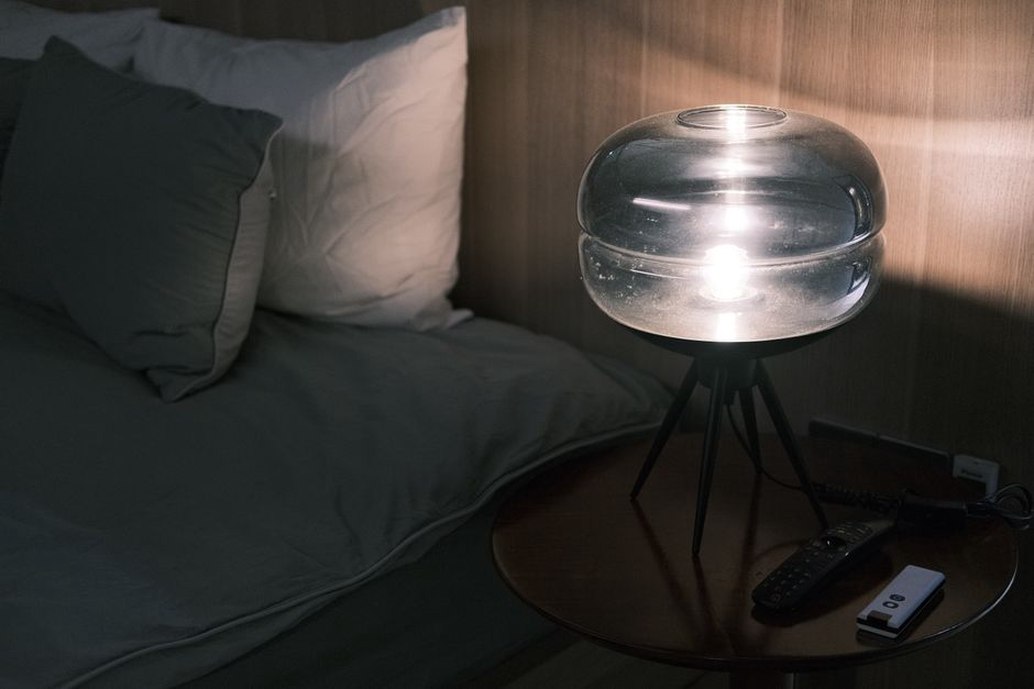
A bedroom needs enough general light for dressing and cleaning, but that level may be unwelcome before sleep. Independent bedside lights let one person read without lighting the whole room. A directional lamp should reach the page without shining into a partner’s eyes. Test it in the position used for reading, not just while standing beside the bed.
Wardrobes deserve attention because a person looking inside often blocks the ceiling light. Lighting near or within storage can improve visibility, provided cables, heat and switching are handled appropriately. Even light across the wardrobe is more useful for choosing clothes than one bright spot. At a dressing mirror, light on the face works better than a single downlight overhead, which can cast shadows under the eyes and chin.
Warm, dimmable light may suit late evenings. But a bulb marked “dimmable” will not necessarily work smoothly with an existing control. Incompatible lamps and dimmers can flicker, buzz or offer only a narrow dimming range. Check the manufacturer’s compatibility information, especially when replacing older lamps with LEDs.
Bathroom: illuminate faces and respect electrical safety
A ceiling light alone may cast shadows on a face at the mirror. Light on both sides of the mirror, or a diffuse source around it, often provides more even illumination for shaving, grooming and makeup. Check it from the normal standing position. A decorative fixture is little help if it shines into the mirror rather than onto the face.
Bathrooms contain moisture, and water may reach electrical equipment in some locations. Fixture placement, protection ratings and wiring requirements depend on local rules and the positions of baths, showers and basins. A fixture labelled “bathroom suitable” is not necessarily suitable everywhere in the room. Have a qualified professional check fixed electrical work and whether a fixture suits its proposed position.
A low-level night light can show the route to the bathroom without switching on the brightest fixture. Place it where it reveals the floor and doorway but does not shine toward the bed. If it is motion-activated, check that its timing and sensitivity suit the household; it should not turn off while someone is still using the room.
Home office and study: control glare before adding brightness
A desk needs enough light for paper tasks, but light directed toward a monitor can produce reflections and discomfort. Aim a task lamp at documents without leaving a bright bulb in your field of view. For handwriting, placing the lamp opposite your writing hand may reduce shadows.
Daylight helps, but it changes through the day. Face a bright window and the contrast between the view and screen may be uncomfortable; put the window behind you and it may reflect in the display. A desk roughly perpendicular to the window, with adjustable blinds or shades, often gives more control. Check it at the times you use it, since morning and afternoon sun can behave differently.
After dark, room lighting should reveal shelves, cables and walkways as well as the desktop. A small task lamp is no substitute for general light if the rest of the workspace becomes hard to move through. For video calls, a soft source toward the face is more useful than relying on a bright window behind the chair.
Dining area: make the table useful at different times
Dining-table light should reveal food and faces without making seated people uncomfortable. A pendant can focus light on the table, but a bare, very bright bulb may cause glare. A shade or diffuser can help, as long as it does not leave the edges too dim for writing or board games.
Check the table’s full length, especially if it extends. A fixture that suits a small round table may leave the ends of an extended one dim. Separate general lighting helps when the dining area also serves as a homework space or a passage between rooms. With a dimmer, test the lowest useful setting using the lamps you intend to keep: some LEDs flicker or switch off abruptly near the bottom of the range.
Hallways, stairs and entrances: prioritize visibility and controls
Circulation spaces need light where people turn, find a door lock or encounter a step. Even illumination usually helps more than dramatic patches of brightness and darkness. Avoid fixtures that shine into people’s eyes as they move between floors. On stairs, light should reveal tread edges and landings; decorative patterns should not obscure step boundaries.
Switch positions matter as much as fixture positions. A stair light controlled only from one end is inconvenient and may encourage people to walk in the dark. If the existing wiring does not offer practical control, ask a qualified electrician about suitable options rather than running extension leads across a route. Motion-activated lights can help in busy passages, but check that they detect someone approaching from either direction and stay on long enough for the trip.
At an entrance, light the place where people handle keys, bags and shoes, not only the centre of the ceiling. Outdoors, check that the fixture suits the weather exposure and aim it toward the threshold without sending unnecessary glare into nearby windows or neighbouring property.
Check the installation as a system
Before choosing a bulb, read the fixture specifications for lamp type, maximum permitted power and any restrictions on enclosed shades. LEDs typically use less power than older incandescent lamps for similar light output, but they still produce heat. A bulb unsuited to an enclosed fixture may run hotter than intended and have a shorter life.
For an integrated LED fixture, consider what happens if its light source or driver fails. A replaceable lamp can simplify maintenance; an integrated fitting may need a different replacement path. Confirm that the fixture supports the intended controls, too. A smart bulb that needs continuous power, for example, may not work as intended if someone routinely switches it off at the wall.
Look beyond quoted lamp lumens when comparing options. A dark shade absorbs light, a narrow beam concentrates it, and a clear lamp may be uncomfortable to look at even with modest output. Pale walls also reflect more light into a room than dark ones. Where practical, try one representative lamp or fixture before outfitting every room.
Adjust after dark, in the positions people use
Daytime checks can miss problems that appear at night. Once the lights are installed, assess them from a chair, at the counter, in front of the mirror and at each doorway. Look for a source in your line of sight, a shadow on the task, a screen reflection or an unlit step. Change the aim, shade or lamp output one at a time so you can tell what helped.
In the kitchen, put a chopping board at the usual preparation spot after sunset and stand as you normally would. If your hands cast a deep shadow across it while the centre of the room stays bright, more ceiling light is unlikely to be the direct fix. Check how light reaches the worktop instead.