
Charging access can change the cost of owning an electric car substantially. The same vehicle may cost far less to run when it is charged mostly at home than when it relies on public fast chargers. Advertised range and purchase price won't show that difference. Compare total ownership cost over a defined period and distance, using the charging options actually available.
Start with a like-for-like ownership period
Choose a period, such as five years, and estimate annual distance. Compare vehicles that can do the same job, with similar passenger capacity, cargo space and suitability for expected use. A smaller electric car is not a direct cost substitute if a larger vehicle is needed regularly.
Separate what you pay during ownership from what the vehicle is likely to be worth at the end. Add the purchase price, taxes and fees, financing, electricity, insurance, maintenance and other recurring charges; then subtract estimated resale value. Apply the same method to a petrol or diesel alternative, including its fuel and servicing. For a vehicle you already own, past costs generally do not belong in a forward-looking replacement decision. Its current sale value does.
- Upfront costs: vehicle price, registration, applicable taxes, home-charger equipment and installation.
- Recurring costs: electricity, charging-network fees, insurance, tyres, inspections, maintenance, parking and road charges where applicable.
- Exit value: expected resale or trade-in value, treated as an estimate rather than a guarantee.
Count tax credits, rebates and exemptions only if the buyer and vehicle meet the current eligibility rules. Check when the benefit arrives, too: money received after purchase may not reduce the cash needed on delivery day.
Purchase price, financing and depreciation
Start with written, drive-away quotes that include compulsory fees and any equipment you need. Check the trim as well as the model. Battery capacity, charging capability, tyres and safety features can differ, affecting suitability or running costs.
For a financed purchase, record the deposit, monthly payments, loan term, interest rate and any final payment. A longer loan may ease the monthly bill while increasing total interest. Do not add the full purchase price to all the loan payments; that counts the financed principal twice. A cash purchase ties up money that could be used elsewhere, although the relevant opportunity cost depends on the owner's circumstances.
Depreciation is often one of the largest costs and one of the hardest to predict. Changes in new-car prices, incentives, battery technology or local demand can shift used-car values. Run at least a high- and low-resale case instead of relying on one figure. For a lease, count upfront payments, instalments, mileage limits, wear charges and end-of-lease fees. Do not subtract a resale value the lessee will not receive.
Estimate charging costs from electricity delivered
Efficiency may be stated in kilowatt-hours per 100 kilometres or miles per kilowatt-hour. Put vehicle consumption and charging tariffs on a consistent distance basis before comparing costs. The electricity drawn from a wall outlet or charger exceeds what reaches the battery because charging and battery conditioning use energy. Temperature, speed, terrain, cabin heating and load also affect consumption.
For an annual estimate, divide distance by 100 and multiply by expected battery consumption in kWh per 100 kilometres. Allow for charging losses, then multiply the electricity drawn by the applicable price per kWh. At 15,000 kilometres a year and 18 kWh per 100 kilometres, the battery would use 2,700 kWh. If charging draws 10% more than reaches the battery, the billed quantity is about 2,970 kWh. At an illustrative 0.20 currency units per kWh, that is 594 currency units a year for energy. These figures are examples, not a forecast for a particular car or tariff.
Home, workplace and public charging are different cost cases
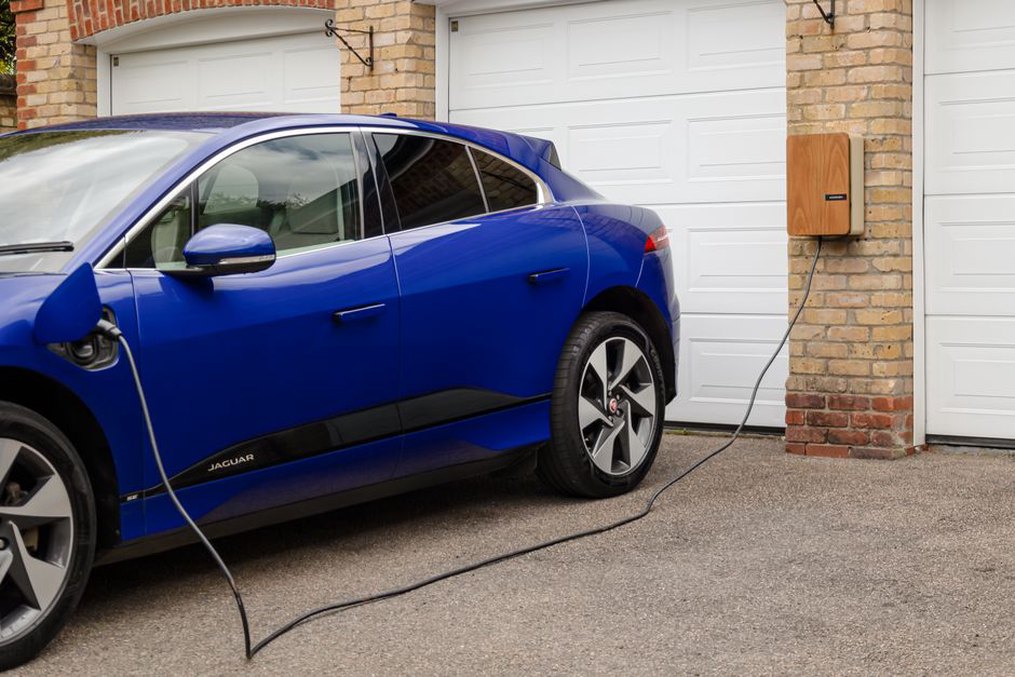
For home charging, use the marginal price paid for the extra electricity, including applicable time-of-use rates and taxes. An overnight rate helps only if charging can reliably take place during that window. Allocate any added fixed monthly charge or demand-related cost to the car where appropriate. Solar charging is not automatically free: that electricity might otherwise earn an export credit or be used elsewhere.
Public chargers may charge by energy, time or both. Prices can depend on charging speed, location, membership and idle fees. A higher-power charger will not necessarily shorten a stop in proportion to its rating; the car's charging rate usually falls as the battery fills. Estimate the home-versus-public mix from ordinary weekly use and longer trips. Without dependable home or workplace charging, pricing every kilowatt-hour at a residential overnight rate will understate costs.
A home installation may involve more than fitting a wall-mounted unit. Cable length, electrical-panel capacity, protective equipment, permits and work in shared parking can all affect the quote. Have a qualified professional assess the property rather than assuming a standard installation price. If a move is likely soon, the installation cost may be spread over relatively few years of charging.
Maintenance savings are real, but not universal
Battery-electric cars need no engine oil changes, exhaust-system repairs or conventional-engine servicing. Regenerative braking can reduce friction-brake wear, but the brakes still need inspection and may deteriorate if used infrequently. Follow the schedule for the specific vehicle.
Tyres, suspension, wipers, cabin filters, air-conditioning and collision repairs still cost money. Vehicle weight, torque, tyre design, alignment and driving style all affect tyre life. It would be misleading to assume either that every electric car wears tyres faster or that its maintenance costs are negligible. Compare replacement prices for the actual wheel size and tyre specification, not a generic average.
Battery capacity gradually declines with age and use; that does not mean every owner will need a full replacement. For a used electric car, review battery warranty terms, remaining coverage, available battery-health information and service history. Check capacity thresholds and exclusions in the warranty. An expensive out-of-warranty repair is a risk to assess, not an automatic line item for every owner.
Insurance, taxes and access charges
Get insurance quotes for the exact vehicles and drivers in the comparison. Repairability, parts availability, local claims and vehicle value may matter more than assumptions about electric cars in general. Check the deductible as well: a lower premium with a higher deductible leaves the owner paying more if a claim occurs.
Registration, road-use taxes, parking rules and congestion charges vary by jurisdiction and may change during ownership. Some places exempt electric vehicles from certain charges; others add registration fees. Note when each rule takes effect, and reconsider any benefit due to expire before the comparison period ends.
Use scenarios to expose the uncertain numbers
One cost-per-kilometre figure can conceal a lot. Build a base case, then vary annual distance, public-charging share, electricity price and resale value. Keep fixed costs separate: driving fewer kilometres cuts energy use, but it does not lower a loan payment or undo the installation bill.
| Input | Base-case question | Useful stress test |
|---|---|---|
| Charging access | Where will routine charging occur? | Price a larger public-charging share |
| Annual distance | What do recent travel records show? | Calculate a lower-mileage year |
| Resale value | What value is assumed at sale? | Reduce the estimated sale price |
| Home installation | Is a written electrical quote available? | Include additional work identified on inspection |
For the combustion-engine comparison, estimate fuel use under realistic driving conditions rather than relying on a best-case rating. Use the same annual distance and ownership dates for both vehicles. If the electric car costs more upfront but less to run per kilometre, divide the extra fixed cost by the estimated saving per kilometre to find a break-even distance. Treat it as a scenario, not a promise: resale values, fuel prices and charging costs can all change.
Before relying on the spreadsheet, check at least one row against a bill or written quote. For charging, multiply the billed unit price by electricity drawn from the grid, not just energy delivered to the battery. Otherwise, charging losses quietly disappear from the annual estimate.