
A loose cabinet hinge calls for a screwdriver that fits the screw head, not a box full of tools you never use. Build a home repair kit around jobs that actually come up: tightening hardware, hanging a light object, measuring a replacement part or containing a minor leak until it can be repaired. Keep the hand tools together in a portable box; store hazardous materials and bulky supplies separately.
Build the kit around safe, repeatable tasks
Decide which jobs you can reasonably tackle without opening an electrical installation, disturbing a structural element or working on a hazardous surface. Adjusting a door latch, replacing a cabinet handle, assembling furniture and filling small holes in sound interior plaster or drywall are reasonable examples. A kit makes these tasks easier; it does not make every fault a do-it-yourself repair.
Start with a modest set of durable hand tools, then add equipment when a particular job calls for it. That way, you avoid accumulating fasteners that do not suit your walls or buying a power tool for work a hand driver could do. If you rent, check which alterations require permission before drilling or applying permanent finishes.
Core measuring and hand tools
Measuring tape: A retractable tape of roughly 3–5 metres covers most indoor measurements. Check that its hook moves freely as designed and its markings are legible. Measure an opening or existing part before buying a replacement; a photograph rarely shows the dimensions needed for a close fit.
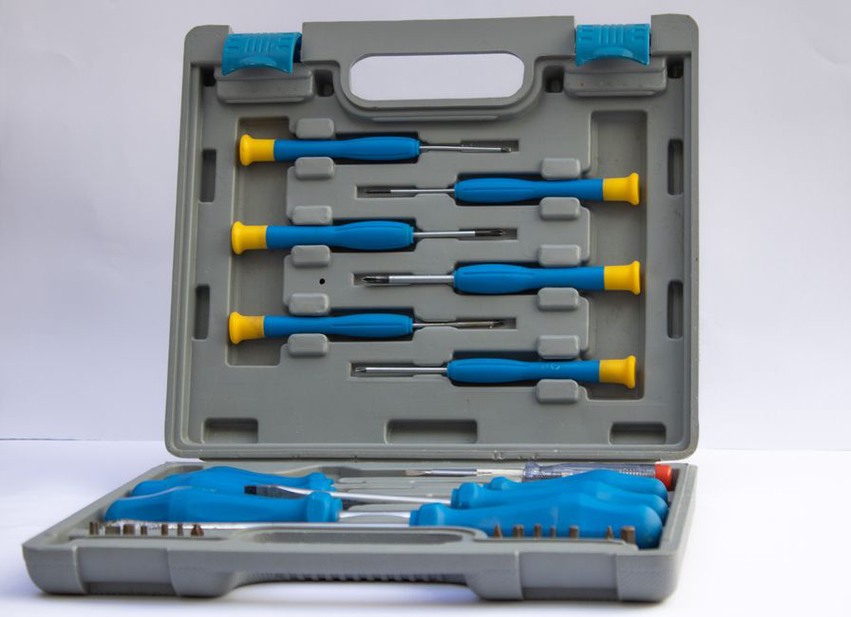
Screwdrivers: Keep medium and small flat-head and cross-head drivers, or a comfortable bit driver with clearly labelled bits. Match each bit to the screw head: one that slips can strip the recess and turn a quick adjustment into a difficult job. Choose sizes found on your furniture and fixtures rather than assuming one cross-head bit fits them all. A small set of hex keys helps with flat-pack furniture and some door hardware.
Adjustable wrench and pliers: A compact adjustable wrench turns suitable nuts and bolts. Slip-joint pliers grip irregular objects, while needle-nose pliers reach into narrow spaces. Make sure the tool contacts the fastener securely, and do not force a rounded or corroded fitting. On delicate plumbing connections, pliers are no substitute for the correct wrench; too much force can damage a joint.
Hammer: A small claw hammer handles light nails and gentle removal work. Keep a short piece of scrap wood to protect finished surfaces when levering out a nail. For hanging framed objects, a small level is more dependable than judging alignment by eye, and it works when your phone is unavailable.
Utility knife: A retractable or folding knife helps with packaging and trimming materials. Give it a sheath or closed compartment, and leave spare blades in their original dispenser. A sharp blade usually takes less force than a dull one. Cut away from your hands and finished surfaces.
Add a pencil, washable marker and small notepad. Recording screw spacing or the width of an old seal—and marking the centre of a bracket—can spare you a second measuring trip.
Fasteners and small consumables
Keep a limited assortment of screws in lengths you are likely to use, with matching nuts and washers for existing furniture hardware. Label the compartments; once packaging is gone, mixed screws are hard to identify. A small packet of picture-hanging hardware can be useful, but the fixing must suit both the load and the wall material. Plasterboard, masonry, timber framing and hollow doors do not take the same anchors. If you do not know what is behind the paint or wallpaper, do not guess.
A few cable ties can bundle loose, non-electrical items. Painter’s tape is handy for temporary marks and protecting adjacent finishes. General-purpose adhesive may help with suitable non-structural items if its label matches the materials and conditions. Do not use it to support a heavy shelf, mend a load-bearing component or secure anything above someone’s head.
For minor surface repairs, a small putty knife and suitable interior filler are usually more useful than several specialised compounds. If filler has a short storage life or may dry out, buy it when you need it. Keep fine abrasive paper or a sanding sponge for cured filler, and control the dust. Do not casually sand older coatings or unknown materials; testing or specialist advice may be needed before you disturb them.
Protection, light and cleanup
Safety glasses protect your eyes from chips produced by hammering, drilling or scraping. Work gloves help with rough edges and debris, but can catch in rotating machinery and should not be worn near it. A suitable dust mask or respirator may be needed for dusty work; it is not permission to disturb unknown insulation, mould or potentially hazardous old coatings. Choose protection for the hazard you have identified, and stop if you cannot identify it.
Keep a compact flashlight or headlamp with working batteries. Under a sink or behind an appliance, a headlamp leaves both hands free. Clean rags and a small debris bag contain ordinary mess. Damp materials and chemicals may need different disposal methods, so check their labels before putting them in household waste.
A non-contact voltage detector can warn of a hazard, but it cannot prove a circuit is safe to touch. Electrical testing and repairs require the right procedures and competence. A basic kit should not encourage work inside wiring or a distribution board; even removing a cover is appropriate only when permitted and safe.
Choose optional tools by the building and the task
Walls, fixtures and access
A cordless drill/driver can save time on furniture assembly or permitted fixings, but it is optional. If you add one, get suitable bits, learn its clutch settings and check what is behind the wall before drilling. Concealed pipes, cables and other services may not be where you expect. Leave tiled wet areas, structural elements and unknown surfaces alone unless you have the information and tools needed to drill safely.
For reachable indoor tasks, a sturdy step stool may be more useful than another power tool. Set it on a firm, level surface and keep the work within easy reach. If a job calls for leaning far to one side, accessing a roof or standing on a makeshift platform, it is outside the scope of a basic kit.
Water and seals
If taps or exposed connections occasionally need attention, write down where the main water shutoff is and keep the card in the kit. A small bucket and absorbent cloths help catch water while you assess a minor drip. Buy replacement washers or seals after identifying the fitting; an arbitrary bag of parts is more likely to confuse than help.
Thread-seal tape suits certain threaded connections, but not every joint. Compression fittings and gasketed connections seal differently, and tape can prevent them from seating properly. If water keeps escaping, isolate the supply if you can do so safely and arrange qualified help rather than repeatedly tightening a suspect fitting.
Keep the kit organised and ready
Choose a box or bag with a secure closure, a handle and compartments that keep sharp tools apart from small parts. Put the tape, driver, pencil and flashlight within easy reach. Label fastener compartments by size or the description on their original packaging. Keep batteries away from loose metal objects, and store chemicals in their original labelled containers as instructed.
After each repair, put tools back, replace damaged bits and note which consumables have run out. Check the flashlight periodically, along with any signs of rust, leaking batteries or dried-out filler. A damp utility space needs extra attention: corrosion can stiffen adjustable tools and obscure markings on measuring equipment.
Set a limit for uncertain repairs. Movement cracks, repeated water ingress, a burning smell, exposed wiring, damaged gas fittings or doors that suddenly become difficult to close may point to more than a loose screw. Record what you observe, avoid disturbing the area and seek an appropriate inspection. If a small job grows unexpectedly, budgeting for home repairs when the scope is uncertain explains why an allowance for hidden work matters.
To check that the kit is ready, try tightening an accessible cabinet handle. Pick a bit that seats fully in the screw, support the handle and turn until snug without forcing it. Then return the driver to its marked compartment. If the screw spins without gripping, note the hole and substrate so you can choose a suitable repair—do not blindly drive in a longer screw.