
When three people come home within minutes of one another, more hooks will not necessarily keep the entryway clear. Wet coats need to dry; keys, bags and school papers need different places to land. Arrange those places around the order things come through the door, so nobody has to sort a pile before putting something away.
Start with the busiest five minutes
Before adding storage, notice what gets set down during a typical arrival. Sort those items into three groups: things that stay by the door until the next departure, things that need to dry or be dealt with soon, and things that belong elsewhere. A return package may need a temporary spot; yesterday’s mail does not need a permanent one.
Look at where people naturally stop. A tray beside the door helps if keys already land there. A hook hidden behind a door may look tidy but go unused if reaching it means stepping around someone else. Daily storage should not require opening a lid, shifting a bag or moving another person’s coat.
Try walking in with an ordinary load—a bag, a jacket and a piece of mail—and putting each item away without setting anything on the floor. Awkward reaches and pauses show where storage needs to move.
Give the entryway jobs, not just containers
Keep daily departures at hand
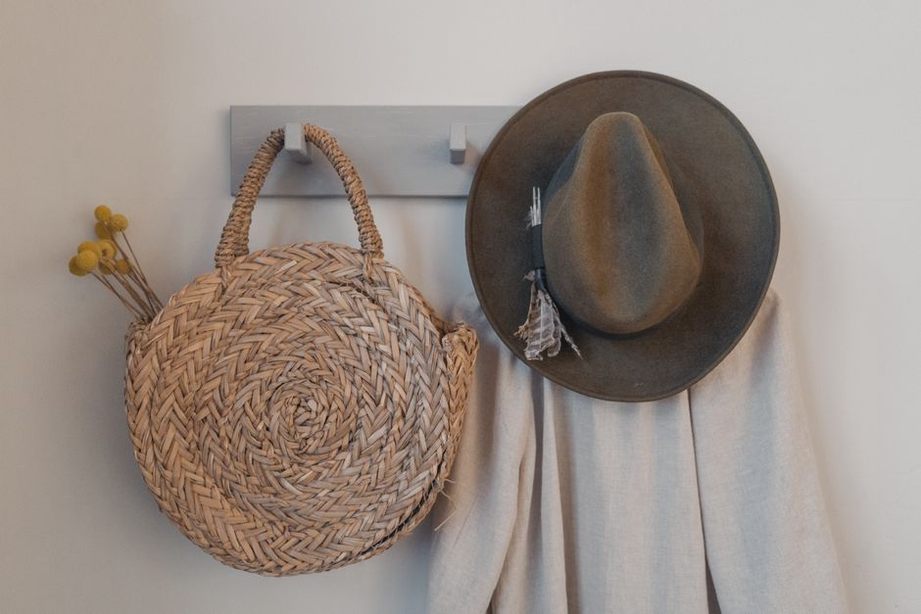
Save the easiest-to-reach spots for things that leave the house most days. Give each person a hook or small open compartment for a regular bag, and use a shared tray for keys and access cards. Labels help when similar bags or sets of gloves compete for space. Place hooks where household members can reach them without asking someone else to hang up or retrieve a coat.
Keep each category specific. A bin marked “outgoing” is useful if it holds only things that must leave on the next trip. Empty it when those tasks are done, or it becomes another place to search.
Separate wet items from clean storage
Wet shoes and coats need airflow and an easy-to-clean surface. A washable mat or tray catches drips from footwear; a damp coat dries better on a spaced hook than in a crowded cupboard. Keep dry accessories in a separate basket so they do not pick up moisture. If the entry is poorly ventilated, move soaked items to a suitable drying area rather than leaving them packed together by the door.
Britannica’s overview of mold explains its association with damp conditions. A tray can catch drips, but it cannot dry what sits on it.
Create one brief holding point
Forms to sign, library books to check and deliveries to open pass through the entryway but should not stay there. Give them one visible shelf or basket with a clear capacity limit. When it fills, deal with what is there before adding another container. After sorting, move recycling and items bound for other rooms away from the doorway.
Use the wall without crowding the route
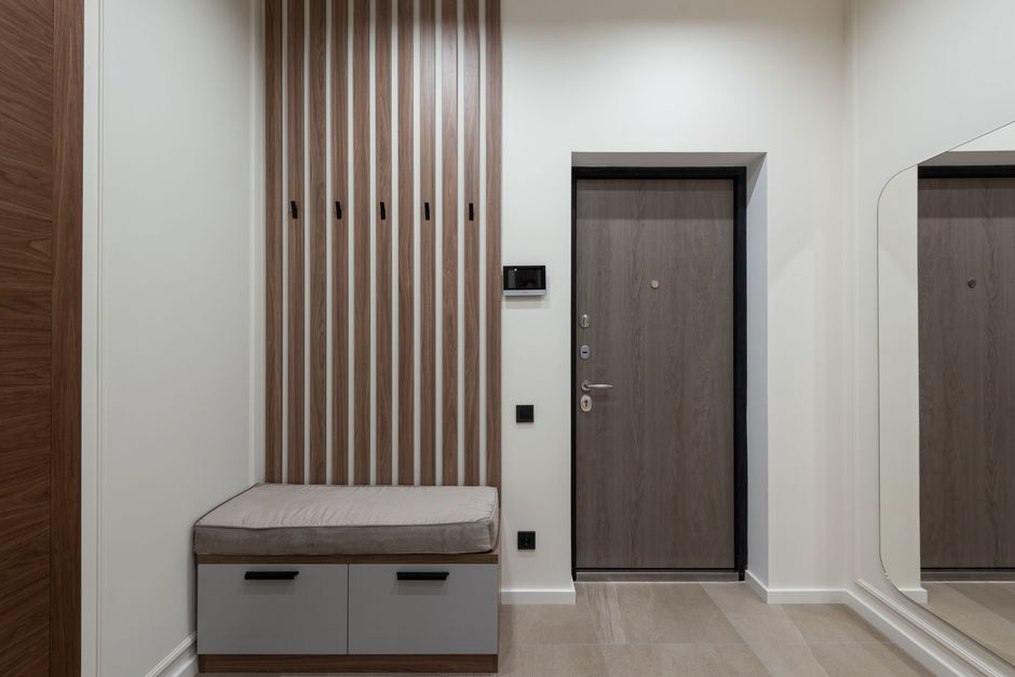
In a narrow entrance, shallow wall-mounted storage may take up less of the route than a freestanding cabinet, provided the wall and fixings suit the expected load. A short row of hooks can hold bags without projecting as far as a coat rack. A slim shelf works as a key landing point only if shoulders and carried bags will not keep striking it.
Measure with the door fully open, including the swing of any cupboard doors or drawers. Then walk through carrying the bulkiest bag used regularly in the household. Storage must not obstruct the exit, create a trip hazard at the threshold or block switches and other fixtures. Avoid putting heavy items high overhead. Follow the manufacturer’s fixing instructions for wall-mounted units, and seek qualified advice if the wall construction or load is uncertain.
A bench earns its space only if someone can sit and stand without blocking everyone else. If it cannot, a shoe tray beneath the hooks may cover the essential need with less floor space. Keep pairs currently in rotation at the door; move the rest to their usual storage area.
Choose storage by how often an item moves
- Every departure: keep keys, regular bags and frequently worn outerwear visible and easy to put back.
- Occasional use: store spare umbrellas and less-used accessories away from the prime spots, without creating an overhead hazard.
- Seasonal use: move out-of-season coats and footwear elsewhere instead of adding more hooks.
- Needs action: give papers and outgoing parcels one designated spot, then clear it regularly.
How often an item moves matters more than whether the baskets match. A covered box hides clutter, but it also adds a step every time someone puts something away. Open storage is usually easier for daily items; closed storage can keep dust off less-used supplies. Choose surfaces that can handle the dirt and moisture the doorway receives, and leave room to clean underneath.
Make the system survive a rushed morning
Test the arrangement during an ordinary workweek, not just after tidying. If bags still land on the floor, see whether the hooks are occupied or hard to reach. If mail spreads across a shelf, separate incoming papers from documents awaiting action. If shoes block the door, the shoe space may be too far from where people take them off—or too full for another pair.
Attach a small reset to an existing routine. Clear the outgoing basket after departures and move dry footwear off the mat, rather than saving everything for a weekend reorganization. For children, a reachable hook and an assigned bag spot are easier to follow than a general instruction to keep the entryway tidy.
Keep the key landing surface deliberately small: a tray sized for keys and access cards makes a misplaced parcel or pile of mail hard to overlook.