
Keep the pan you use most near the stove, with its handle well clear of the burner. Good kitchen storage works on that principle: it saves steps during an ordinary meal without taking up the space you need to cook safely. In a small kitchen, where something belongs depends less on where it fits than on when and how you use it.
Start with a meal, not a cabinet
Before buying an organizer, trace the path of a meal you cook regularly. Where do you get the ingredients, wash vegetables, chop, heat a pan, serve, and clean up? Repeated trips across the room may tell you more about a storage problem than a crowded cabinet does.
Empty one work area at a time. Sort its contents into things you use most days, occasionally, and rarely. Keep daily items close to the task they support; move occasional equipment to higher or lower storage that you can still reach comfortably. If you haven't used something in a typical month, consider whether it needs kitchen space at all. Don't empty every cupboard at once: the piles will get in the way of cooking while you decide what goes where.
Can you take out an item and put it back without moving several others? A shelf that looks tidy but requires you to dismantle a stack every evening isn't working well.
Protect the counter space you actually need
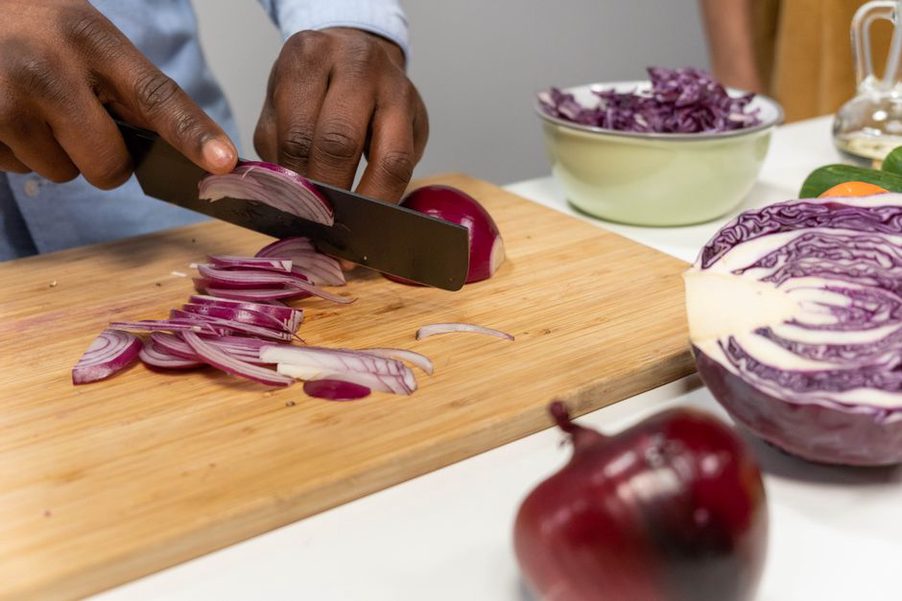
Countertop storage can look orderly while leaving nowhere to prepare food. Set aside a section large enough for your usual cutting board and the ingredients beside it, and keep it free of permanent storage. If possible, choose a spot near the sink or cooking area so washed produce and chopped ingredients don't have to travel far.
Be honest about how often you use small appliances. A kettle used several times a day may deserve a permanent spot. An appliance used once a week might be better below the counter, as long as it isn't awkward to lift. Keep vents clear and follow the manufacturer's clearance and storage instructions. Don't run an appliance inside a cupboard unless the installation is designed for it.
Give each cabinet a job
Place cookware by the cooking task
If the layout allows, store everyday pans, lids, and cooking utensils near the stove. A shallow drawer often serves utensils better than a crowded countertop crock: you can see the tools, and the counter stays clear. Stand lids in a stable divider or keep them with their matching pans. If reaching a skillet means lifting out a heavy stack, try moving that skillet to the front before buying another organizer.
Keep towels, plastic containers, and other heat-sensitive items away from hot surfaces. A utensil is not conveniently stored if reaching it means passing your hand over a burner.
Keep food preparation tools together
Keep boards, knives, peelers, mixing bowls, and measuring tools near the preparation area. A suitable block, sheath, or drawer insert protects knife blades and keeps hands from searching among loose utensils. Boards may be easier to select and dry when stored vertically rather than wedged beneath other equipment; use a rack that stays put when you remove one.
Group tools by what you do with them, not what they're made of. A measuring spoon used while cooking may be more useful beside the spices than in a drawer of miscellaneous metal utensils.
Keep dishware close to unloading
Plates and everyday glasses are easiest to put away near the dishwasher or drying rack. If space there is tight, give daily pieces priority and store serving platters farther away. Where possible, keep heavier dishes at a comfortable lifting height instead of reaching to a high shelf with a stack in your hands.
Use vertical space without creating obstacles
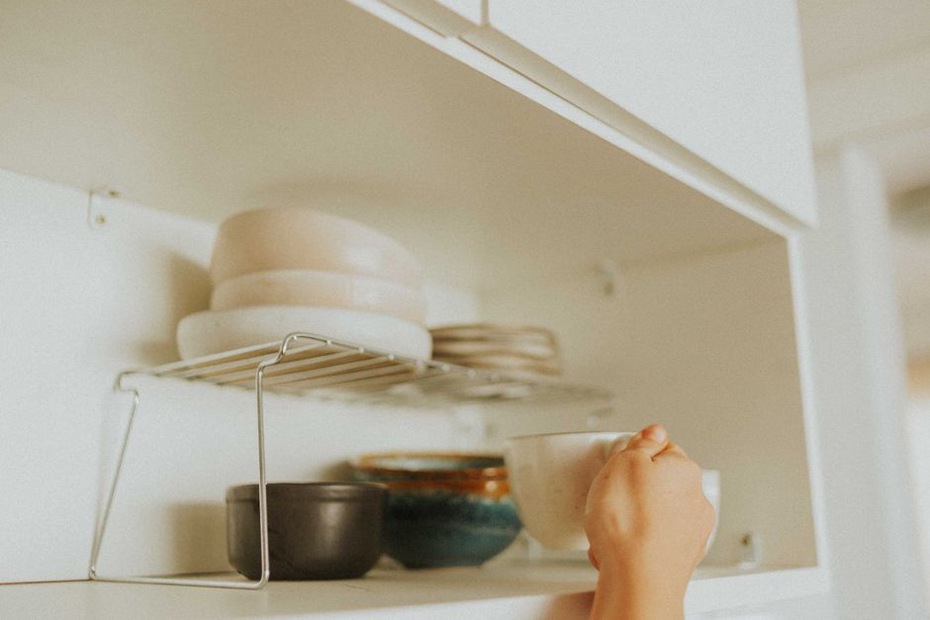
A shelf riser can make use of empty cabinet height, giving cups or small bowls two accessible levels. Measure the cabinet and its contents before buying one. It only helps if you can reach both levels and the shelf can support the combined load.
Wall rails and hooks can free drawer space for lightweight tools you use often. Make sure the wall and fixings suit the load, and keep hanging items away from burners, splashing water, and walking routes. Removable storage may suit a rented home, but check the instructions for adhesive hooks; don't rely on them for heavy or breakable objects.
A cabinet door may have room for light items such as measuring spoons or cleaning cloths. Check the clearance first: a rack that hits the shelves will make the door harder to close. Don't block hinges, plumbing shutoff valves, or electrical equipment.
Make deep storage easy to inspect
Deep cupboards hold plenty but can hide what's at the back. A pull-out tray, drawer, or open-topped bin can bring things into view. Pick the simplest fix for the problem: a bin may be enough for packets, while heavy pots may need a properly supported pull-out. Measure with the cabinet door open, including the space taken up by hinges, before fitting anything.
Containers earn their place when they keep a category of items from scattering. For example:
- Breakfast supplies: oats, tea, and frequently used spreads on one reachable shelf.
- Cooking packets: small bags of grains or dry noodles upright in a bin, with labels visible.
- Baking tools: measuring cups, paper liners, and decorating tools together if you bake occasionally.
Avoid nesting bins just to fill a cupboard. Each extra layer adds a step before you can use what's inside. Clear containers can help you see their contents, but there's no need to transfer every pantry item into matching jars. If you decant food, keep the original label or record the contents and relevant date, especially when similar-looking ingredients or allergens could be confused.
Organize food for visibility and appropriate storage
Keep regularly used shelf-stable ingredients at eye level or within easy reach. Group similar foods so you can spot an open package before buying another. When storage conditions and dates permit, put newer packages behind older ones. Shelf-edge labels can help when several people put groceries away, though broad categories such as “cooking oils” or “canned beans” are easier to maintain than a label for every product.
Don't trade food safety for an extra shelf. Follow package directions about refrigeration after opening, and keep dry foods away from leaks, dampness, and heat. A cabinet beside the stove may be convenient but unsuitable for heat-sensitive ingredients. If you keep cleaning supplies under the sink, separate them from food and protect them from plumbing leaks.
Choose storage for the space beneath the sink
Pipework makes under-sink cabinets awkward, and the space is more likely to become damp. Use it for suitable items, such as securely stored cleaning supplies, rather than as an overflow pantry. A washable tray can help you notice and temporarily contain a small leak, but it is no substitute for a repair. Keep shutoff valves accessible.
If children or pets can reach the cabinet, follow cleaning-product storage warnings and use appropriate secure storage. Don't pour chemicals into unmarked bottles. A small caddy can make frequently used supplies easier to take out, provided it doesn't block pipes or leave containers prone to tipping.
Fit the system to daily habits
Storage stops working when putting something away takes more effort than leaving it out. Give the things that collect on your counter—perhaps lunch containers, a colander, or a bag of coffee—places that are easy to reach. Store matching container lids upright in a divider or beside their bases. Recycle or repurpose unmatched pieces rather than keeping an ever-growing pile in case the lids turn up.
Leave a little room where you put groceries away. Tightly packed shelves make it harder to rotate food or see partial packages. After a week of normal cooking, look at what keeps landing on the counter. Move one of those items to a better cabinet position, then see whether it's easier both to retrieve and to put away. That small test may be all you need to find a workable home for the daily pan or cutting board.