The environmental cost of a motorway is not paid solely at the fuel pump. By the time the first vehicle crosses a newly opened bridge or tunnel, a substantial debt of embodied carbon, raw material depletion, and ecological disruption has already been locked into the asset. In heavy civil engineering, where structures are expected to serve for a century or more, the decisions made during the feasibility and preliminary design phases dictate environmental performance far more than operational tweaks ever can. Lifecycle Analysis (LCA) provides the quantitative framework to measure this debt, shifting the conversation from simple operational efficiency to a holistic accounting of an asset from material extraction through to decommissioning.
For transport infrastructure, the standardised phases of LCA—defined in ISO 14040 and 14044—are typically grouped into four stages: Product and Construction (A1–A5), Use (B1–B7), End-of-Life (C1–C4), and the supplementary benefits beyond the system boundary (D). The challenge for geotechnical and structural engineers is that the dominant environmental burden often lies where traditional cost estimating is least precise: deep foundations, earthworks, and long-term maintenance interventions spread over decades.
Embodied Carbon in Geotechnical Assets
In a typical highway or railway project, earthworks and foundations can contribute over 30% of the total embodied carbon, a figure that is frequently underestimated during early-stage planning. The production of cementitious binders for deep soil mixing, jet grouting, or diaphragm walls carries an exceptionally high global warming potential. A single cubic metre of CEM I concrete in a contiguous bored pile wall may represent upwards of 300–400 kg CO₂ equivalent, depending on the mix design. When multiplied across kilometres of retaining structures or hundreds of bridge piers, the cumulative impact demands rigorous scrutiny through LCA rather than relying on generic emission factors.
Geotechnical engineers have a direct lever to influence these outcomes. Comparative LCA studies consistently show that optimising foundation geometry—reducing pile diameters where shaft resistance governs, or switching from replacement to displacement piles in suitable soils—can trim embodied carbon by 15–25% without compromising ultimate limit state requirements. The analysis, however, must be site-specific. A pile penetrating stiff clay in a seismic zone demands a different environmental calculus than one socketed into competent bedrock, and the LCA model must reflect the actual logistics of spoil transport, temporary casing, and bentonite management.
Pavement Systems and the Maintenance Cycle
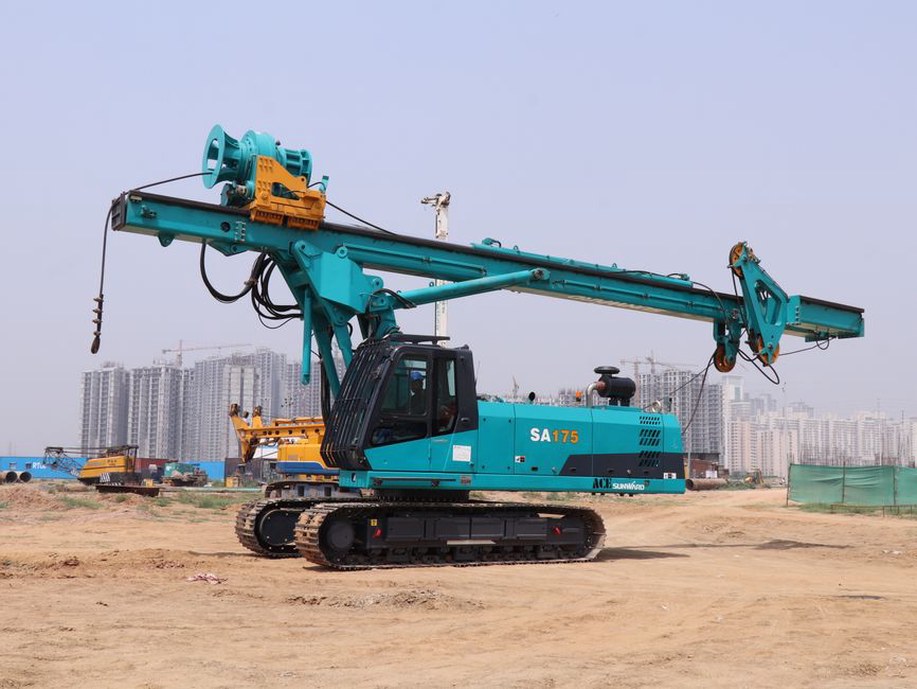
Rigid and flexible pavement designs present a classic LCA trade-off. Portland cement concrete pavements typically carry a higher initial embodied carbon burden due to clinker production, yet their extended service life and reduced rolling resistance can offset this over a 60-year analysis period. Flexible asphalt pavements, conversely, demand recurrent resurfacing, milling, and overlay operations that generate traffic disruption, material consumption, and repeated equipment mobilisation.
The critical variable is the maintenance frequency assumed in the lifecycle inventory. A poorly calibrated model that underestimates the rate of rutting or reflective cracking will systematically favour designs that appear cheaper and cleaner on paper but deteriorate prematurely. Integrating geotechnical parameters—subgrade stiffness, drainage condition, frost susceptibility—into the pavement LCA is essential. A well-drained granular subbase that preserves the design modulus over decades can reduce the lifecycle impact of an asphalt pavement more effectively than marginal improvements in the binder course formulation. This is where the intersection of geotechnical engineering and road foundation design becomes inseparable from sustainability outcomes.
Bridges and Structural Lifecycle Thinking
Bridge LCA is dominated by the structural material choice, but the analysis must extend beyond simple comparisons of steel versus concrete. A composite steel-concrete deck may offer a lower superstructure weight, reducing foundation dimensions and associated earthworks, which in turn lowers the total project carbon footprint even if the steel production phase is more intensive per tonne. The system boundary must capture these interdependencies; an LCA that treats the superstructure and substructure in isolation will miss the cascading effects that skilled designers exploit.
Corrosion protection strategies introduce another temporal dimension. A weathering steel girder that eliminates the need for periodic recoating over a 120-year design life avoids not only the paint-related volatile organic compound emissions but also the traffic management, containment, and abrasive blasting operations required for maintenance painting. Quantifying this benefit requires robust service-life modelling tied to the local atmospheric corrosivity category, a parameter that should be explicitly documented in the lifecycle inventory. The methodologies used in modern bridge inspection and condition assessment provide the input data that makes such long-term projections credible rather than speculative.
Tunnels: The Energy and Materials Nexus
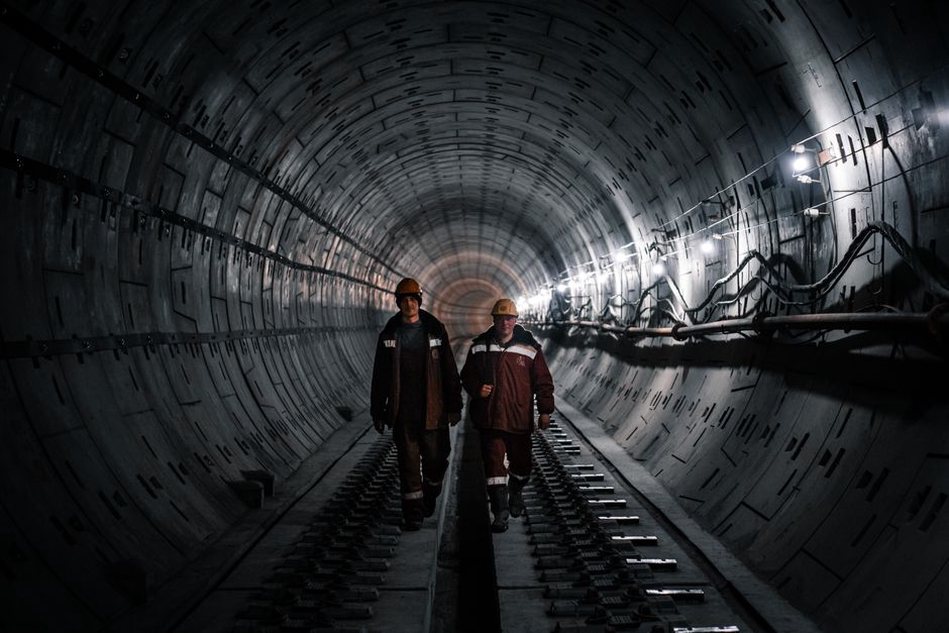
Tunnelling LCA presents unique difficulties because the construction-phase impacts are extraordinarily concentrated. Tunnel boring machine (TBM) excavation in hard rock consumes significant electrical energy for cutting, muck haulage, and ventilation, while drill-and-blast methods introduce explosives manufacturing and nitrous oxide release into the inventory. The permanent lining—typically cast-in-situ concrete or precast segments—adds a material burden proportional to the excavated diameter squared.
Yet the operational phase of a tunnel can yield systemic environmental credits that are invisible if the analysis stops at the portal. A rail tunnel that flattens a gradient reduces traction energy consumption for every train that passes through it over the entire service life. A road tunnel that bypasses a sensitive alpine pass eliminates the salting, ploughing, and avalanche control measures that would otherwise be required. These avoided burdens must be credited in a consequential LCA framework, but the assumptions about future traffic volumes and energy mixes introduce uncertainty that demands transparent sensitivity analysis.
Monitoring and the Validation of Assumptions
Every LCA model is built on assumptions about deterioration rates, intervention thresholds, and material longevity. Without empirical validation, these assumptions drift into optimistic territory. Modern infrastructure monitoring provides the feedback loop that grounds lifecycle models in reality. Distributed fibre optic sensing in concrete linings records actual strain evolution, allowing the recalibration of fatigue life predictions. Satellite-based interferometric synthetic aperture radar (InSAR) tracks millimetric settlement patterns across entire rail corridors, identifying sections where foundation performance deviates from the design basis and where accelerated maintenance cycles may be needed.
When this monitoring data is systematically fed back into the LCA model, the analysis transforms from a static assessment performed at the design stage into a dynamic tool that supports adaptive asset management. A bridge that is performing better than predicted can have its major intervention deferred, reducing lifecycle impacts and freeing resources for structures that genuinely need attention. The techniques discussed in the context of advanced infrastructure monitoring technology are directly applicable to this continuous improvement loop.
Data Quality and the Limits of Generic Databases
Engineers applying LCA to transport infrastructure must confront the limitations of background data. Generic emission factors for concrete production may reflect a national grid average that differs substantially from the specific electricity mix powering a local batch plant. Transportation distances for aggregates are often estimated from regional averages rather than actual quarry-to-site haul routes. These data gaps introduce systematic errors that can reverse the apparent ranking of design alternatives.
A rigorous approach requires that the most sensitive parameters—cement content, steel recycled content, diesel consumption for earthmoving—be collected as primary data from suppliers and contractors. Environmental Product Declarations (EPDs) for specific concrete mixes, reinforcing steel grades, and waterproofing membranes provide a traceable basis for the inventory. Where primary data is unavailable, a sensitivity analysis that varies the uncertain parameters across a plausible range is the minimum acceptable practice for any LCA that will inform a design decision.
Integrating LCA into the Design Workflow
For LCA to influence outcomes rather than merely document them, the analysis must be iterative and embedded in the design process, not performed as a post-hoc justification. Early-stage screening using parametric LCA tools can identify the environmental hotspots—often the foundation solution or the pavement thickness—before the geometry is frozen. As the design matures, the LCA model is refined in parallel with the structural and geotechnical calculations, so that the final submission documents not only the structural utilisation ratios but also the carbon per lane-kilometre or per passenger-kilometre of capacity provided.
Specifying a maximum embodied carbon target in the employer's requirements, alongside the traditional strength and durability criteria, is a practical mechanism to drive innovation. Contractors and designers then have the freedom to propose alternative materials, optimised earthworks strategies, or local sourcing arrangements that demonstrably reduce the quantified environmental impact. The target must be realistic—set through benchmarking against comparable projects—and the verification method must be clearly defined to avoid disputes over system boundaries and allocation rules.