
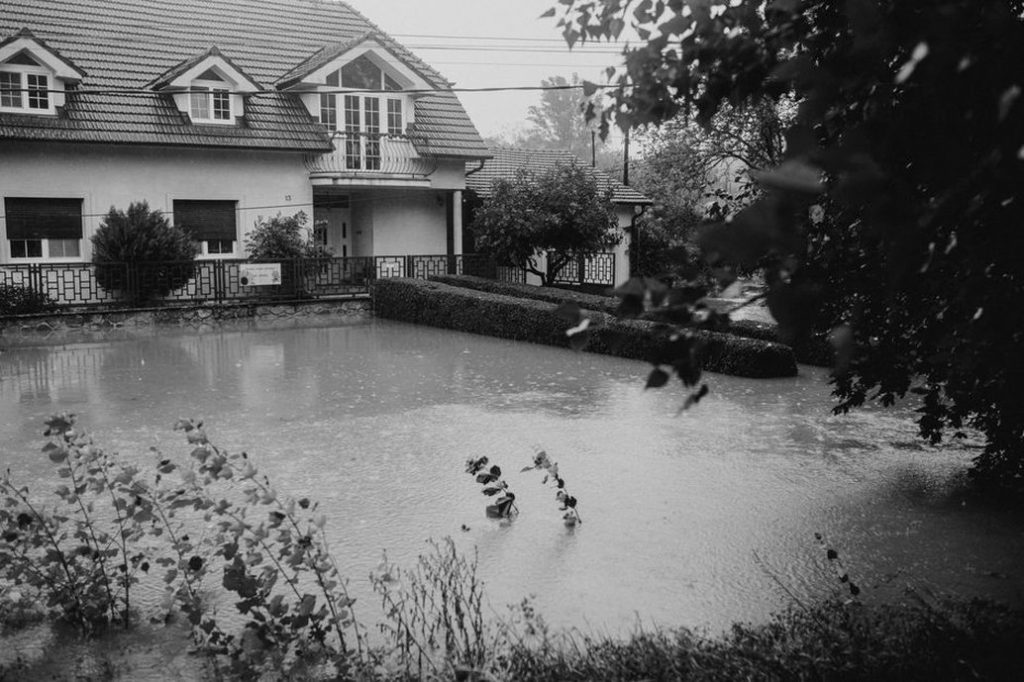
A rail embankment can lose support after a short, intense storm even if its drainage has performed adequately under historical rainfall. A concrete bridge deck may crack more readily when repeated heat cycles increase thermal gradients. These are not isolated maintenance problems: climate change is altering the environmental loads transport assets must withstand over their service lives.
For infrastructure owners, the issue is not simply higher average temperatures or greater annual rainfall. Reliability depends on the sequence, intensity, duration, and combination of hazards: saturated ground under traffic loading, heat during restrained expansion, storm surge at high tide, or wildfire damage followed by a debris-flow event. Assets designed using historic records alone may face failure mechanisms beyond their original operating envelope.
How climate hazards become infrastructure failures
Climate variables affect materials, foundations, water-management systems, and operations. The most consequential effects often occur at interfaces: between pavement and subgrade, track ballast and formation, bridge abutments and approach embankments, or tunnel portals and adjacent slopes.
- More intense rainfall can exceed the capacity of inlets, ditches, culverts, and cross-drains. Runoff erodes shoulders and slopes, while infiltration reduces soil strength and raises pore-water pressures.
- Higher temperatures raise pavement surface temperatures, accelerate some material-aging processes, and increase thermal movement in bridges, rails, joints, bearings, and restrained structural elements.
- Flooding and coastal water levels can cause scour, erosion, buoyancy effects, salt exposure, and prolonged inundation of electrical and mechanical systems.
- Freeze-thaw variability alters frost penetration, thaw weakening, and the number of cycles that damage porous materials and disturbed ground.
- Drought and wildfire can dry expansive soils, shrink or crack fine-grained subgrades, reduce root reinforcement on slopes, and leave catchments prone to rapid post-fire runoff and debris flows.
The key design and asset-management question is hazard-specific: which component is exposed, what physical mechanism links the hazard to deterioration or failure, and how quickly could the resulting condition become unsafe or disrupt service?
Ground, drainage, and earthworks under changing rainfall
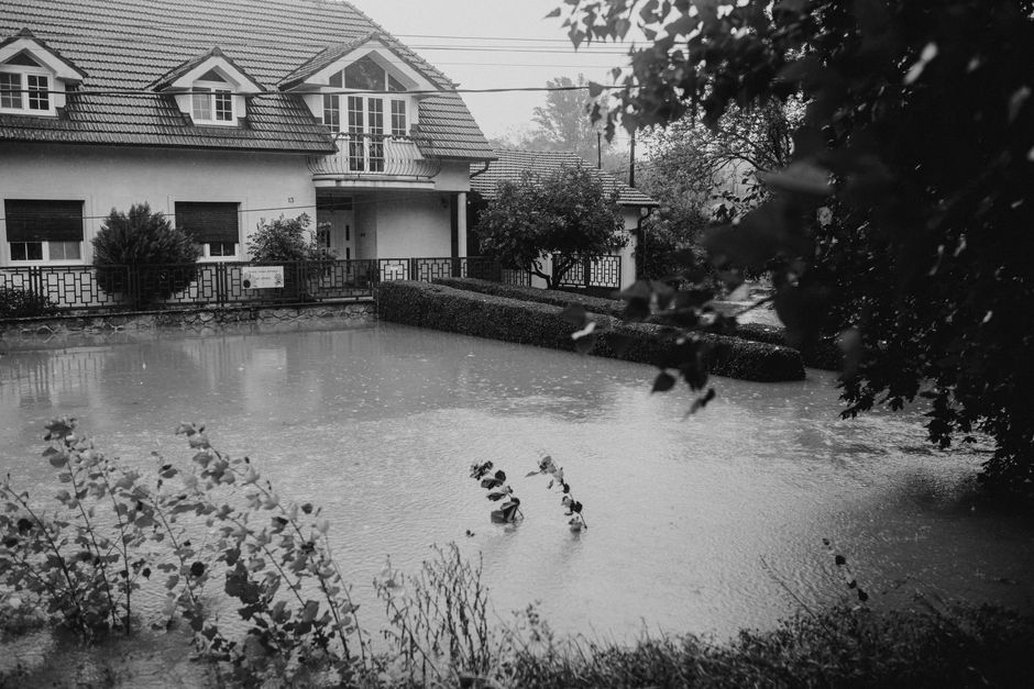
Earthworks are especially sensitive because their stability depends on soil strength, moisture conditions, geometry, drainage, and construction history. High-intensity rainfall can trigger shallow failures in cut slopes, wash out fill slopes, and mobilize debris at drainage outlets. Longer wet periods can be just as significant when they allow deeper infiltration and sustained rises in groundwater levels.
Road and rail corridors often include ageing culverts designed for earlier hydrological assumptions. Sediment, vegetation, woody debris, or storm-borne waste can block a crossing that would otherwise have sufficient capacity. Overtopping may then erode embankment faces and rapidly remove material at culvert inlets or outlets. Inspections after major events should therefore cover more than visible pavement damage. They should examine hydraulic pathways, outlet protection, erosion scars, and shifts in adjacent channel alignment.
Subsurface water acts more slowly, but its effects can persist. Repeated wetting weakens unbound pavement layers and fine-grained subgrades, contributing to rutting, pumping, settlement, and cracking. In rail systems, wet formations can degrade track geometry and increase maintenance demand. Piezometers, inclinometers, settlement points, and rainfall gauges are most valuable when linked to defined trigger levels, field inspections, and response procedures rather than used for data collection alone.
Scour is a system-level bridge risk
For bridges over waterways, flood resilience cannot be assessed from the superstructure alone. Faster or more variable flows can remove bed material around foundations, alter channel geometry, undermine revetments, and trap debris against piers. Critical conditions may develop during a short flood peak, when direct inspection is difficult or unsafe.
Asset owners should retain records of foundation type and depth, previous scour observations, bed levels, protective works, and post-flood inspections. Uncertainty in older foundation records should be explicitly considered during prioritization. Remote sensing, fixed monitoring devices, and targeted underwater surveys can improve condition knowledge, although each has limitations related to turbidity, access, sensor survival, and interpretation.
Heat, materials, and operational constraints
Heat affects each asset type differently. Asphalt mixtures soften as temperatures rise, leaving heavily loaded lanes more susceptible to permanent deformation where structural support or drainage is inadequate. Thermal cycles can widen existing cracks and contribute to sealant or joint distress. Maintenance planning should account for surface temperatures that can substantially exceed ambient air temperatures, particularly on dark pavements with little shade.
Steel rail is vulnerable to thermal compression when longitudinal movement is restrained. Buckling risk depends on rail temperature, neutral temperature management, track geometry, fastening condition, ballast resistance, and local constraints. Heat-related rail management is therefore an inspection and operations issue as much as a forecasting issue.
Bridge components need sufficient movement capacity across the expected temperature range. Bearings, expansion joints, drainage details, deck surfacing, and restrained connections require inspection because deterioration may prevent intended movement or direct water toward vulnerable areas. Electrical, signalling, communications, and ventilation equipment may also perform less effectively or have shorter service lives at elevated temperatures if enclosure and cooling assumptions are no longer valid.
Coastal exposure and compound events
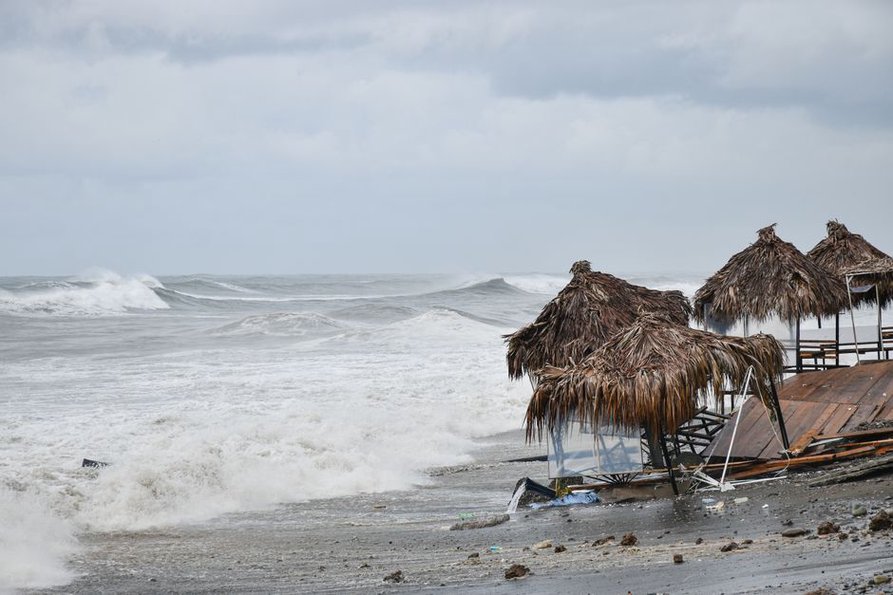
Coastal roads, railways, ports, and bridge approaches are exposed to sea-level rise, wave action, storm surge, saline groundwater, and salt-laden spray. The concern is not limited to permanent inundation. Repeated wave overtopping can strip fill, damage pavement edges, corrode reinforcement and fittings, and leave salt deposits that intensify corrosion cycles.
Compound events require particular attention. Elevated sea level combined with storm surge, high waves, intense rainfall, and river discharge can overwhelm drainage and flood low-lying transport links from several directions. A geotechnical perspective on shoreline erosion, foundation conditions, and groundwater processes is developed in Overcoming Coastal Infrastructure Challenges: A Geotechnical Perspective.
From climate projections to asset decisions
Climate projections are not direct design values. They indicate plausible future conditions, with uncertainty that varies by location, time horizon, emissions pathway, and climate variable. A sound adaptation process considers those projections alongside asset criticality, failure consequences, remaining service life, inspection evidence, and the feasibility of intervention.
- Build an asset-hazard register. Map drainage crossings, low points, slopes, bridge waterways, coastal sections, heat-sensitive systems, and known recurrent defects.
- Identify failure mechanisms. Separate, for example, pavement surface flooding from subgrade saturation, or wave overtopping from foundation scour. Each requires different evidence and controls.
- Assess vulnerability and consequence. Consider redundancy, evacuation or freight function, detour availability, exposure of adjacent communities, and recovery time alongside repair cost.
- Use adaptation pathways. Select measures that can be staged, monitored, and upgraded as risk signals change rather than committing too early to one irreversible option.
- Verify performance after events. Record observations, failures, rainfall or temperature conditions, and repair outcomes to refine future thresholds and investment priorities.
| Hazard signal | Likely asset response | Useful evidence |
|---|---|---|
| Short-duration extreme rainfall | Overtopping, erosion, shallow slope failure | Drainage inventory, terrain model, event inspections |
| Prolonged wet season | Subgrade weakening, settlement, deep-seated instability | Groundwater trends, deformation surveys, borehole records |
| Extreme heat | Rutting, joint distress, rail misalignment risk | Surface and component temperatures, defect history |
| Flood and high flow | Scour, debris blockage, approach washout | Hydraulic records, foundation data, channel surveys |
Monitoring and maintenance as climate adaptation
Adaptation is often associated with major reconstruction, yet targeted maintenance can preserve capacity and provide time for better-informed capital decisions. Clearing drainage before wet seasons, maintaining outlet protection, sealing defects that admit water, correcting localized track drainage, and inspecting bridge waterways after threshold events can reduce exposure to avoidable deterioration.
Condition monitoring is most useful when observations are interpreted across disciplines. Deformation data without groundwater context can lead to the wrong explanation for movement, while thermal readings without component-condition data can either overstate or understate risk. Methods and interpretation challenges for this work are addressed in Advanced Structural Health Diagnostics for Transport Infrastructure.
A post-event record for a washed-out embankment should include rainfall timing and intensity, water levels, photographs of inlet and outlet conditions, erosion extent, material loss, traffic restrictions, temporary works, and the performance of the permanent repair during the next comparable event. Such records turn a disruptive incident into site-specific evidence that can inform inspection intervals, drainage priorities, and renewal scope.