A shoe rack can clear shoes off the floor and still make a small entrance harder to use if it narrows the path. Before adding storage, watch where the door swings, where people stop to remove footwear, and what they carry through. In a compact entry, storage has to fit around movement, not the other way around.
The same applies to small staff entrances at offices, depots, and other facilities. Water, grit, bags, and loose equipment can accumulate at a cramped threshold, particularly when several people arrive at a shift change. Give frequently used items a place, but leave the floor and door area visible enough to spot maintenance problems.
Map the working area before adding storage
Observe a normal arrival and departure. Mark the door’s full swing, the route to adjoining rooms, and any door needed for emergency egress. Would an open cabinet block someone carrying a parcel or using a mobility aid? A sketch showing door swings and existing fixtures tells you more than a photograph of an empty wall.
Sort what collects by the entrance into three groups: items used on most trips out, items used occasionally, and items that belong elsewhere. Daily keys and a frequently worn coat need easy reach. Spare bags, out-of-season footwear, and equipment awaiting repair do not need space beside the door. In a shared entry, assign places by person or item type so the arrangement still makes sense when everyone arrives at once.
- Keep the route clear: allow room to open doors and turn, not just a narrow strip between furniture.
- Keep controls visible: do not cover switches, access panels, alarms, or ventilation openings with shelves or coats.
- Check actual use: account for bulky clothing, wet umbrellas, delivery boxes, and the busiest arrival period.
If the entrance is part of an accessible route or a required exit, applicable building requirements and users’ needs take priority over storage. In a workplace or public facility, the responsible facilities or design team should review permanent changes.
Give the floor a specific job
An entry mat can catch some water and grit before they spread, provided its edges lie flat and its backing suits the floor. A mat that curls, slides, or catches the door creates a problem of its own. Inspect it after wet weather, and clean out trapped grit before it abrades the surface underneath.
A shallow tray can contain wet footwear in a private entry if it stays out of the route. Empty the water and wash the tray; damp shoes left in a closed recess can develop an odor and take longer to dry. In a shared staff entrance, a cleaning routine may work better than individual trays. Traffic, space, and responsibility for upkeep should guide the choice.
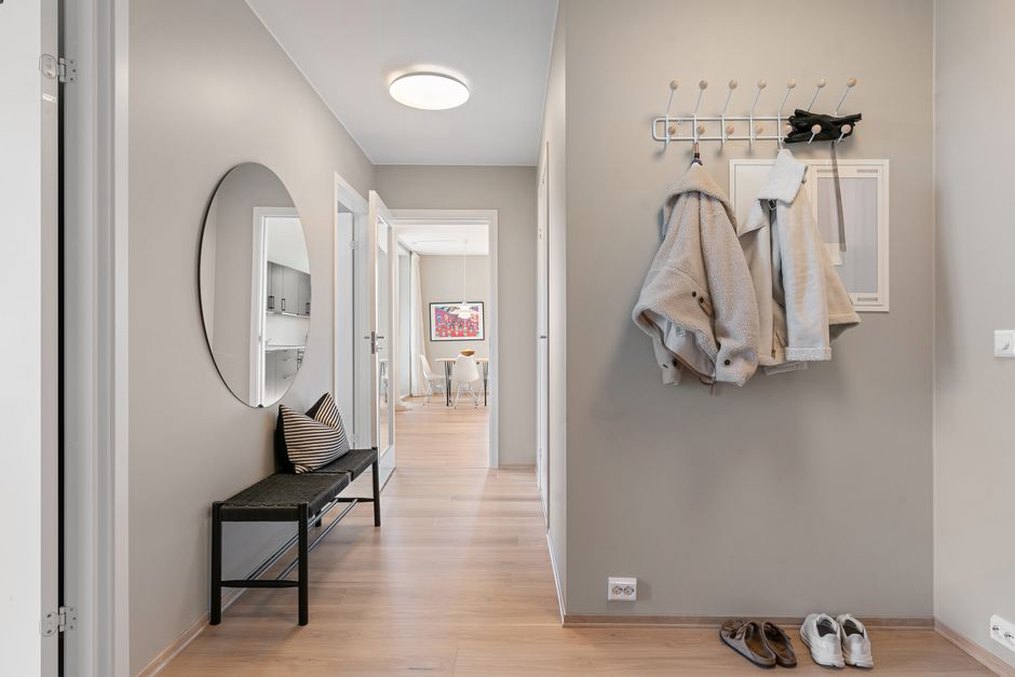
Use wall height without making the wall a hazard
Put everyday items within easy reach
Hooks take up less floor space than a coat stand, but the coats still need room. Hooks behind a door are no help if the hanging clothes stop it opening fully. A small shelf or tray can hold keys above a narrow console; avoid using it for objects that may fall when the door closes. Put frequently handled items where their users can reach them comfortably.
Reserve high shelves for light items used infrequently, rather than making a step stool necessary for daily essentials. If the wall construction or fixing points are uncertain, have the mounting assessed before loading a rail or cabinet. For adhesive hooks, check the stated capacity and surface suitability, and consider what could be hit if a hook fails.
Choose shallow, contained storage
A narrow cabinet can hide clutter, but its doors and drawers need space to open. Open shelves make things easier to find, though protruding shoes and loose straps can creep into the walking area. A low-profile unit with a defined place for each item may serve the entrance better than a larger one that creates a bottleneck.
Give a few containers distinct jobs: one for gloves and hats, perhaps another for equipment that must leave with a particular person. Labels help in shared entrances when similar-looking items have different owners. Deep catch-all baskets tend to bury whatever someone needs in a hurry.
Make arrivals and departures easier to manage
Arrange the entry around the act of leaving as well as storing belongings. Keep keys, access cards, and other essentials near the exit, but not where they are visible or reachable through an exterior opening. A small designated spot for outgoing items can keep a package off the floor in front of the door. If that spot grows into long-term storage, clear it.
Check the lighting with someone entering while carrying things. Can they see the floor, door hardware, and storage without stepping into a dark corner? Existing fixtures may be sufficient once lamps are clean and working, though new furniture can cast shadows. In a facility, changes to lighting or electrical controls belong with the appropriate maintenance process. Do not run a loose lamp cord across the entrance.
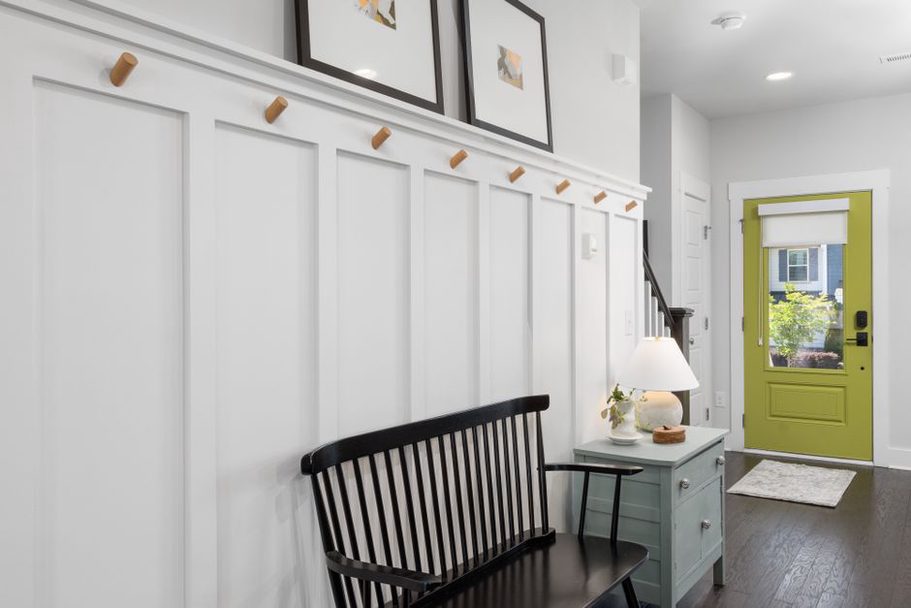
A seat helps when changing footwear only if it leaves a usable path and does not block the door. In a very tight entry, a stable seat just outside the entry zone may work better than a bench squeezed inside. If damp gear goes into bench storage, allow for ventilation and routine cleaning.
Design for dirt, moisture, and inspection
Storage should be easy to move or clean around. Grit gathers under low cabinets and behind shoe racks; damp items can mark walls and floors. Leave access to wipe surfaces and spot leaks, damaged finishes, or recurring wet patches. If water regularly crosses the threshold, address its source instead of hiding it under a larger mat.
Choose materials for the wear they will see. Smooth, cleanable surfaces are easier to maintain near wet shoes than finishes with dirt-catching grooves. A rack that lifts out for cleaning may be preferable to a fixed unit with an inaccessible gap below. At a staff entrance exposed to worksite mud or equipment, cleaning frequency and finish durability matter more than concealing everything.
After installing storage, test the entrance at its busiest time. Open the door fully. Have one person retrieve an item while another passes, and check where wet footwear goes. If the route pinches, move or remove something rather than adding another organizer. A weekly look at mat edges, the tray, and the space behind the door will show whether the layout still works.