
A bottle that leaks beside field notes is no use, even if it keeps water cold all day. Think about where it will be carried, where it can be refilled and how you will clean it. Those details are more useful than a long list of features.
Choose capacity for access to drinking water
Capacity comes down to refill frequency and carried weight. One litre of water weighs roughly one kilogram, before you count the bottle. A larger container makes sense when refills are difficult, but it takes up more space and may be awkward to handle with gloves. At a desk or site office with a nearby tap, a smaller bottle may be easier to refill and wash.
Check where the bottle needs to fit: a bag pocket, an equipment case or a stable surface away from drawings and electronics. Dimensions matter as much as volume. A wide insulated bottle may not fit a narrow pocket; a tall, narrow one may tip over easily.
Compare materials by their practical limits
Stainless steel, plastic and glass each have trade-offs in weight, visibility, impact resistance and maintenance.
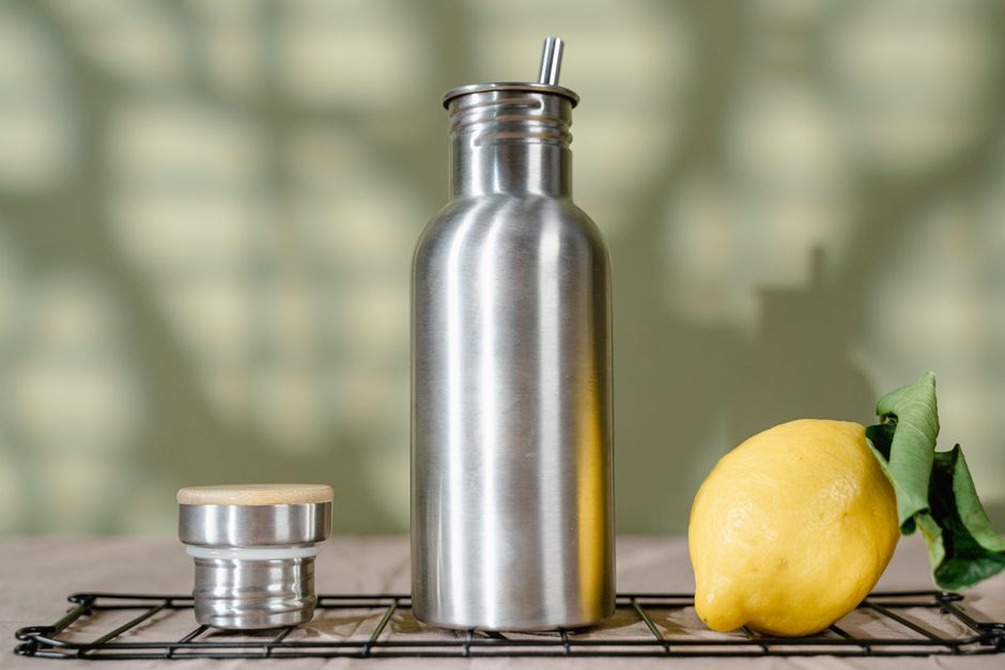
- Stainless steel: Usually durable, but its opaque body makes it harder to judge cleanliness at a glance. Double-wall versions can reduce heat transfer and condensation, though they add weight and bulk. Check whether replacement lids and seals are available.
- Plastic: Often lighter and available in easy-to-carry shapes. Inspect it for cracks, deep scratches, persistent odours and damage around the neck. Follow the maker’s dishwasher and temperature instructions; do not assume it can tolerate hot water.
- Glass: Does not readily retain flavours, and you can see inside it. It can break if dropped, however. A sleeve may improve grip but will not eliminate that risk. Glass may be unsuitable where broken fragments would create a hazard.
For drinking-water use, look for clear manufacturer information about intended use and temperature limits. A claim such as “chemical-free” tells you little about performance: every material is made of chemicals. If you might use the bottle for hot drinks, check that both the vessel and lid are designed for them. A bottle made for cold water is not automatically suitable for boiling liquid.
Examine the lid before the bottle body
Leaks often start at the closure. A screw cap with an intact gasket is relatively easy to inspect. Flip tops, straws and push-button lids can make one-handed drinking easier, but they add joints and small parts that need cleaning. “Leak-resistant” does not mean “leakproof.” Check the manufacturer’s guidance before carrying a bottle on its side, including how the cap must be closed for any leak claim to apply.
Look for parts you can actually clean
Take off the lid and look at the threads, gasket groove, mouthpiece and any vent. Can a brush reach the surfaces that touch water or lips? Can you remove a straw without tools? A narrow opening may be comfortable to drink from but difficult to scrub or fill with ice. A wide opening is easier to inspect, though it may spill more readily when you drink on the move.
The seal should sit securely, be removable for cleaning if the instructions allow it, and be replaceable when worn. Tiny proprietary parts can shorten the life of an otherwise sound bottle. Do not modify a cap or fit an ill-fitting gasket to fix a leak; the closure may become unreliable.
Match insulation and grip to the setting
Insulation can help when water sits for hours in a warm office or outdoor work area. Double-wall vacuum bottles generally hold temperatures steadier than single-wall ones, but results depend on the whole design and how often you open the lid. Insulation does not make a drink safe to leave indefinitely, nor does it guarantee a cool exterior when the contents are hot.
Grip matters too. A smooth, heavy bottle can be difficult to control with wet or gloved hands. Check the lid diameter and surface texture, and see whether the carry loop is sturdy enough for ordinary handling. A loop is not necessarily a rated attachment point for securing a bottle to equipment or preventing it from falling from height. Keep the bottle where it cannot roll into a walkway or onto sensitive instruments.
Check the cleaning routine and service life
Wash the bottle regularly with warm water and detergent, paying particular attention to the lid and seal. Follow the manufacturer’s instructions for dishwasher use, soaking and reassembly. Dry the parts thoroughly before storage; closing a damp bottle can encourage stale odours. Clean it promptly after using it for anything other than water, since residue can collect in a straw or gasket channel.
Before buying, find out whether you can get replacement caps, seals or straws. Replaceable parts do more for long-term reuse than a fashionable finish. Consider how the exterior coating will hold up against keys, tools or rough storage. Cosmetic scuffs may not affect drinking safety, but they can make damage harder to spot.
Cracks, corrosion, a smell that persists after thorough cleaning or a cap that no longer seals call for a closer inspection. Replace the affected part where possible. If the drinking rim of a glass bottle chips, stop using it rather than trying to smooth the edge. Before carrying any bottle near documents or electronics, fill it with water, close it as instructed and leave it on its side over a sink for a short leak test.