
Before joining a drainage clean-up, find out whether volunteers will stay on public paths or enter land controlled by a road or rail authority. Access permissions, briefings and suitable tasks depend on that boundary. A live carriageway, track corridor, unstable slope or confined culvert is no place for an untrained volunteer, however useful the work may be.
Community groups may need help collecting litter, surveying vegetation or recording barriers on accessible routes near transport infrastructure. For a first shift, knowing where your role ends matters as much as knowing when to arrive. Inspections, repairs and traffic management belong with trained personnel.
Establish the task and who controls it
Read the shift description and ask the organizer for anything it leaves out: the exact meeting point, finish time, activity, site boundaries and name of the shift leader. Confirm that the group has permission to use the area and ask whom to contact if the leader is delayed. “By the bridge” is not a useful meeting point if there are several approaches or one is beside moving traffic.
Find out what volunteers are meant to produce. Collecting visible litter from an approved path, recording blocked drains from a safe vantage point and documenting accessibility barriers for a local campaign call for different tools and records. Ask whether photographs are needed, how observations should be logged and who will receive them. If the organizer cannot explain the work area or supervision, get clarification before the shift rather than improvising on site.
Questions that resolve most first-shift uncertainty
- Where may volunteers work, and which areas are off limits?
- Will there be an on-site briefing, a named supervisor and a way to contact them during the shift?
- What equipment and protective items are provided, and what should volunteers bring?
- What physical demands, accessibility needs or facilities should you plan around?
- What happens in bad weather, if the site closes or if you need to leave early?
Brief answers are fine if they give you something to act on. “Stay on the pedestrian path and report debris in the drainage channel to the leader” is more useful than “use common sense.”
Dress for the actual environment
Check the forecast and ground conditions rather than dressing for the season alone. Uneven paths, wet grass, loose aggregate and standing water call for sturdy, closed-toe footwear with good grip. Wear clothes you can move in and layers if you may alternate between walking and standing still. If high-visibility clothing, gloves or eye protection are required, ask what the organizer supplies and what type you need. Ordinary gloves may not offer the protection a particular task requires.
Take water, any medication you need and some food if the shift crosses a usual meal break. Bring sun or rain protection when appropriate. Keep belongings compact and secure, away from walkways. If an injury, condition or mobility requirement affects the work you can do, tell the organizer enough to arrange a suitable task; you do not need to share unrelated medical details with the group.
Arrive early enough for the briefing
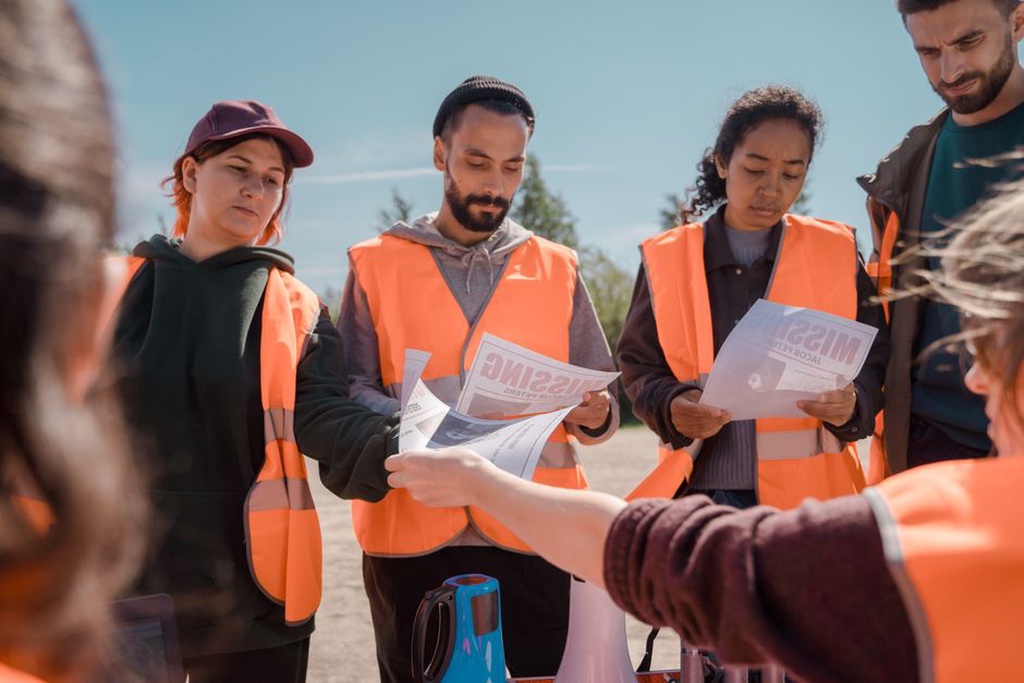
Reach the stated meeting point shortly before the shift begins, rather than heading into the site on your own. Sign-in, introductions and equipment distribution may be part of the organizer’s safety process. If you cannot find the group, use the contact details provided. Do not enter a fenced area or follow someone who merely appears to be working nearby.
At the briefing, identify the leader and confirm the work-area limits, where first-aid supplies are kept and how to report an incident. Find out where breaks will take place and how the group will account for everyone at the end. Ask for a demonstration before using an unfamiliar tool, including a litter picker or hand tool. Experience using one in a garden does not necessarily cover working beside a public path or drainage feature.
Use stop-work boundaries, not guesswork
Conditions near transport infrastructure can change during a shift: water may rise, a surface may give way, maintenance crews may arrive or a quiet path may become busy. Stop and tell the supervisor if the work would mean reaching into traffic, stepping onto railway property, climbing a structure, entering a culvert or working below an unstable bank. The same applies to handling an unknown container or moving a heavy object without an agreed method. A better photograph or a more thorough clean-up is no reason to cross a barrier.
Leave suspected sharps, chemical containers, electrical equipment and other potentially hazardous debris where they are. Mark the location only if the organizer has a safe procedure, then report it. When documenting infrastructure, describe what you can see—water emerging through a retaining wall or a visibly damaged handrail, for example. Do not declare a structure safe or attempt a repair.
Match your contribution to your role
On a first shift, take a defined task, work with your assigned partner if you have one and check back when the task is done. Resist moving into another area just because it needs attention. It may have been excluded because of land ownership, buried services, ecological constraints or exposure to vehicles—none of which may be obvious from the path.
For observation work, precise records help more than dramatic descriptions. Note the location using the organizer’s agreed reference, the time, what you could see and any immediate obstruction to public use. Keep observation separate from interpretation: “water crosses the footpath at the north end of the underpass” records a condition; “the drainage design has failed” requires investigation. Ask before photographing people, private property or controlled infrastructure, and follow the group’s rules for storing and sharing records.
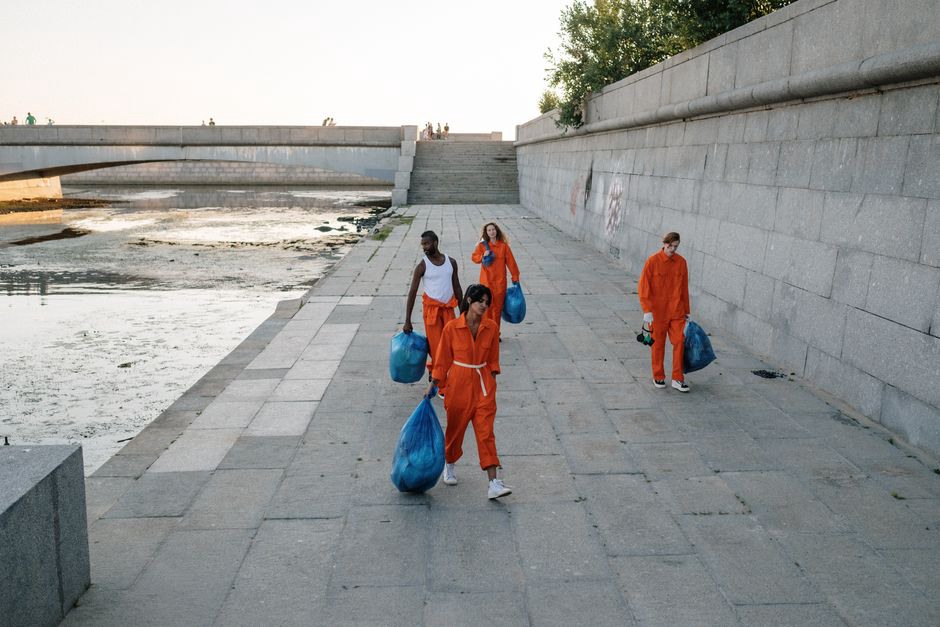
If a member of the public asks what the group is doing, use the approved short explanation or refer them to the leader. Do not promise a repair or offer an unofficial assessment of a bridge, slope or pavement. Community reports can flag problems, but inspection and intervention decisions rest with the responsible asset owner and qualified specialists.
Finish with a useful handover
Return tools as instructed. Tell the leader about unfinished work, hazards you avoided, equipment problems and observations needing follow-up. Send notes through the agreed channel rather than leaving photographs in an informal message thread, where location and context can be lost. Sign out if the group tracks attendance so the leader knows everyone has left the site.
Check the meeting area for bags, collected waste and temporary markers before you go. If you spotted a blocked drain but could not approach it safely, give the leader its exact path-side location and the time you saw it. That is useful information without turning your volunteer shift into an unauthorized inspection.