
An electricity bill can increase even if the per-kWh rate has not changed. A longer billing period, higher peak demand, or an estimated meter reading may account for the difference. At a tunnel plant room, pumping station, rail maintenance building, or signals depot, start by separating how much electricity was used, when it was used, and how the tariff charges for it.
Bill layouts and terms vary by utility and jurisdiction. The line items below are common examples, not a universal tariff. Check the definitions on the statement and in the applicable tariff before relying on a calculation.
Start with the account, site, and billing period
The account number identifies the customer relationship; the service address identifies where electricity is delivered. For an organization with several facilities, the mailing address may not be the metered site. Check the meter or service identifier too, particularly where a compound has separate supplies for traction-related equipment, lighting, offices, or construction works.
Then check the billing dates and number of days covered. A 35-day bill will often exceed a 28-day bill even when daily consumption is unchanged. Dividing billed energy by billing days makes a better first comparison: 14,000 kWh over 28 days and 16,500 kWh over 33 days both average 500 kWh per day. This does not account for weather, operating hours, or equipment load, but it stops a longer billing period from looking like an efficiency problem.
The statement date is when the bill was issued; the due date is when payment is expected. A carried-forward balance or late-payment charge belongs to the account ledger and may have nothing to do with current-period consumption.
Check how the meter reading became billed energy
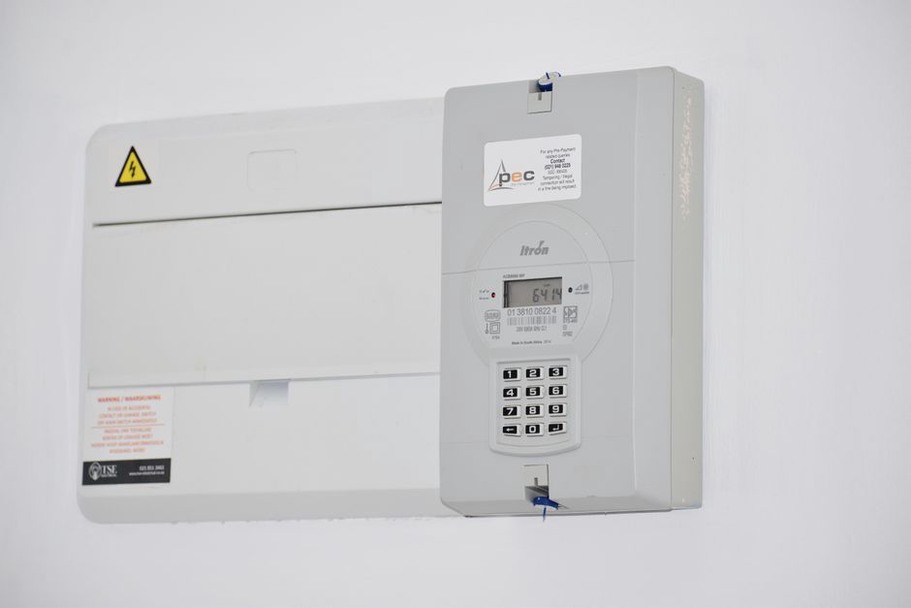
Previous and current readings
A straightforward bill shows previous and current meter readings and their difference in kilowatt-hours (kWh). Readings of 42,180 kWh and 44,680 kWh differ by 2,500 kWh. Some meters display units that need a multiplier: with a multiplier of 10, a difference of 250 units represents 2,500 kWh. Check whether the bill has already applied it. Applying the multiplier to an adjusted billed quantity would count it twice.
Larger sites may have several meters or registers. Registers can track different time periods; separate meters may serve different equipment groups. Where the bill shows multiple energy rows, establish whether they add together or break down a total shown elsewhere.
Actual, estimated, and corrected readings
An actual reading generally comes from a meter read or utility-accepted remote measurement. An estimated reading stands in when usable data are unavailable. When an actual reading follows an underestimate, the resulting catch-up bill may look unusually high; a correction can also reduce the amount billed.
If a reading looks implausible, note the meter identifier, reading dates, read type, multiplier, and billed kWh before contacting the provider. Compare them with authorized meter records or building-management data if available. A mismatch is a reason to investigate, not proof of a billing error: submeter boundaries, timestamps, and data gaps may differ from those of the utility’s revenue meter.
Separate energy use from demand
Energy is accumulated consumption, measured in kWh. Demand is a rate of electricity use, generally measured in kilowatts (kW). A 20 kW load running steadily for three hours uses 60 kWh. Where a demand charge applies, it is usually based on a measured peak over a defined interval, not on the three-hour energy total.
This matters at sites with large motors, ventilation fans, pumps, lifts, or electric heating. Two sites can use the same monthly kWh but incur different demand charges if one concentrates its use into shorter periods. The bill or tariff should define the measurement interval, the peak calculation, and whether billing uses the current month’s peak or another rule. Some tariffs set a minimum billable demand or refer to a previous peak; a single total will not reveal which rule applies.
Demand is not installed equipment capacity. Adding motor nameplate ratings does not establish the billable peak: the motors may not run together or at rated input. Conversely, a brief high-load event can affect a demand-based bill while adding relatively few kWh.
Read each charge by its unit
The unit beside a rate often says more than the charge name. A per-kWh rate varies with energy; a per-kW rate depends on billable demand; a daily or monthly rate follows the billing period. Taxes and adjustments may be percentages or separately calculated amounts. Common line items include:
- Customer, service, or standing charge: a fixed amount associated with the account or connection, sometimes prorated by billing days.
- Energy charge: billed kWh multiplied by one or more per-kWh rates, potentially split by time band or pricing tier.
- Demand charge: billable kW multiplied by a per-kW rate where demand pricing applies.
- Delivery or network charge: a charge for distribution infrastructure. It may be fixed, energy-based, demand-based, or a combination.
- Supply or generation charge: the electricity commodity component, itemized separately from delivery in some markets.
- Adjustments, levies, and taxes: items defined by the applicable tariff or law, each with its own calculation basis.
Names differ between providers. “Distribution” alone does not tell you whether a charge is fixed or consumption-based. Before adding “supply” and “delivery” to a printed subtotal, check whether that subtotal already includes them.
A small arithmetic check
Suppose a statement lists 2,500 kWh at 0.12 currency units per kWh, a 30-unit fixed charge, and a 15-unit adjustment. Those visible items total 345 units: 300 for energy, plus 30 and 15. If the amount due differs, check for taxes, credits, previous balances, and other charge rows before assuming an arithmetic error. The figures illustrate the calculation, not a representative tariff or price.
Understand time-of-use and tiered prices
Under a time-of-use tariff, the rate depends on when electricity is used. A bill may show peak, off-peak, and other bands. The tariff defines the clock times, weekdays, holidays, and seasonal rules; check whether band times use local time and how clock changes are handled. Interval meter data may explain a higher energy charge despite unchanged total kWh: more consumption may have fallen in a higher-priced band.
Tiered pricing works differently. Rates change after consumption crosses quantity thresholds within the billing period. If a bill assigns 1,000 kWh to one tier and 500 kWh to another, those rows may represent 1,500 kWh in total, not 2,500 kWh. Some tariffs prorate thresholds for billing periods of different lengths, so check the printed rules rather than assuming a constant monthly threshold.
A bill alone rarely establishes whether changing an operating schedule will save money. Ventilation, pumping, signaling, and safety systems have service requirements that cannot be decided on price alone. Review any proposed change against those requirements and the facility’s actual tariff.
Look for power factor and reactive-energy items
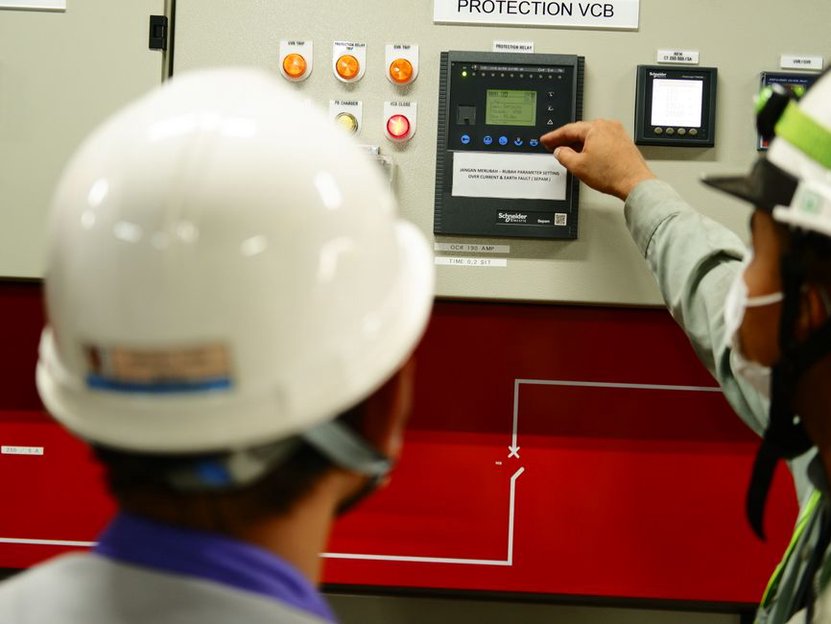
Some commercial and industrial tariffs include a power-factor adjustment or reactive-energy charge. Active energy, measured in kWh, is the energy typically billed as consumption. Reactive energy may appear in kilovolt-ampere reactive hours (kvarh), while apparent demand may appear in kilovolt-amperes (kVA). These quantities are related but not interchangeable.
Motor-heavy facilities may encounter these items, depending on the tariff and metering arrangement. A poor-power-factor line item does not diagnose the cause or justify specifying corrective equipment. Check the tariff’s measurement method and the metered data; persistent issues call for assessment by a qualified electrical specialist familiar with the installation.
Reconcile the current charges with the amount due
Current charges and amount due are not always the same. The statement may record a payment made after the previous billing date, carry an unpaid balance, apply a credit, or include a deposit adjustment. Trace the ledger in order: opening balance, payments and credits, current charges, then closing balance. A payment shown on the statement does not reduce the electricity consumed in the current period.
Check whether taxes apply to every charge or only certain components. Rounding can explain small differences between a manual sum and the printed total, especially when the displayed rates have fewer decimal places than those used in billing. For a material discrepancy that remains unexplained, request an itemized explanation from the provider rather than guessing which line is wrong.
Compare bills without hiding operational changes
For an infrastructure operator, it helps to track billing days, total kWh, kWh per day, billed peak demand, major time-band quantities, and current-period charges separately. Compare bills for the same meter and service boundary. A new pump, temporary work compound, or meter reassignment can undermine a year-on-year comparison even when every bill is arithmetically correct.
| Bill field | First comparison to make | Important limitation |
|---|---|---|
| Billing dates | Days in each period | Weather and operating schedules may differ |
| Total kWh | kWh per day | Does not show when electricity was used |
| Peak demand | Billable kW and tariff rule | May reflect a short measurement interval |
| Time-band kWh | Share used in each band | Band definitions may change by season |
| Amount due | Current charges versus account balance | May include past payments or arrears |
If kWh per day rises, compare the change with equipment runtime, occupancy, temperature, maintenance records, and known incidents. A rise in whole-bill cost per kWh is harder to interpret: fixed charges, demand charges, taxes, and credits can shift that ratio without changing the posted energy rate.
When a bill merits a closer check
Take a closer look when the meter identifier changes unexpectedly, an actual reading becomes an estimate, the billing period is unusually long, billed demand jumps without an evident operating change, or a new charge appears. Gather the affected bills and identify the line item, dates, quantities, rates, and calculation you cannot reconcile. Ask the provider for the relevant tariff provision or reading history; “the total is too high” gives them less to investigate.
If interval data are available, keep their timestamps and units when exporting them. A billed peak of 180 kW, for example, cannot be verified against a daily-kWh chart. You need interval demand data and the tariff’s definition of billable demand to check that figure.