
A basil plant on a dim kitchen counter can look healthy for a week, then put out long, weak stems and small leaves. That usually calls for a closer look at the light, not more water or fertilizer. Before buying pots or seeds, find the brightest available spot and note how many hours of direct sun it gets.
Start with the growing conditions
Check the light before choosing herbs
Most culinary herbs need substantial light for compact, flavorful growth. A bright window with several hours of direct sun may be enough, but conditions change with the season, nearby buildings and the direction the window faces. Watch the spot throughout the day rather than judging it at noon. If plants lean toward the glass or develop widely spaced leaves, they may need more light.
Where daylight falls short, a full-spectrum grow light can provide a more consistent source. Follow the manufacturer’s positioning guidance, use a timer to keep a regular daily cycle and keep leaves clear of any lamp that gets hot. Extra light can prevent the weak growth sometimes mistaken for a fertilizer problem, though it will not help roots sitting in water.
Keep plants away from heating vents, cold drafts and glass that chills at night. A kitchen may make harvesting convenient, but light and a stable environment matter more.
Pick herbs that suit the space
Start with two or three herbs you cook with regularly. Basil and parsley suit a bright spot if you can keep up with their watering needs. Chives can be cut a few stems at a time, while vigorous mint belongs in its own container. Thyme, oregano and rosemary need plenty of light and prefer their mix to dry somewhat between waterings. Rosemary, in particular, can struggle in a dim room.
Young plants give you a harvest sooner than seeds. At the nursery, look for firm stems, healthy new growth and leaves without visible pests. Pass over plants with persistently soggy mix or roots packed into a dense mat. Seeds cost less per plant and offer more varieties, but germination and early growth need closer attention. Check the packet for sowing depth and spacing; not every seed should be buried the same way.
Set up containers that drain
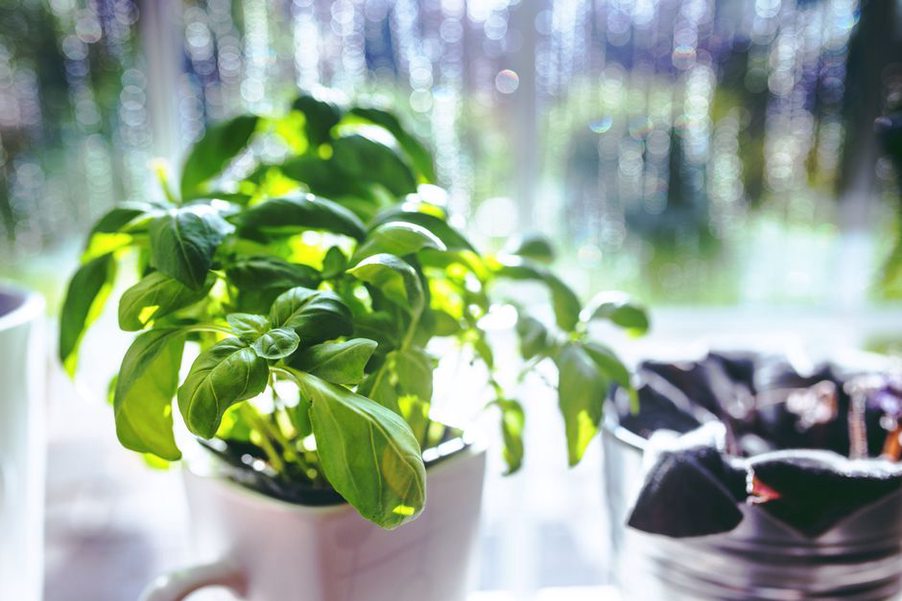
Choose a pot with a drainage hole and a saucer you can empty. In a decorative pot without holes, water can collect around the roots unnoticed. To use one, keep the herb in a smaller draining pot inside it and take that pot out for watering. Give the roots room, but avoid putting a small plant in a large volume of mix that will dry slowly.
Use fresh potting mix made for containers rather than soil dug from the yard. Potting mix holds moisture while leaving air around the roots; garden soil can compact in a small pot. Moisten dry mix before planting, set a transplant at roughly its previous depth, then water until excess runs through the drainage hole. Empty the saucer. Give mint its own pot so it cannot crowd the other herbs.
Use a simple care checklist
- Every few days: Feel below the surface of the mix and check whether the pot feels light. A dry-looking surface alone is not a reason to water.
- When watering: Wet the mix thoroughly, let it drain and discard standing water. Different herbs—and pots—dry at different rates.
- Weekly: Check beneath leaves and along stems for insects, webbing, sticky residue or discoloration. Notice whether new growth is compact or stretched.
- At harvest: Make clean cuts, leave enough foliage for regrowth and remove dead leaves from the pot.
- Periodically: Look for crowded roots at the drainage holes. If a plant repeatedly dries out soon after watering, reassess its pot and mix.
Water according to the plant and pot
There is no reliable watering calendar for all indoor herbs. Pot size, light, temperature, plant size and potting mix each affect how fast water is used. Put a finger into the mix to check below the surface. Basil and parsley generally need more even moisture than thyme or rosemary, whose roots are more vulnerable to constant wetness. Wilting can mean dry mix, but it can also signal root damage in saturated soil. Check before adding water.
Yellow leaves, a stale smell and mix that stays wet for days point toward a watering or drainage problem. Rapid wilting in a very light pot points more strongly toward dryness. If the signs conflict, inspect the roots and growing conditions rather than treating every yellow leaf with fertilizer.
Feed lightly and harvest for regrowth
Potting mix may contain nutrients, but the supply diminishes as plants grow and are watered. Once an herb is established and actively growing, use a fertilizer labeled for edible container plants at the label rate. Extra fertilizer cannot make up for poor light and may produce soft growth. Reduce or pause feeding when growth slows markedly during darker months.
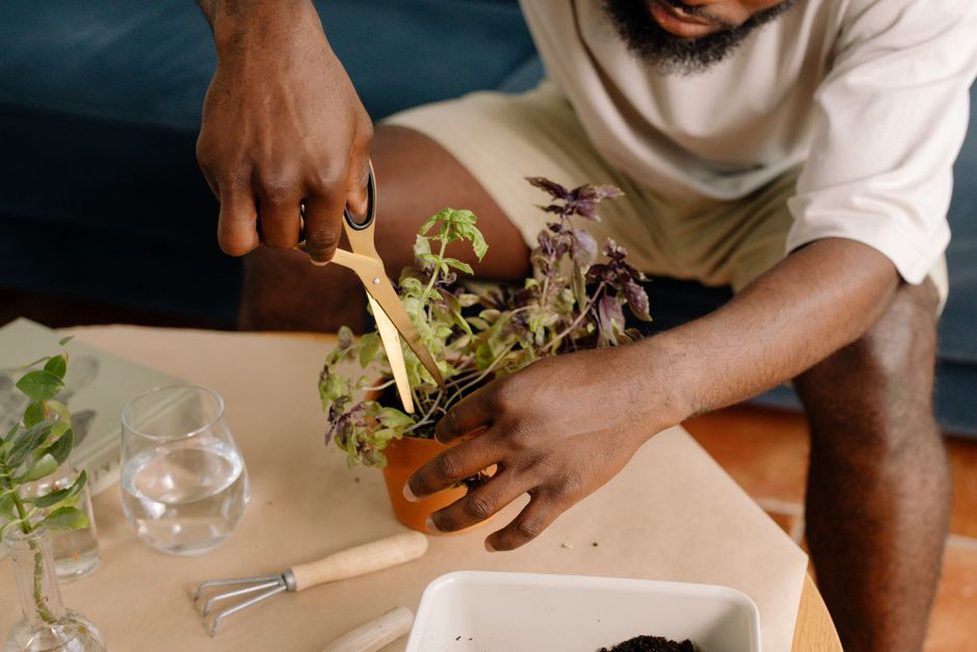
For basil, cut a stem just above a pair of leaves so shoots can grow below the cut. Snip chives near the base rather than repeatedly trimming their tips. With parsley, take the larger outer stems and leave the center growing. Do not strip most of the foliage from a small plant at once; it needs leaves to replace the harvest. Wash herbs before eating them, especially after any pest treatment.
Diagnose problems before changing everything
Leggy stems and small, widely spaced leaves commonly point to too little light. Brown, crisp edges are less specific: dry mix, hot air and inconsistent watering can all play a part. Drooping alongside persistently wet mix calls for a root check. When you can, change one condition at a time and watch the new growth. Damaged leaves rarely recover, so they tell you little about whether a change worked.
Aphids, spider mites and fungus gnats can turn up on indoor herbs. Isolate an affected pot while checking nearby plants, and remove badly infested foliage. Use a pest-control product only if its label permits use on edible plants, and follow its directions and harvest restrictions. Fungus gnats often accompany consistently moist mix; adjusting watering may help, though larvae can require further control. Never spray an unidentified household product on leaves you plan to eat.
Flowering can change what you harvest. Basil often produces fewer tender leaves after it flowers, so pinch off developing flower tips if leaves are the goal. Some herbs eventually turn woody or decline even with good care. Replacing an aging plant may make more sense than repeatedly adding water or fertilizer.
Make the first harvest manageable
Let a new transplant settle and put on fresh growth before taking a substantial harvest. For the first basil cutting, choose an established stem, find a healthy pair of leaves below its tip and cut just above them with clean scissors. Use the leaves promptly or refrigerate them briefly in a suitable container. A few days later, look for new shoots below the cut: they show how the plant is responding.