
Groundwater entering a tunnel heading can destabilize the face. Pumping it away may also lower water levels beyond the excavation, reduce flow to a spring or change ground conditions beneath a nearby building. The consequences depend on the source of the water, its discharge point and whether the change persists after construction. Those pathways need to be investigated before excavation starts.
The work affects its surroundings through more than the heading itself. Site clearing, shaft excavation, dewatering, spoil removal, ventilation and deliveries all create potential impacts. An urban rail tunnel beneath utilities poses different constraints from a mountain tunnel near a stream. For each likely source of change, the assessment should identify the affected receptor and what can be measured during construction.
Establish a baseline that construction can be compared against
One preconstruction reading seldom captures normal variation. Groundwater levels respond to rainfall and seasonal recharge; stream flow and water quality change naturally; urban background noise varies by hour. Baseline records should show when measurements were taken and under what conditions. Records of existing wells, drainage systems, buildings and contaminated land can also help distinguish a construction effect from a pre-existing problem.
Ground investigation has an environmental role as well as a construction one. Hydraulic connections through fractures or permeable layers may matter even if they do not govern the excavation method. Sampling may identify spoil that cannot be handled as clean excavated material. Where uncertainty remains, the construction plan should state a testable assumption rather than bury it in a single predicted value.
Groundwater and surface-water pathways
Excavation can intercept groundwater; shafts and temporary works can obstruct or redirect shallow flow. Drawdown may affect wells or springs and cause settlement where compressible soils lose pore pressure. Pressurized water can also carry sediment into the works. A low inflow rate at one face—or a dry borehole—does not, by itself, show that the wider groundwater system is unaffected.
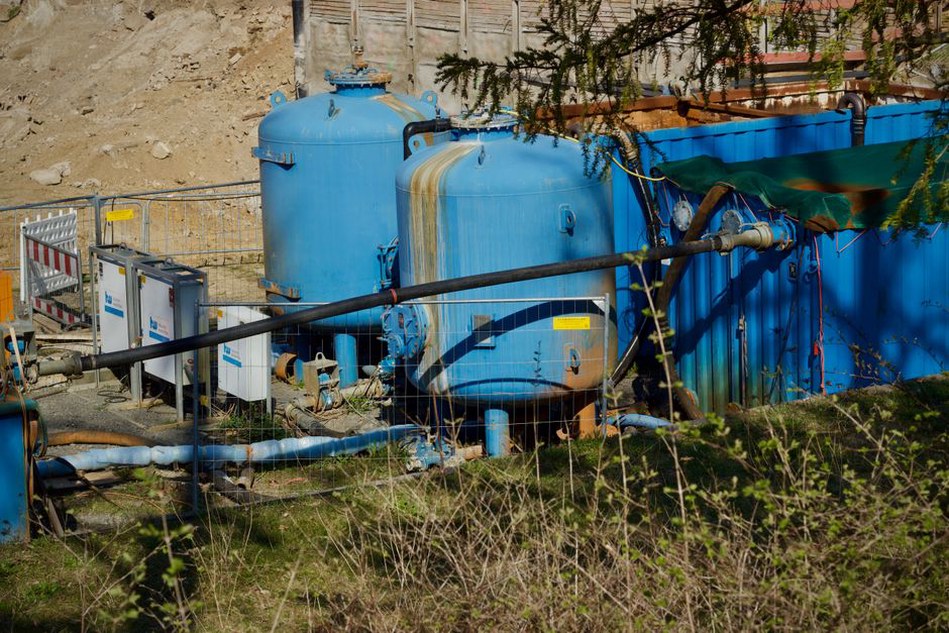
Water pumped to the surface may contain suspended solids, naturally occurring minerals or contaminants encountered underground. Treatment and discharge arrangements should reflect test results and the receiving water, not pump capacity alone. Controls may include keeping clean runoff separate from worksite water, containing sediment and checking discharge quality. Permits and monitoring requirements vary by jurisdiction and site.
Surface works need the same scrutiny. Shafts, portals and access roads alter runoff routes, while an intense storm can wash exposed soil or stored fines into a stream. Temporary drainage must be maintained as construction progresses, especially when a shaft compound expands or a stockpile moves. For long-term water pathways and operational recovery, climate resilience for tunnels addresses a different phase of the problem.
Spoil is a logistics and materials question
Excavated material can dominate a tunnel project’s surface footprint. Its volume, moisture and composition affect truck movements, stockpile space, dust and disposal options. Bored material may contain conditioning agents; blasted rock may differ sharply from weak, wet ground elsewhere along the alignment. Calling material “soil” or “rock” is not enough to establish that it can be reused.
A workable spoil plan distinguishes expected material classes and sets out how each will be tested, stored, transported and tracked. Testing needs to cover proposed reuse as well as contamination and other handling constraints. Covered loads, wheel cleaning and managed haul routes can limit impacts, provided they are inspected and maintained. If classifications change during excavation, handling methods and destinations may need to change with them.
Questions to resolve before choosing a handling route
- What will be excavated? Compare investigation results with material observed at the face or recovered by the machine.
- Can streams be kept separate? Mixing clean material with suspect or very wet material may rule out an otherwise viable reuse option.
- Where will it go? Confirm receiving-site acceptance criteria and transport implications before production peaks.
- What changes the plan? Establish a process for unexpected staining, odor, debris or test results; visual inspection alone is not enough.
Noise, vibration, dust and local access
People near a shaft often experience the surface compound more directly than excavation far below. Fans, generators, muck handling, deliveries and nighttime lifting can create sustained noise even when no single activity seems exceptional. Blasting or piling may add intermittent vibration. Its effects depend on ground transmission, building condition and the sensitivity of nearby equipment. Predictions help plan controls, but measurements at representative receptors are needed to check actual exposure.
Controls should address the source. Enclosures and maintenance can reduce plant noise; scheduling can limit disruptive short-duration work; site layout can move stockpiles or loading points away from sensitive boundaries. Dust control works best when it prevents release during cutting, handling and vehicle movement, rather than relying on cleaning afterward. Access plans also need to keep pedestrian routes and emergency access clear when deliveries or spoil vehicles queue.
Vibration readings need context. A peak may come from construction, traffic or another local source, while an average can obscure a short event that matters to a sensitive receiver. Logs that connect measurements to construction activities make investigations more useful than unexplained alarms.

Ecology, land take and construction staging
Most ecological disturbance occurs where the tunnel project reaches the surface: at portals, shafts, compounds, spoil areas and access routes. Vegetation clearance can fragment habitat; lighting and noise can affect nearby species; sediment runoff can carry impacts beyond the site boundary. Surveys should reflect the likely receptors and the timing of work. An observation from one season may not describe how a site is used throughout the year.
Staging can limit the area disturbed at any one time, but temporary land is still unavailable for its previous use. Plans should show how topsoil will be protected, exposed slopes stabilized and areas restored. Restoration needs a defined check of its success, not just a record that seeding took place. On constrained urban sites, maintaining access to properties and services may be the more immediate surface concern.
Energy use and the choice of controls
Ventilation, pumping, excavation equipment, concrete production and material transport all use energy. Comparisons between construction approaches should account for these activities across the job, rather than considering excavation energy alone. A method that cuts truck movements, for example, may require more processing on site. The balance depends on haul distances, ground conditions, equipment and the material’s destination.
Environmental controls involve trade-offs too. Pumping can protect the excavation while increasing drawdown risk; sealing an inflow can change pressures elsewhere. Responses need to account for construction safety and the surrounding system, then use observations to test the assumed pathway. Specific thresholds and engineering interventions require project-specific investigation and approval.
Turn predictions into construction decisions
A useful monitoring plan specifies the baseline, measurement locations and frequency, who is responsible, and what happens when a result is unexpected. It distinguishes observations that support a prediction from those requiring investigation. Groundwater levels, discharge quality, settlement, noise and vibration may each call for different locations and response times. An instrument placed only for convenience may miss the receptor of concern.
Consider a shaft beside a shallow well. If its water level falls, compare the reading with rainfall, nearby pumping records and other observation wells before attributing the decline to tunnelling. If the pattern points to a construction-related change, the team needs a documented route to review pumping, inspect the works and notify affected parties as required by the project. Record the decision with the readings so the evidence is available when the next excavation stage begins.