Level ground at dusk can be a puddle by morning. Before pitching a tent, look for shallow drainage channels, loose soil, dead branches overhead and signs that water has recently crossed the ground. For engineers or researchers staying near a remote infrastructure study area, those few minutes of inspection matter more than choosing the flattest-looking patch.
This checklist covers a first overnight stay at an established campground or an authorized field location. It does not replace a fieldwork risk assessment. Restricted access, unstable slopes, rail corridors, construction sites and flood-prone ground need separate controls. If there is no safe place to camp, arrange accommodation elsewhere and travel to the work site during approved hours.
Before departure: confirm that the site is suitable
- Permission and access: Confirm that overnight stays are allowed and find out where camping is permitted. An agreement to access a work site does not automatically include permission to camp.
- Forecast: Check the expected overnight low, wind, rain and official severe-weather warnings shortly before departure. Conditions at a high or exposed site may differ from the forecast for a nearby town.
- Ground and water: Check for flood exposure and consider how rain could affect nearby streams and access routes. Avoid drainage paths and low ground, even if they are dry when you arrive.
- Facilities: Find out whether potable water, toilets and waste collection are available. Pack for the facilities at this site, not those you expect a campground to have.
- Communication: Tell a designated contact where the group will stay, who is going and when to expect a check-in. Agree on what they should do if it is missed.
An established site with known facilities leaves fewer unknowns on a first trip. At a remote field location, the responsible team must settle questions about emergency access, communications and changing ground conditions before anyone plans to stay overnight.
Keep camping separate from hazardous work areas
Do not put tents in a road or rail work zone, beneath a bridge being inspected, at a tunnel portal, beside stored materials or on an embankment simply because it is close to the task. Use an approved location, far enough from operational areas that an ordinary trip out of the tent at night cannot lead someone into one. Find the route to the toilet and other permitted facilities in daylight; a headlamp will not make every unfamiliar hazard obvious.
An overnight stay affects the next workday, too. Poor sleep can reduce attention during inspection, sampling and travel between site locations. Allow time to set up before dark rather than using the overnight stay to extend hazardous work into the evening.
Pack for sleep and weather, not just daylight conditions
Try the basic sleep system at home. Pitch the tent, check for poles, stakes and rain cover, then practice taking it down. Choose a sleeping bag suited to the expected nighttime conditions and a mat that insulates against the ground. A bag’s stated rating does not guarantee comfort for every sleeper.
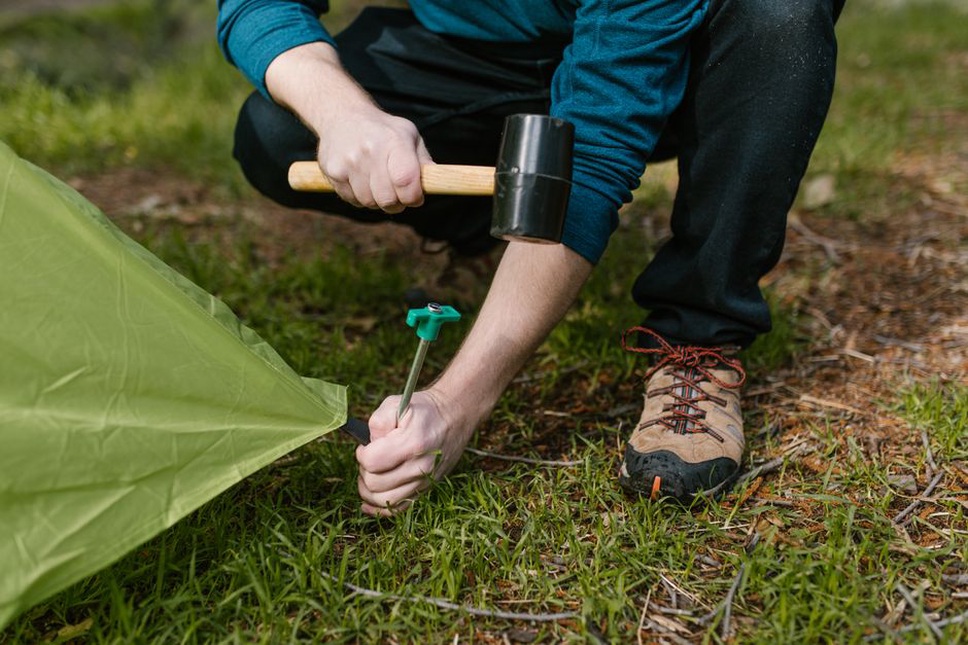
- Shelter: Tent, poles, stakes, rain cover and any repair items supplied with the tent. Check whether the intended surface will take stakes.
- Sleep: Sleeping bag, insulated mat and a small pillow, or packed clothing to use as one.
- Clothing: Layers for the forecast, dry sleep clothes, spare socks and rain protection. Keep the dry set in a protected bag.
- Light: A headlamp or flashlight with a charged spare battery or suitable backup. Test it before leaving.
- Personal items: Required medication, hygiene supplies, sun protection where relevant and a compact first-aid kit suited to the group’s training.
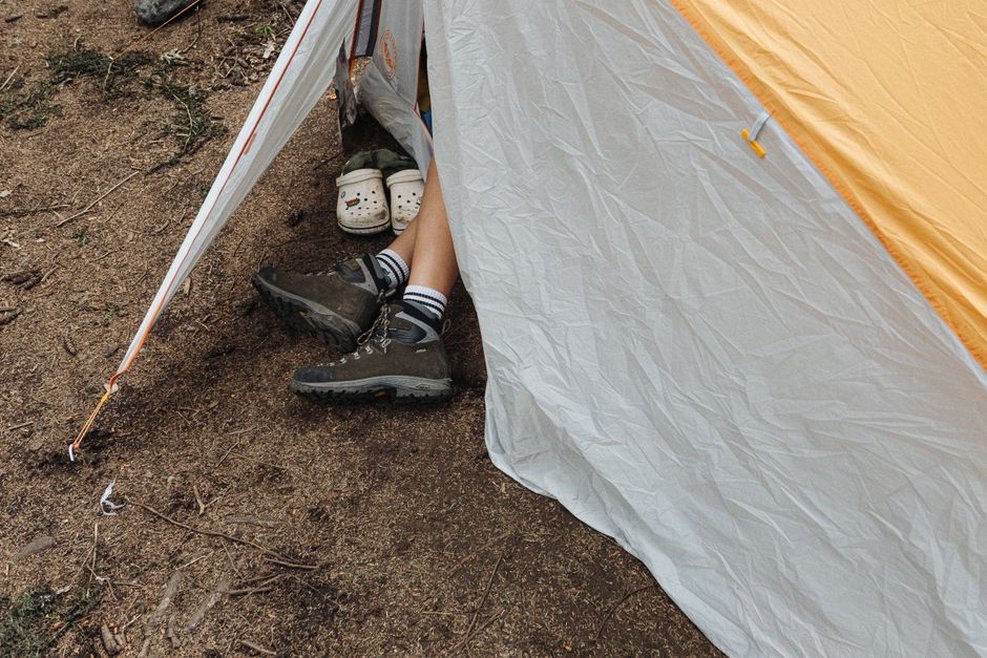
Footwear needs to suit the campsite ground as well as the day’s work. Change out of wet clothing promptly, and put boots where they will stay dry without blocking the tent exit. If cold, wind or prolonged rain is beyond what the equipment can handle, change the overnight plan rather than trying to make do with work clothing.
Plan water, food and waste as one system
Find out whether the site supplies drinking water. If it does not, bring enough potable water for drinking and food preparation, plus a reserve appropriate to the conditions and group. A nearby stream is not necessarily safe to drink from. If a reliable supply cannot be carried, choose a treatment method appropriate to the source and learn to use it before departure.
Choose meals the group can prepare with the time and facilities available. A simple first-night meal avoids handling raw ingredients in poor light. Store food according to site rules and local wildlife guidance, not in a tent where animals may investigate it. If there is no waste collection, bring containers for food scraps and other rubbish. This is a practical difference between an established campground, where water, toilets and disposal may be provided, and an undeveloped site, where the group may have to manage all three.
Check cooking equipment before packing it
If cooking is permitted, confirm the fuel type, assemble the stove at home and check that its controls work as intended. Use it outdoors in a suitable spot away from tents and combustible materials, following its instructions and site restrictions. Never run a fuel-burning stove inside a tent or enclosed shelter: it can produce dangerous carbon monoxide. The Britannica explanation of carbon monoxide describes the danger when the gas builds up in an enclosed space.
Pack a lighter or other suitable ignition method, a cooking vessel, eating utensils and a way to clean them. If fire restrictions or weather could prevent cooking, bring food that does not need heating. Plan disposal for wash water and food scraps as carefully as for other waste; leave neither beside a drainage feature or watercourse.
Set up the site while you can still see the ground
- Walk the permitted area. Look for drainage lines, soft ground, sharp debris, dead branches overhead and signs of recent water flow. Stay clear of slopes or ground that appears unstable; do not walk onto a suspect area to investigate it.
- Choose an approved tent position. Follow campsite spacing requirements and keep access routes clear. Do not block paths, gates or other people’s movement.
- Pitch and secure the tent. Follow its instructions and position the rain cover correctly. Keep cords out of walking routes.
- Locate essentials. Before dark, find the toilet, potable-water point, permitted cooking area and route out of the site.
- Protect dry equipment. Close bags after use and keep spare clothing and sleep equipment protected while unpacking or cooking.
Rain can change how a campsite surface behaves. Compacted gravel may shed water into lower patches; disturbed soil may become slippery. Inspect the ground around the pitch and note the direction water would flow, but do not treat a quick walk-through as a geotechnical assessment of a larger slope. If a ground hazard remains unresolved, move to an approved alternative or leave.
Make the overnight safety plan brief and explicit
Everyone should know whom to contact, how to reach the agreed exit and what would trigger a departure. Charge communication devices and check coverage at the campsite itself, not just at the work location. If reception is unreliable, the fieldwork plan needs another communication arrangement agreed in advance. A saved map can help with orientation, but it cannot call for help.
Check the forecast again before sleep. Rising water, severe wind, lightning exposure or an unexpected loss of safe access may make the site unsuitable. Act on a credible warning before the tent is damaged. Agree on a place to gather if evacuation is needed, and keep footwear and a light within reach overnight.
Before leaving in the morning, account for every person and item. Check the tent footprint for stakes, cord, packaging and small food scraps, then check the cooking area for waste. Note a bent stake or a pole joint that became difficult to fit before repacking; it is easier to deal with before the next overnight assignment.