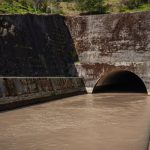
A pavement or track system may look serviceable while hidden conditions are already shaping its long-term performance: moisture retained in the formation, gradual loss of ballast quality, chloride ingress into a bridge deck, or maintenance deferred beyond the economical point. Lifecycle analysis brings these dependencies into view by treating infrastructure as a sequence of material, operational, financial, environmental, and risk consequences rather than an initial construction project alone.
For roads and railways, the assessment follows the asset through route selection, design, construction, operation, renewal, and end-of-life management. Its purpose is not to produce a universal score. It supports defensible choices between alternatives that meet required safety, availability, capacity, and resilience over a defined service period.
What lifecycle analysis includes
Lifecycle analysis is often used as a broad term, although several related assessments answer different questions. A sound decision process keeps them separate while using a shared asset model.
- Life-cycle cost analysis (LCCA) compares costs incurred by the owner and, where relevant, users: investigation, construction, inspection, maintenance, rehabilitation, renewal, traffic or rail possession management, and disposal.
- Life-cycle assessment (LCA) quantifies environmental impacts across asset stages, commonly including greenhouse-gas emissions, energy demand, resource use, and selected emissions to air, water, and soil.
- Whole-life carbon assessment focuses on carbon accounting. It is useful when comparing material quantities, construction activities, maintenance frequency, and end-of-life scenarios.
- Whole-life performance and risk assessment considers whether an alternative can maintain acceptable structural capacity, geometry, ride quality, drainage function, and operational reliability under foreseeable loads and hazards.
An option with low initial cost may require frequent possessions or offer limited flood resilience. A low-carbon material may still need evidence of long-term behaviour in wet, freeze-thaw, or high-load conditions. Lifecycle analysis does not assume that one metric outweighs the others. It identifies trade-offs and tests whether they are acceptable to the asset owner and operator.
Setting the decision boundary before calculations
The most important assumptions are often made before quantities, costs, or emissions enter a spreadsheet. The functional unit should describe the service being compared. For a road, this could be a specified lane-kilometre carrying a defined loading spectrum at a required level of service. For rail, it may be a route-kilometre or track-kilometre supporting defined axle loads, train frequency, speed, availability, and geometry tolerances.
The assessment period should be long enough to capture meaningful renewal cycles. It should not favour an option simply because its major intervention falls just beyond the selected horizon. Residual value also needs a transparent method, particularly for long-lived earthworks, bridges, tunnels, and structures with replaceable components.
System boundaries should reflect physical dependencies
Road and rail assets are systems rather than isolated surfaces. An assessment limited to asphalt layers can miss the influence of subgrade treatment, drainage, culverts, retaining structures, and utility reinstatements. Likewise, an analysis limited to rail and sleepers can overlook formation improvement, ballast cleaning, drainage renewal, electrification interfaces, and the logistical effects of restricted access.
A practical boundary normally includes:
- raw material extraction, processing, and transport;
- manufacture of asphalt, cementitious products, steel, aggregates, rails, sleepers, ballast, and geosynthetics where material significance warrants inclusion;
- site preparation, earthworks, plant operation, temporary works, and construction transport;
- inspection, monitoring, routine maintenance, rehabilitation, and component replacement;
- operational disruption, diversion, reduced speed, or rail possessions when these materially affect user impacts or service risk;
- demolition, recycling, reuse, recovery, and final disposal.
Inventory quality determines credibility
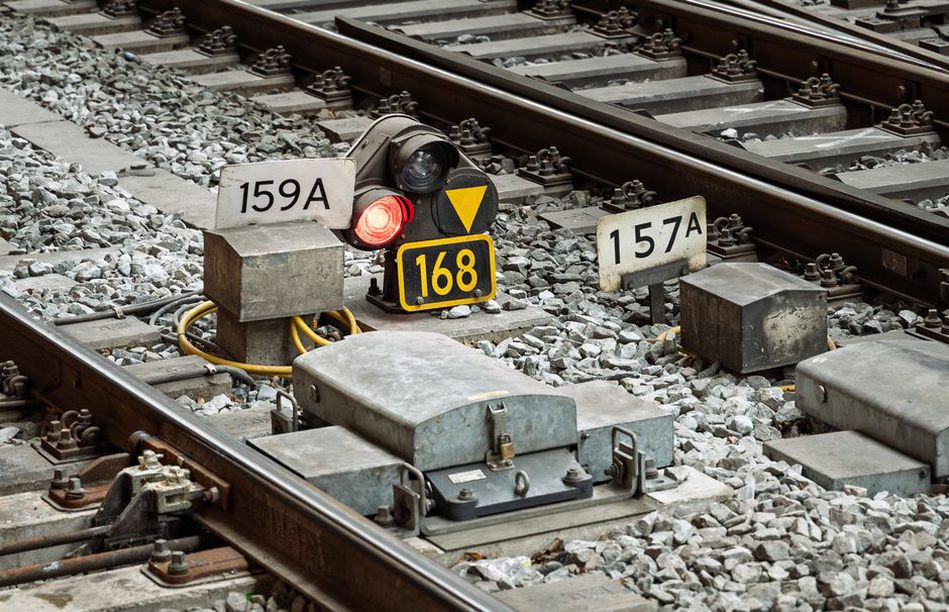
Lifecycle results are only as credible as the inventory behind them. Design estimates may be suitable during early option selection, but they should be updated using as-built quantities, supplier environmental declarations where available, measured haul distances, fuel records, maintenance histories, and verified condition data.
Material quantities deserve close attention. Small percentage differences in binder, cement, reinforcement, aggregate haulage, or excavation disposal can become significant at corridor scale. For railways, ballast demand, undercutting intervals, sleeper replacement rates, and rail-grinding assumptions can dominate the maintenance inventory. For roads, the timing and extent of resurfacing, local full-depth repairs, and drainage renewal often have more influence over the lifecycle outcome than a modest difference in initial surfacing thickness.
Uncertainty should be shown rather than hidden behind precise-looking totals. Key variables may include traffic growth, axle-load spectra, groundwater behaviour, deterioration rates, energy sources, maintenance access, and recycling yields. Scenario ranges and sensitivity testing indicate whether a decision remains defensible when these inputs change.
Deterioration models link engineering behavior to lifecycle outcomes
Lifecycle analysis becomes useful when intervention timing reflects realistic deterioration mechanisms. Surface age alone is an inadequate trigger. Relevant condition indicators vary by asset type and failure mode.
| Asset element | Typical lifecycle condition drivers | Potential consequence of delayed intervention |
|---|---|---|
| Road pavement | Fatigue cracking, rutting, moisture damage, joint condition, skid resistance | Accelerated structural repair, safety reduction, higher user delay |
| Rail track | Track geometry, ballast fouling, formation stiffness, drainage, rail wear | Speed restrictions, frequent tamping, loss of ride quality, renewal escalation |
| Bridges and culverts | Corrosion, cracking, bearing movement, scour exposure, waterproofing failure | Load restrictions, intrusive repair, service interruption |
| Earthworks | Pore-water pressure, settlement, erosion, vegetation, slope movement | Emergency stabilization, line closure, reconstruction risk |
Climate and geotechnical conditions must be treated as active drivers rather than background descriptors. A formation exposed to repeated wetting and drying may deteriorate differently from one under stable groundwater conditions. Permafrost thaw, expansive soils, coastal exposure, intense rainfall, and freeze-thaw cycles can alter both the likelihood and cost of intervention. The effect may be nonlinear: declining drainage performance can turn a manageable maintenance issue into rapid loss of support after severe rainfall.
Condition monitoring reduces uncertainty only when it informs decisions. The value of sensors, surveys, and inspections lies in identifying change earlier, targeting interventions more accurately, and confirming that a treatment restored the intended function. Smart monitoring methods for safer transport infrastructure are particularly relevant where ground movement, water conditions, structural response, or traffic loading governs deterioration.
Road and rail differ in their dominant lifecycle constraints
Road assets often allow more flexible access for local maintenance, although lane closures can cause substantial disruption on busy corridors. Lifecycle plans need to account for traffic loading, surfacing condition, drainage behaviour, winter service where relevant, and the interaction between pavement renewal, buried utilities, and structures.
Railway maintenance is more tightly constrained by possession windows, safety rules, access points, equipment logistics, and timetable commitments. A treatment with favourable material costs may still be unsuitable if it requires repeated track access or creates excessive geometry recovery work. Conversely, a higher initial investment in formation resilience or drainage may reduce the frequency of disruptive interventions over the route's operating life.
Traffic and train-delay effects require careful treatment. They can be significant, but the accounting method must be transparent and avoid double counting. A possession-related operational cost, for example, should not be counted twice as both a contractor cost and a user-delay cost unless the accounting framework clearly distinguishes them.
Maintenance strategies should be compared as pathways
Comparing one resurfacing treatment with another is rarely sufficient. Each alternative should be represented as a pathway: the likely sequence of inspections, routine maintenance, minor repairs, major rehabilitation, and final renewal under stated conditions. This allows preventive and reactive strategies to be assessed on equal terms.
- Define condition thresholds based on safety, structural capacity, service quality, and operational requirements.
- Model intervention sequences for each alternative, including realistic access and cure-time constraints.
- Assign quantities, costs, carbon factors, and disruption effects to every intervention event.
- Test sensitivity to timing, material durability, loading, and extreme-event assumptions.
- Review the results against risk tolerances, rather than relying only on the lowest discounted cost or carbon total.
Preventive intervention can perform well because it preserves structural layers and avoids the progression from surface distress to deeper damage. This is not automatic. Applying a treatment before the cause of distress is understood can retain moisture problems, fail to address loss of support, or create a misleading impression of renewed capacity. Diagnosis remains a prerequisite for lifecycle optimisation.
End-of-life is usually a circularity decision, not a final event
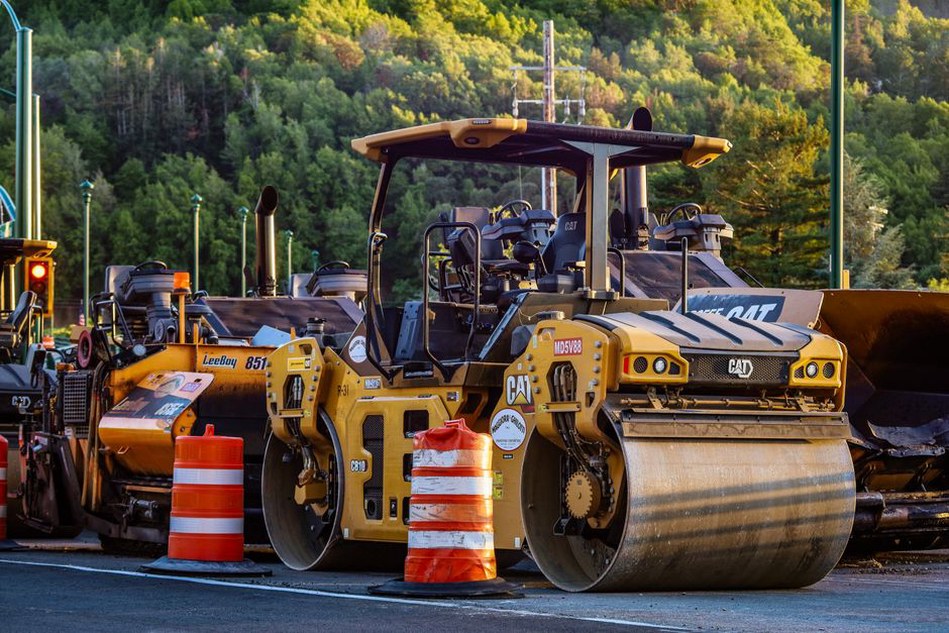
At the end of a component's useful life, the main question is often whether its materials can remain in productive use. Reclaimed asphalt pavement may be processed for reuse, subject to material quality and mixture requirements. Rail, steel reinforcement, and structural steel have established recycling routes. Crushed concrete or masonry may be suitable for specified secondary applications after testing and processing. Excavated soil may also be reused within a project where geotechnical and environmental properties have been verified.
Recycling credits need careful treatment. A lifecycle model should state whether it uses a cut-off, substitution, or another allocation approach, then apply that approach consistently. It should not assume that every recovered tonne displaces an equal tonne of virgin material at identical quality. Transport, contamination, processing energy, and market demand can materially affect the result.
Using results for asset decisions
Lifecycle findings are most useful when recorded as the basis for a decision rather than reduced to a single ranking. Report the functional unit, assessment period, system boundary, condition model, data sources, key exclusions, cost discounting assumptions, carbon accounting method, uncertainty range, and the events driving differences between alternatives. A simple dashboard can present net present cost, whole-life carbon, planned intervention count, expected possession hours, and residual risk side by side.
For bridge-linked road or rail options, material selection should be assessed against inspection access, corrosion exposure, repairability, and replacement logistics as well as embodied impacts. The discussion in Bridge Materials and Reliability: Designing for Durability in Service provides useful context for linking material durability to service-life planning.
The final review should trace the largest result driver back to a physical assumption. If a model favours a drainage upgrade because it postpones two major track renewals, the drainage mechanism, expected groundwater response, inspection plan, and renewal trigger should be checked against site evidence. That step turns lifecycle calculations into a defensible basis for engineering decisions.