
Road-tunnel ventilation demand is not determined by tunnel length alone. It varies with traffic mix, congestion, gradient, weather at the portals, fire scenarios, maintenance condition, and resistance from operating equipment. Running fans continuously at a nominal duty point wastes energy and may erode the control margin needed during an incident.
Optimization should begin with a defensible operating envelope: the normal, congested, maintenance, and emergency conditions in which air quality, visibility, temperature, and smoke-control objectives must be achieved. The aim is not simply to reduce fan power. It is to make system response predictable under measured conditions while retaining capacity for credible equipment faults.
Define objectives before adjusting fan operation
Tunnel ventilation serves different purposes in different operating modes. Under routine traffic, it dilutes vehicle emissions and manages visibility. During a fire, the priority may shift to smoke control, keeping evacuation routes tenable and supporting emergency response. Settings that are economical during ordinary traffic may be inappropriate during an incident.
A sound optimization plan separates these modes and defines measurable performance indicators for each.
| Operating mode | Primary concern | Typical optimization focus |
|---|---|---|
| Normal traffic | Air quality and visibility | Minimum fan output that maintains validated thresholds |
| Congested traffic | Higher emission intensity and unstable flow | Earlier control response and demand forecasting |
| Maintenance or partial closure | Changed aerodynamic resistance and access constraints | Safe temporary control logic and equipment isolation |
| Fire emergency | Smoke movement and evacuation conditions | Pre-engineered, tested smoke-control sequences |
Performance criteria should come from the governing design basis, local regulations, the fire strategy, and the tunnel-specific risk assessment. A control algorithm must not replace that engineering basis or redefine emergency ventilation requirements on its own.
Build a reliable picture of the tunnel airflow system
Efficiency calculations based on poor measurements are misleading. Before changing setpoints, verify the instrumentation used to assess tunnel conditions: pollutant sensors, opacity or visibility monitors, air-velocity instruments, temperature sensors, fan status signals, damper positions, and power meters.
Placement is as important as calibration. A monitor near a portal can be heavily influenced by outside air, while a sensor close to a jet-fan group may reflect local mixing rather than average tunnel conditions. Longitudinal tunnels can develop substantial spatial gradients, particularly during slow-moving traffic or adverse winds. Several measurement zones may be needed to distinguish a local anomaly from a ventilation shortfall across the tunnel.
Commissioning tests and model calibration
Field tests should establish how fan commands translate into actual airflow. Fan thrust, tunnel leakage, wall roughness, traffic piston effects, portal winds, and pressure losses all affect the result. A network model or computational fluid dynamics model can support this work, but it should be checked against measured pressures, velocities, and fan power at representative operating points.
Calibration becomes especially important after major works, including lining repairs, installation of signs or other equipment, changes to portal canopies, or fan replacement. Such work can change aerodynamic resistance or local recirculation. Diagnostic information gathered through advanced tunnel safety diagnostics can also reveal sensor drift, mechanical deterioration, and control-system faults that distort the operational picture.
Use demand-controlled ventilation for normal operation
Demand-controlled ventilation adjusts fan operation to measured need rather than a fixed timetable. It is often the clearest route to lower energy use where traffic and environmental loads fluctuate. Control may be based on pollutant concentration, visibility, airflow velocity, traffic state, or a combination of these inputs.
Basic threshold control can repeatedly start and stop fans when readings hover near a limit. Deadbands, time delays, rolling averages, staged fan activation, and minimum run times produce steadier operation. Where fan and electrical systems are designed for variable-speed operation, proportional or model-based control can increase output gradually.
- Use validated sensor signals: reject implausible readings, flag communication losses, and apply conservative fallback logic.
- Account for direction: longitudinal airflow can carry pollutants toward a portal or occupied area.
- Coordinate fan groups: avoid opposing thrust or fan combinations that deliver poor net airflow.
- Limit unnecessary starts: frequent cycling increases wear on motors, contactors, and mechanical components.
- Preserve emergency override: fire sequences must take priority over normal air-quality control without delay.
Traffic data can improve this approach. Vehicle counts, speed, occupancy, heavy-vehicle share, and queue detection may indicate rising emissions before concentration sensors respond. Short-term forecasts are most useful when used alongside direct environmental measurements, not in place of them.
Reduce resistance and recover lost fan performance
Energy demand increases when fans must overcome avoidable resistance. Obstructions, poorly positioned equipment, accumulated deposits, damaged silencers, misaligned dampers, and degraded fan blades can reduce delivered airflow or thrust. In transverse and semi-transverse systems, fouled ducts and blocked dampers may cause major pressure losses.
Maintenance and ventilation optimization cannot be separated. Establish baseline trends for fan current, vibration, temperature, pressure rise, and airflow or thrust where measurement is possible. These records help differentiate gradual fouling from abrupt faults, such as belt damage, bearing deterioration, inverter failure, or an incorrectly reported damper position.
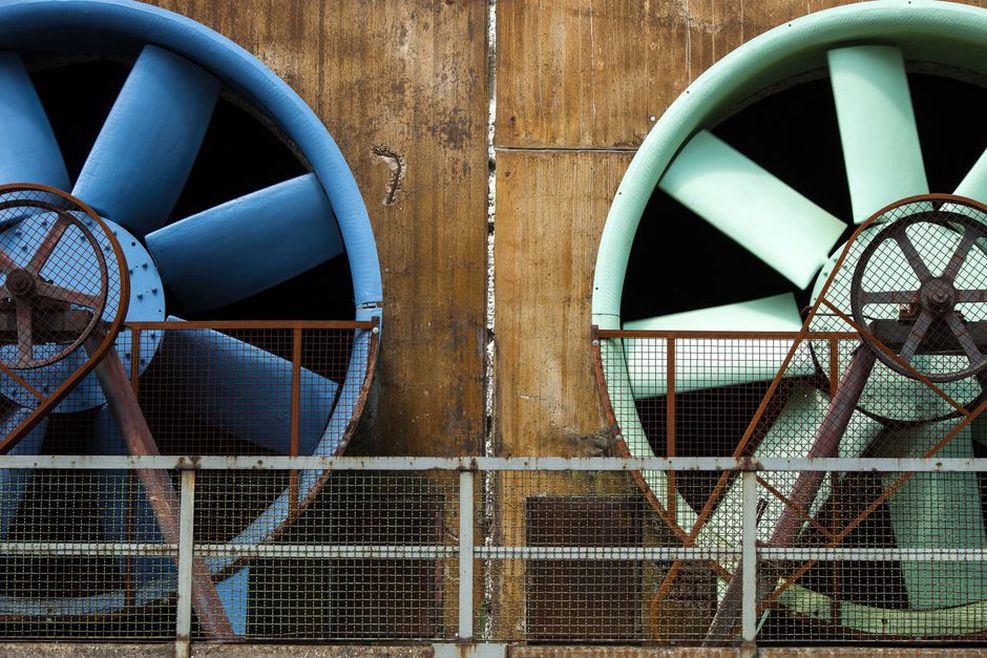
Jet fans need particular attention because reduced thrust may not be visible in a simple run-status signal. Reversible units should be verified in both directions. During planned functional tests, control-room indications should be checked against acceleration time, direction, vibration response, protective trips, and communication with the supervisory system.
Integrate ventilation with fire and evacuation strategy
Fire ventilation cannot be optimized by minimizing fan energy. Smoke movement depends on fire size, heat release, tunnel gradient, longitudinal airflow, portal pressure differences, geometry, and the state of cross-passages, shafts, dampers, and related systems. A longitudinal velocity that restricts upstream smoke spread can intensify smoke movement downstream. The appropriate response must follow the approved fire strategy.
Emergency control logic should be pre-defined, scenario-based, and protected against ambiguous sensor interpretation. It commonly includes alarm-confirmation rules, fan-direction commands, damper sequences, traffic-control interfaces, emergency lighting, public-address coordination, and status feedback. Manual intervention remains necessary when field conditions differ from modeled scenarios.
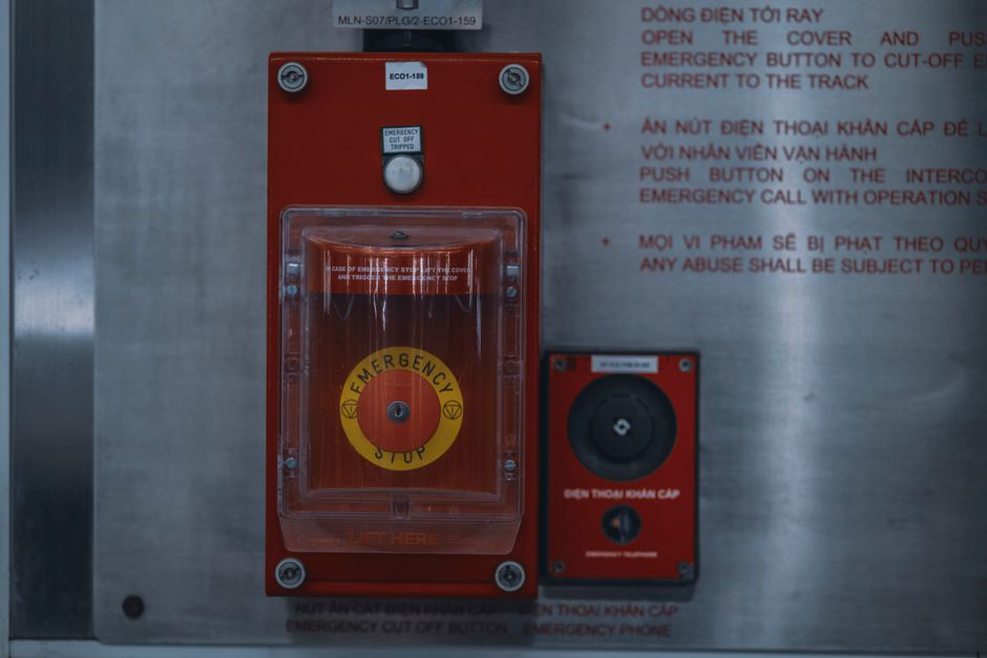
Periodic integrated exercises are necessary because individual fan tests do not prove system performance. Exercises should examine command priority, loss of a communications segment, power transfer, assumed fan failures, and operator response under time pressure. The wider operational context, including inspection and lifecycle constraints, is addressed in the complexities of tunnel maintenance.
Apply digital tools without surrendering engineering judgement
A supervisory control and data acquisition platform can bring together sensor data, fan status, energy use, traffic information, and alarm history. The most useful analysis goes beyond displaying live values and identifies recurring patterns: fans drawing more power at the same command level, portal wind directions associated with frequent starts, or pollutant peaks following repeated traffic queues.
Digital twins and predictive models can assess alternative staging logic or examine the effects of equipment outages before changes are introduced in service. Their results depend on input quality and modelling assumptions. Any proposed change to emergency sequences, airflow targets, or fan availability should undergo formal engineering review, simulation where appropriate, controlled commissioning, and documented acceptance testing.
Measure optimization as a continuing operational process
Energy intensity is useful, but it must be read alongside safety performance. Track fan energy per operating hour, starts per fan, time above normal-control setpoints, sensor availability, alarm frequency, response time, and manual overrides. Review the results by traffic state and season. A low annual energy figure can conceal poor performance during infrequent but demanding conditions.
A final operational check is to replay a high-demand traffic interval using archived data. Compare the measured response with the intended staging sequence, confirm that failed or unavailable sensors triggered the correct fallback mode, and record setpoint changes only after airflow, pollutant response, equipment loading, and emergency-override behaviour have been verified.