Removing sound asphalt to fix a failure beneath it wastes material. Covering a wet, unstable base with a thin overlay can waste the overlay just as quickly. The first decision in pavement rehabilitation is therefore where the distress starts and how deep it runs. Limit the work to the material that needs it, but judge the environmental cost over the treatment’s useful life—not by thickness alone.
Define the rehabilitation decision before selecting a technique
Maintenance, rehabilitation, and reconstruction address different conditions. A surface treatment can slow water entry or restore texture when the structure remains adequate. Rehabilitation restores function or capacity while retaining useful parts of the pavement. Reconstruction replaces substantially more of the structure, sometimes because the foundation or drainage cannot support a lasting repair. Treating these options as interchangeable weakens both environmental comparisons and specifications.
Divide a corridor into sections with comparable structure, distress, traffic loading, drainage, and construction constraints. Cracking pattern and severity, rut location, patch history, surface profile, skid resistance, and drainage observations help identify candidate treatments. Cores and test pits show layer thickness, bonding, moisture, and material condition; structural testing can help distinguish surface deterioration from inadequate support. A rut mainly confined to asphalt calls for a different response from deformation involving the unbound base or subgrade. Match the investigation to the decision, adding tests where uncertainty could change the treatment.
Compare proposed work with the likely performance of leaving the pavement in service under routine maintenance, rather than with an imaginary zero-impact option. Deferring work on a section close to structural failure may mean deeper excavation later. Resurfacing a section that needs only local repairs can consume resources without extending service life enough to justify them. Document the remaining structural value in existing layers, drainage components, and sound shoulders before specifying removal.

Compare whole-life impacts on equal terms
Compare treatments for the same pavement area, intended traffic function, assessment period, and defined performance threshold. Include the work each option is likely to need to meet that threshold, including maintenance and repeat interventions. Emissions per tonne of mix alone say little about differences in layer thickness, expected life, transport distance, or repair frequency.
A project-level inventory should at least separate material production, transport, construction, maintenance, and end-of-life handling. Plant fuel, binder production, aggregate processing, haulage, equipment use, and waste disposal may all affect the result. Traffic management can matter too, particularly on a busy route, but delay and detour estimates depend heavily on network conditions. Report them separately or show the assumptions rather than assigning the fastest technique an unexplained credit.
Service life is often the largest uncertainty. A low-temperature mix or recycled layer offers little environmental advantage if it fails early and needs replacement. Compare plausible performance scenarios, then test sensitivity to haul distance, recycling yield, plant energy, and the timing of future work. Existing procurement guidance on sustainable road materials can help identify evidence to request from suppliers, but the calculation still needs to reflect the section being rehabilitated.
Retain and reuse pavement material where performance permits
Targeted milling and overlays
Milling a deteriorated surface and placing a new course retains underlying layers while correcting profile, texture, or shallow rutting. Milled material can become reclaimed asphalt pavement, or RAP, if it is processed and incorporated into a suitable mix. Its environmental value depends on usable yield and the virgin aggregate and binder it actually displaces. Milling deeper than the damage requires creates more waste and can reduce structural reserve; milling too little may leave poorly bonded or distressed material under the overlay.
Bond quality, crack activity, water sensitivity, and structural capacity determine whether an overlay will last. Movement in lower layers can cause reflective cracking. Crack sealing, local patching, drainage correction, or an engineered interlayer may help, but each uses material and has limits. Specify the required performance and how it will be verified rather than treating avoided excavation as proof of sustainability.
Reclaimed asphalt in new mixes
RAP contains aggregate and aged asphalt binder. More RAP can reduce demand for new material, but a recycled-content target says little about pavement performance. Stockpile variability, contamination, moisture, aggregate grading, and binder stiffness affect workability and cracking resistance. Nor can the aged binder’s contribution to a new mix simply be equated with the binder measured in the RAP. If rejuvenating agents or softer virgin binders are proposed, test their effects at mixture level, including rutting, cracking, and moisture-related performance appropriate to the intended layer.
Keep RAP streams traceable. Pavement layers and sites can have different aggregate and binder properties, while demolition debris may introduce unsuitable constituents. Crushing, screening, stockpile management, and sampling matter as much as nominal recycled content. For more on verifying road material claims against service life, see Sustainable Road Materials: Performance, Verification and Whole-Life Value.
In-place recycling and stabilization
Hot in-place recycling heats, loosens, and reworks asphalt near the surface. Cold in-place recycling reprocesses asphalt at lower temperatures, often with a binder or stabilizing agent. Full-depth reclamation incorporates asphalt and some underlying granular material into a new layer. These methods can greatly reduce the amount of pavement material moved off site, but none replaces a diagnosis of the layer being treated.
In-place work needs reasonably consistent material and enough working depth to produce a uniform layer. Utility covers, variable thickness, contamination, and weak, wet foundations complicate the process. Cold recycled layers also need attention to moisture, curing, compaction, and the timing of the surfacing above them. Cement or other stabilizers may improve strength but add production impacts and can alter shrinkage or cracking behavior. Where material varies along the alignment, trial sections and field density or stiffness checks are particularly useful.
Account for process energy, water, and local effects
Warm-mix asphalt technologies permit production and compaction at lower temperatures than comparable hot mixes. Depending on plant operation and fuel, that can reduce energy use and some worksite emissions. Check actual savings against plant records or a transparent model: wet aggregate, extended storage, reheating, or changes in production rate can erode the benefit. The mix must still coat aggregate adequately and compact across the expected range of delivery temperatures.
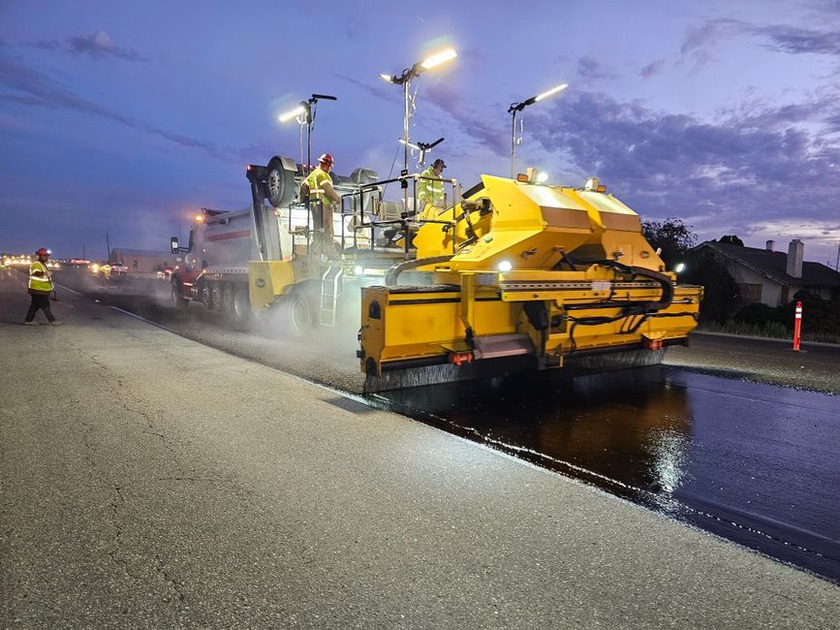
Cold processes avoid some heating, but may need emulsions, foamed asphalt, cementitious additions, curing time, or a protective overlay. Lower mixing temperature alone does not establish a lower whole-life impact. Include material quantities, binder production, water use, and field performance in the comparison.
Construction controls protect the surroundings and the repair itself. Milling and excavation expose fines that need controlled handling; cutting and cleaning can generate slurry or dust. Manage runoff from stockpiles, wash water, and uncured stabilized material so it does not enter drainage systems untreated. Keep outlets working, too: water trapped beneath a new surface can accelerate damage to retained layers.
Match technique to failure mechanism
These distinctions are for screening, not final design. A corridor may need several treatments, each checked against material condition and local loading.
| Observed condition | Potentially suitable response | Key sustainability risk |
|---|---|---|
| Surface aging or texture loss, with sound support | Localized repairs, surface treatment, or limited milling and resurfacing | Removing sound structural material unnecessarily |
| Distress concentrated in an asphalt layer | Depth-controlled milling, overlay, or suitable in-place recycling | Leaving active cracking or poor bonding beneath new work |
| Widespread base weakness or moisture damage | Investigation-led base rehabilitation, drainage correction, or reconstruction where necessary | Using a surface-only treatment that fails early |
| Variable layers and repeated isolated failures | Segmented treatment with local reconstruction at failed areas | Applying one intensive treatment to the entire length |
When failure begins in the support system, the assessment must extend below the asphalt. Saturated granular layers, blocked edge drains, erosion, or soft subgrade can defeat a carefully designed recycled surface. Correcting water pathways may require excavation and new material, yet protect retained pavement for much longer. Indiscriminate drainage work can also disturb stable shoulders or create discharge problems. Establish where the water comes from and where it can safely go before specifying it.
Make performance claims verifiable
Environmental product data help only when their boundaries match the decision. A declaration limited to mix production cannot establish the impact of an installed rehabilitation system. Check whether feedstock preparation, transport, placement, and expected future repairs are included. Use a consistent allocation method so the same reclaimed material is not credited twice—as both avoided disposal and full replacement of new material.
Construction quality affects sustainability because defects bring the next intervention forward. Useful project records include:
- Pre-work condition, layer investigation, and the reason for each treatment boundary.
- Quantities milled, reused on site, incorporated into new mixes, sent elsewhere for recovery, and disposed of.
- Mix properties, recycled material sources, binder additions, and changes made during production.
- Placement temperatures where relevant, moisture condition, compaction results, layer thickness, and bond checks.
- Drainage repairs, construction deviations, and post-opening performance observations.
Those records provide a firmer basis for comparison than an unqualified recycled-content or carbon-savings claim. Monitor the failure mode identified at the outset: cracking and rutting in asphalt, deformation where support was uncertain, and water-related distress where drainage was repaired. If a section fails sooner than expected, review the diagnosis and construction records before repeating the treatment.
Use uncertainty to set treatment boundaries
Uniform specifications are convenient; pavement condition rarely is. Sound material suitable for preservation may sit beside short lengths needing deep repair. Set segment boundaries using measured changes in condition and structure, while allowing workable transitions for milling and paving equipment. Where uncertainty could alter those boundaries, targeted investigation can prevent both unnecessary full-width reconstruction and under-treatment of a failed foundation.
Suppose cores show sound lower asphalt across most of a section but water-damaged material near a blocked outlet. The quantity schedule can distinguish asphalt to retain from material to remove. Record the outlet repair and limits of local excavation alongside the resurfacing work. Those limits guide the amount of virgin material ordered and give later inspections a precise place to check performance.