
A higher electricity bill is not proof that consumption rose. The statement may cover more days than the last one, a temporary credit may have ended, or the price per kilowatt-hour may have changed. Check the meter readings and billing dates first, then the rates and fixed charges. That order separates changes in electricity use from changes in what you pay for it.
Find the period and usage first
Check the dates the statement covers. A 35-day bill will often exceed a 28-day bill even when daily consumption is unchanged. Divide billed kilowatt-hours (kWh) by billing days for a fairer comparison: 840 kWh over 28 days and 900 kWh over 30 days both work out to 30 kWh per day.
A meter records energy, not instantaneous power. Kilowatts (kW) measure the rate at which equipment uses electricity; a kilowatt-hour is the energy used by 1 kW operating for one hour. A 100-watt device running for ten hours uses about 1 kWh, assuming its power draw stays near 100 watts.
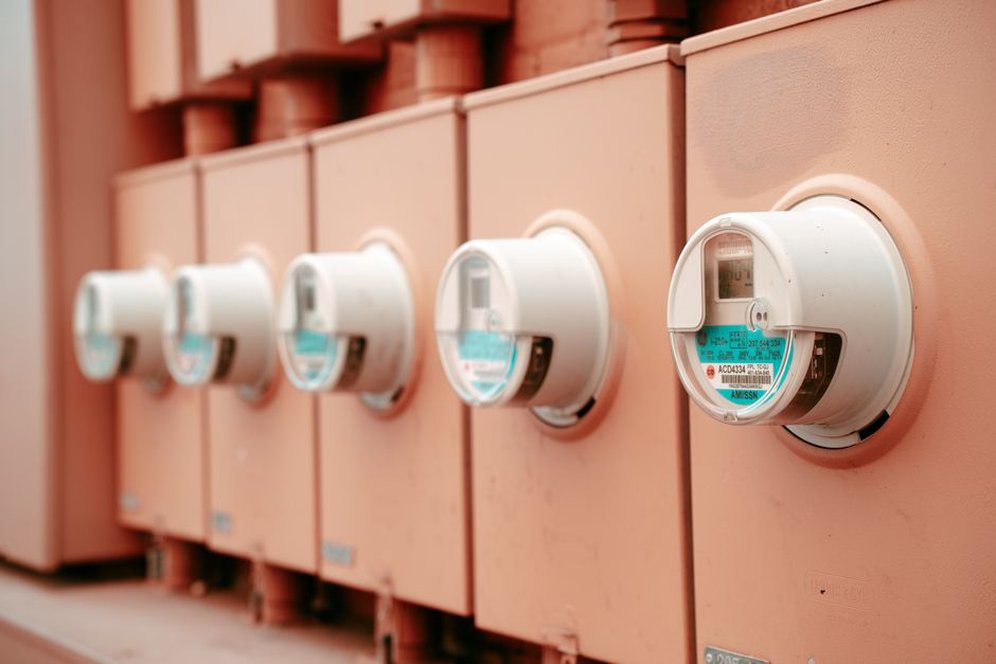
Many bills list previous and current meter readings. Their difference gives usage for the period, subject to any stated meter multiplier or adjustment. An actual reading comes from the meter or an accepted remote reading; an estimated reading is calculated when a reading is unavailable. If an estimate was too low, the first bill based on an actual reading may include electricity used but not previously billed. Look for “estimated,” “actual,” and “adjustment” before treating a jump as a sudden rise in demand.

Separate the charges on the bill
The total combines charges that do not all respond to usage in the same way. Names and billing rules vary by location, utility, and contract, but most line items fit into these categories:
- Energy or supply charge: the price of electricity consumed, often calculated per kWh. There may be one rate or several.
- Delivery or network charge: the cost of transporting electricity and maintaining the system serving the account. It may have fixed and usage-based components.
- Fixed customer charge: an amount charged per day or billing period regardless of kWh used.
- Taxes, levies, and program charges: items specific to the jurisdiction, calculated as a percentage, per kWh, or as a fixed amount.
- Credits and adjustments: discounts, assistance credits, corrections, or charges carried over from another period.
Do not treat every line labeled “rate” as another price for the same charge. Supply and delivery prices can both apply to each kWh, while other items may be fixed or based on a subtotal. Check the descriptions and arithmetic. If the account has a separate retail supplier, supplier and network charges may appear together or on separate bills.
Why the advertised rate may not match the effective rate
Dividing the whole bill by kWh gives an effective cost per kWh, not necessarily the contracted energy rate. A $126 bill for 700 kWh works out to $0.18 per kWh, but that figure includes any delivery charges, fixed charges, taxes, and credits in the total. When usage is low, fixed charges are spread over fewer kWh, so the effective cost can rise even if the listed energy rate does not.
For month-to-month comparisons, calculate both total cost per day and kWh per day. To assess a tariff, compare its individual rate lines and fixed charges too; the total alone will not show which component changed.
Check how your rate is applied
A flat-rate plan generally uses the same energy price per kWh throughout the billing period, though other charges may vary. A tiered plan assigns different rates to blocks of consumption. Under a time-of-use plan, the price depends on when electricity is used, and the bill may list peak, off-peak, or other periods separately. Some tariffs also vary by season or follow a stated schedule of price changes.
Read the dates beside each rate line. If a price changed partway through the billing period, usage may be split between two rates. How that split is calculated depends on the tariff and available meter data. A change halfway through the month does not necessarily mean half the usage was billed at each rate.
With time-of-use billing, compare the kWh assigned to each rate period, not just the total. Moving consumption to a lower-priced period can reduce energy charges without reducing kWh used; fixed charges and other items may remain the same. A bill that shows only monthly kWh cannot establish how much was used in a particular rate window.
Demand charges are different from energy charges
Some commercial and other eligible accounts have a demand charge based on the highest measured power draw over a specified interval. Demand is usually expressed in kW, not kWh. Two sites can use the same monthly kWh yet face different demand charges if one runs several large loads at once. Check the bill or tariff for the measurement interval and rules for billed demand: a short spike can matter more to this charge than many hours of modest use.
Work through a bill without double-counting
Reconcile the usage charges before looking at the account balance. This illustrative bill has a single energy rate and no taxes; a real statement may have more lines:
| Item | Calculation | Amount |
|---|---|---|
| Energy charge | 600 kWh × $0.12/kWh | $72.00 |
| Usage-based delivery | 600 kWh × $0.05/kWh | $30.00 |
| Fixed customer charge | One billing period | $14.00 |
| Current charges | $72.00 + $30.00 + $14.00 | $116.00 |
If the statement also shows a $20 payment toward a previous balance, do not subtract it from the $116 in current charges unless the bill applies it there. Follow the account summary instead: previous balance, payments or credits, current charges, then amount due. A carried balance or an unposted payment can make “current charges” and “amount due” different figures.
Budget billing, or an equal-payment plan, adds another distinction. The requested monthly payment may be smoothed across the year rather than match that month's actual electricity cost. Check the actual charges, payments, and any accumulating credit or deficit. A stable payment does not mean usage or rates have stayed stable.
Investigate an unusual change systematically
If a bill looks wrong, start with its readings and charges before estimating what individual equipment used. These checks help locate the difference:
- Confirm the dates and day count. Compare kWh per day with a similar previous period, preferably in a comparable season.
- Check the reading status. Look for an estimate followed by an actual reading, a corrected reading, or a meter multiplier.
- Compare rate lines. Check energy and delivery prices, tiers, time-of-use allocations, and fixed charges.
- Reconcile the account balance. Look for unpaid amounts, reversed payments, expired credits, deposits, or one-time adjustments.
- Review operating changes. Heating and cooling, electric water heating, new equipment, and longer operating hours can affect consumption. For a facility, match billing dates to operating logs rather than relying only on calendar months.
Interval data, where available, can show whether extra usage occurred at certain times or throughout the day. A monthly total cannot pinpoint a malfunction. If the readings, rates, or adjustments still do not reconcile, keep the bill and relevant meter readings when asking the utility or supplier for an explanation. A meter photograph should clearly show the reading and date, but first check which register the bill uses.
Use comparisons that answer the right question
For households, weather and occupancy can make a simple month-to-month comparison misleading. At an infrastructure facility, lighting schedules, pumping hours, ventilation, or temporary works can shift electricity use. Ignoring those conditions may make normal usage look like a billing error—or hide a real increase.
Keep billed kWh, billing days, and current charges excluding old balances from each statement. Record the reading status and tariff name if they can change. On the next bill, calculate kWh per day first. If it remains near its previous level while current charges rise, check rates, fixed charges, and credits before investigating equipment.