
Tunnel incidents rarely stem from a single failed component. Minor water ingress can damage electrical equipment; a delayed alarm can slow the operator response; smoke stratification can turn an otherwise viable escape route into an unsafe one. Tunnel safety depends on connected systems that identify abnormal conditions early, interpret them reliably, and support clear action by operators and tunnel users.
Technology cannot compensate for poor geometry, inadequate drainage, insufficient ventilation capacity, weak fire resistance, limited emergency access, or untrained personnel. Its role is to reduce uncertainty in day-to-day operation and during escalating events. The most effective upgrades address defined hazards, fit credible operating procedures, can be maintained, and have measurable performance targets.
From isolated equipment to a safety system
Older tunnel installations often operate as separate subsystems: CCTV for observation, ventilation for air control, lighting for visibility, and fire detection for alarms. A current safety architecture connects their data and commands through a supervised control environment. This can support a sequence in which an incident is detected automatically, confirmed by video, followed by activation of a predefined response plan and recording of every command and status change.
Integration is not the same as uncontrolled automation. Safety-critical logic needs defined priorities, fail-safe states, manual override arrangements, cybersecurity controls, and testing under realistic degraded conditions. If a communications link fails, for example, local controllers should still place essential equipment in a known safe state rather than wait indefinitely for a central instruction.
Design around operational scenarios
Technology selection should begin with operational scenarios, not product catalogues. Representative cases include a stopped vehicle, collision, fire, hazardous-material release where applicable, flooding, power loss, unauthorised access, structural distress, and a communications failure during evacuation. For each case, the project team should define:
- the earliest observable indicators;
- the permissible detection and verification time;
- the actions triggered automatically and those requiring operator confirmation;
- the information sent to tunnel users and emergency responders;
- the safe state if sensors, power supplies, or networks are unavailable; and
- how the event and system response will be reviewed afterwards.
This avoids a common weakness: advanced sensing installed without a verified procedure that identifies who acts on an alert, how they act, and within what time.
Earlier detection of traffic and fire incidents
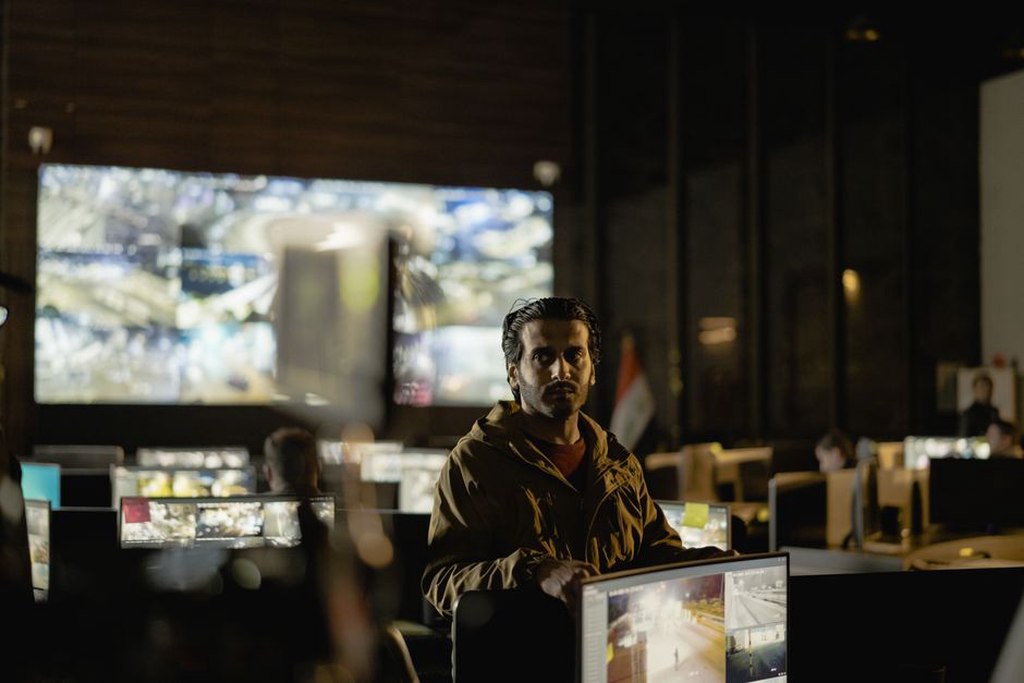
Video analytics now does more than provide passive recording. Algorithms can identify stopped vehicles, wrong-way movement, pedestrians, debris, smoke-like patterns, congestion, and abnormal vehicle trajectories. In rail tunnels, similar machine-vision applications can help identify intrusion, track obstructions, or unusual occupancy in restricted areas. The main operational benefit is speed: an alert may reach the control room before anyone reports the event by phone.
Analytic outputs remain probabilistic rather than self-validating evidence. Image quality can change because of glare, headlamp flare, dirty lenses, vibration, variable lighting, fog, and camera occlusion. Systems should be configured for representative site conditions and assessed for both detection performance and false-alarm burden. Too many nuisance alerts create alarm fatigue and can lead operators to distrust the system when a genuine emergency occurs.
Multi-sensor fire confirmation
Fire detection increasingly relies on complementary signals rather than a single device type. Linear heat detection can identify a local temperature rise along a cable route. Video-based systems may recognise smoke or flame patterns. Optical, thermal, and air-sampling technologies can provide early warning in suitable environments, while ventilation and gas sensors add context on air conditions.
Combining signals can improve confidence, provided the logic reflects fire development and site geometry. A detector close to a ventilation flow may respond differently from one in a sheltered recess. Sensor fusion should distinguish between an alert that requires immediate evacuation measures and a condition requiring rapid visual verification. Full-scale or representative testing remains essential because smoke movement and heat transport are strongly affected by the ventilation regime, tunnel cross-section, longitudinal gradient, and local obstructions.
Ventilation control informed by real conditions
Longitudinal and transverse ventilation systems are fundamental life-safety assets, but fixed emergency modes may not always provide the best conditions for evacuation and responder access. Control platforms can use data from fire detection, airflow sensors, visibility meters, temperature sensors, traffic status, and computationally validated control rules to select an appropriate response.
The engineering task is not simply to maximise fan output. High airflow can alter smoke direction, protect one area while exposing another, and affect fire behaviour. Control strategies must follow the tunnel’s fire and life-safety concept, then be verified through commissioning tests, simulations where appropriate, and periodic operational exercises. Operators need a clear display of the active mode, the reason for its selection, and whether field feedback confirms the expected fan and damper performance.
Air-quality monitoring also supports routine safety. Carbon monoxide, nitrogen oxides, particulate matter, and visibility measurements can inform ventilation operation, traffic restrictions, and maintenance planning. Sensor drift, contamination, and calibration intervals require the same attention as the software dashboard. Poor-quality input data can produce confident but incorrect control decisions.
Communications that work under stress
During an emergency, people need short, location-specific instructions. Dynamic message signs, lane-control signals, public-address systems, radio rebroadcast, emergency telephones, and mobile-network support can work together to direct users away from hazards and towards exits. The system should account for people who may be driving, walking through smoke, wearing hearing protection, or unable to understand a spoken announcement.
Visual guidance becomes particularly important when visibility falls. Directional evacuation lighting, illuminated exit signs, distance markers, and low-level wayfinding can make an escape route legible close to the floor, where conditions may be better than at head height. Their effectiveness depends on continuity, contrast, backup power, routine cleaning, and a clear relationship with cross-passages or emergency exits.
Resilient communications architecture
Digital radio, fibre networks, leaky feeder systems, and dedicated emergency channels can improve coordination between operators and responders. Resilience depends on physical route diversity, fire-resistant cabling where required, segregated power supplies, protected equipment locations, and tested fallback modes. A network diagram does not demonstrate resilience by itself: one flooded equipment room, common cable route, or shared time source may still disable several functions at once.
Cybersecurity belongs in the same safety discussion. Remote access, connected sensors, cloud-based analytics, and vendor support channels increase the attack surface. Asset owners should maintain an inventory of connected devices, control access by role, use tested update processes, segment operational networks, preserve logs, and exercise procedures for cyber-related loss of control or visibility. Security changes should be assessed for their effect on real-time availability.
Digital twins and condition-aware maintenance
A useful tunnel digital twin is more than a three-dimensional model. It is a controlled representation that connects physical assets, inspection history, sensor data, operating states, and maintenance records. For safety management, it can help teams locate equipment, visualise dependencies, check asset configuration, plan closures, and investigate recurring faults.
Condition-aware maintenance is particularly useful when data identifies degradation before functional failure. Examples include motor-current and vibration trends for jet fans, thermal signatures in electrical cabinets, battery health in uninterruptible power supplies, pressure or flow anomalies in fire-water systems, and repeated communication dropouts. Trend monitoring should support physical inspection, not replace it. A rise in vibration may indicate bearing wear, misalignment, looseness, or a changed operating regime; diagnosis still requires engineering judgement.
Digital records have real value only when asset identity remains stable. Each sensor, panel, fan, sign, and emergency door should have an unambiguous identifier linked to its location, configuration, test history, and responsible maintenance workflow. Otherwise, a control room may receive an alarm from an asset that has been replaced, relocated, or incorrectly represented in the database.
Structural and geotechnical intelligence
Safety technology extends beyond operational equipment. Distributed fibre-optic sensing, convergence measurements, inclinometers, piezometers, crack-monitoring devices, and remote survey methods can provide evidence of tunnel and ground behaviour. These tools are particularly valuable near excavations, portals, faulted ground, water-bearing zones, or adjacent construction where deformation may develop gradually.
Monitoring plans need baseline data, alert thresholds linked to engineering assessment, clear ownership, and validation procedures. A threshold breach should lead to a defined response, such as instrument checks, targeted inspection, survey confirmation, operational restrictions, or specialist review. It should not automatically be treated as evidence of structural failure. For seismic hazards, the interaction between ground response, lining condition, utilities, and operational recovery should be assessed systematically; seismic risk evaluation for transport tunnels provides a focused framework for that part of the safety case.
Commissioning, validation, and human factors
New technology provides a safety benefit only after it has been proven in the installed configuration. Factory testing checks components; site acceptance testing checks interfaces; integrated testing checks sequences; exercises test the people and organisations expected to use the system. These stages should include credible faults: failed cameras, delayed sensor signals, unavailable communication channels, loss of normal power, conflicting alarms, and manual takeover of automated functions.
| Technology area | Primary safety contribution | Key verification need |
|---|---|---|
| Video analytics | Rapid recognition of abnormal events | Detection and false-alarm testing in actual lighting and traffic conditions |
| Sensor fusion | Improved confidence in fire or incident alarms | Logic testing against realistic event development |
| Smart ventilation control | Smoke-management response aligned with conditions | Field feedback, mode verification, and emergency exercises |
| Digital twin and asset data | Faster fault location and condition planning | Accurate asset identifiers and change-control discipline |
| Structural monitoring | Early evidence of abnormal movement or loading | Baseline definition and engineering review of alerts |
Human-machine interfaces require particular scrutiny. Alarm screens should prioritise the most consequential events, show location in an unambiguous format, avoid unnecessary clutter, and make field-equipment status immediately visible. A response plan that requires operators to move through several screens or interpret obscure abbreviations is vulnerable during a fast-moving incident.
One practical acceptance exercise is to simulate a stationary vehicle followed by a confirmed fire alarm, loss of one CCTV feed, and a delayed fan-status signal. The test record should show the time of each detection, operator acknowledgement, public message, ventilation command, field confirmation, and restoration step. Any difference between the intended sequence and the recorded response should become a specific corrective action for equipment configuration, interface logic, training, or procedure.