
Before moving a sofa, mark its position with small pieces of removable tape on the floor. If the new layout feels cramped, you can put it back without guessing. Take a photo from the doorway as well. It may reveal a blocked sightline or a cluttered surface that is easy to overlook when you are standing in the room.
You need not replace the largest pieces to make a room work better. First, identify what is bothering you: an awkward route through the space, uneven light, clutter, worn surfaces, or textiles that no longer suit it. Then try one reversible change at a time.
Start with a room audit, not a shopping list
Stand at the entrance and notice what catches your eye first. A window, fireplace, worktable, or piece of art may be a natural focal point. A pile of bags or exposed cables probably should not be. Then walk the routes you use each day. Where do you sidestep a chair? Does a door catch, or a drawer fail to open fully?
Separate problems of use from problems of appearance. If a lamp casts your shadow across a desk, changing cushion covers will not help. If the room feels crowded even though you can walk through it easily, too many small objects may be competing for attention. Use this short audit to narrow down what needs work:
- Movement: Can doors, windows, drawers, and storage units operate without moving something else first?
- Use: Does the furniture already there support reading, working, relaxing, and conversation where those activities happen?
- Light: Which corners are dim, and where is glare uncomfortable?
- Surfaces: What needs cleaning or minor repair, and what is simply worn in a way you can live with?
- Clutter: Which items belong in the room, and which have ended up there because they lack a home?
Photograph the room in daylight and again with the usual evening lights on. An arrangement that feels balanced by day can look gloomy at night. If the room serves more than one purpose, check it under the conditions in which you use it for each one.
Rearrange for use before appearance
Protect the routes you actually walk
Start with the largest pieces you can move. Pull a sofa or desk out of an awkward corner, rotate a table, or swap two chairs. Furniture does not all need to sit against the walls. Moving seats slightly inward can make conversation easier while opening a route behind them.
Test a proposed layout by walking through it with something you regularly carry, such as a laundry basket or tray. Sit in every chair. Check the view of a screen or window, whether you can reach a side table, and whether cabinet doors still open. A plan that looks tidy from above may be inconvenient to live with.
Keep exits, heaters, ventilation openings, and electrical equipment accessible. Empty heavy furniture and check for attached cables before moving it; get help rather than dragging it across the floor. If you move a tall storage unit, check that any required anti-tip restraint is correctly installed in its new position.
Use what you own in a different role
A bedroom table might work beside a living-room chair; a spare dining chair could provide a place to sit while putting on shoes. Give a swap several days before deciding. Check that it is stable and useful: a narrow, wobbly table is no substitute for a desk you can work at comfortably.
Turning a rug may define a seating area more clearly, as long as it lies flat and does not create a trip edge. A mirror can change how spacious a room feels, but place it where the reflection is useful rather than where it sends glare into someone's eyes. As furniture moves, keep loose cords out of walking routes.
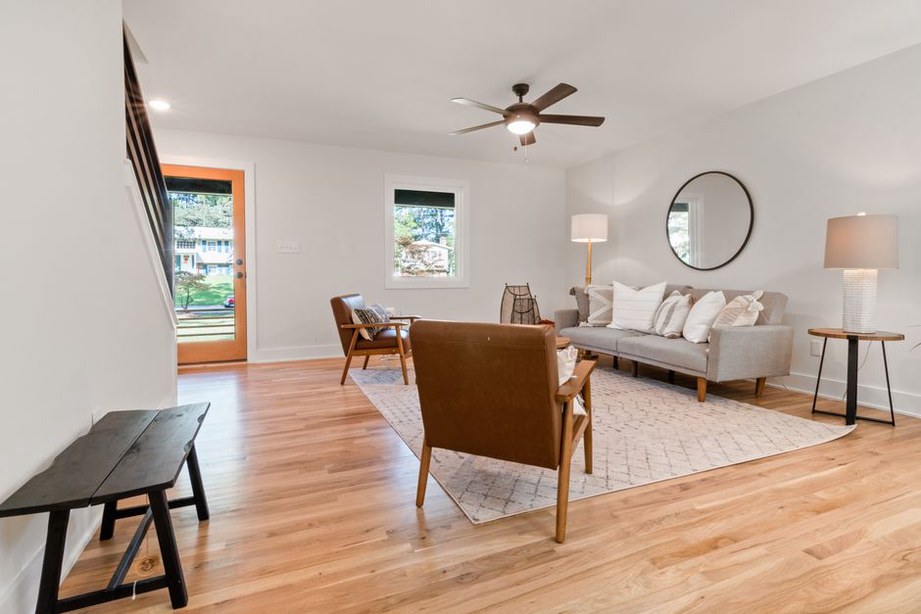
Remove visual noise before adding anything
Clearing a tabletop does not mean hiding its contents beside it. Empty one shelf, table, or corner completely and clean it. Return only what is used there or intentionally displayed there. Put stray items where they belong, and give frequently used things an easy-to-reach storage spot so the surface stays clear.
Look at storage you can see from the room. A line of unrelated containers can look busy even if each is organized. Group similar items on a tray or shelf you already have, stand books together, and leave breathing room around displayed objects. There is no need to buy matching boxes.
Pay attention to the view from the doorway. A crowded entrance can dominate your impression of an otherwise tidy room. In a small space, removing an unnecessary side table may do more than shifting a dozen ornaments.
Clean the surfaces that shape the room
Dusty glazing, marked walls, flattened cushions, and dirty lampshades all change how a room looks. Clean windows and accessible fixtures with methods suited to their materials, and vacuum upholstery with an appropriate attachment. Test a spot-cleaning product somewhere inconspicuous first. Before washing removable covers, read the care labels: some fabrics shrink, lose shape, or need specialist cleaning.
Minor defects near a focal point can be surprisingly distracting. Tighten a loose cabinet handle, replace a missing felt pad, straighten a frame, or fix a rattling door if you can do so safely. Do not hide signs of water damage behind artwork or furniture. Persistent dampness, staining, or a musty smell calls for an investigation of the cause, not a cosmetic fix.
If you are considering paint, test a small area and look at it in daylight and at night before painting a whole wall. Check the preparation the surface needs, protect ventilation, and follow the product instructions. Painting is not always the quickest option; cleaning a marked wall or rearranging what hangs on it may be enough.
Work with light already in the room
Clean glass, move objects away from a window, or adjust existing curtains so they open fully. If privacy is a concern, consider how much of the window needs covering at different times. More daylight is not always more comfortable: direct sun on a seat or glare on a screen can make the room harder to use.
In the evening, try different combinations of lights. Ceiling light alone may leave useful corners dim while making the center feel stark. You may be able to move an existing floor or table lamp nearer a reading chair or work surface. Keep lamps and shades clear of fabrics, use bulbs compatible with the fixture, and do not run an extension cord under a rug or across a doorway to reach a preferred spot.
A mirror may reflect daylight toward a darker area if it faces a bright wall or window at the right angle. Try its position at the time of day you use the room most. If the reflection causes glare, move it, even if it looks good in a photograph.
Change the balance of color and texture
Textiles you already own offer an easy change to reverse. Put a throw over a chair rather than the sofa, exchange cushion covers between rooms, or try a different position for a rug. Work with the colors of the largest pieces instead of trying to disguise them. Repeating one existing color in a few smaller places can help the arrangement feel connected.
Texture makes a difference too. Smooth wood beside a woven blanket, or a plain cushion beside patterned upholstery, adds contrast without adding many objects. If the room already has strong grain, prints, or open shelving, avoid piling on more patterns. Rotate or rearrange unevenly faded fabric only if the previously hidden side is suitable for display.
Hang artwork in relation to the furniture below it rather than automatically centering it on an empty wall. Small works can be grouped more closely using the frames you have. Before making new holes, check the spacing with paper templates or removable tape, and verify what is behind the wall before drilling. Use fixings suited to the wall and the object's weight; light-duty adhesive is not suitable for a heavy frame.
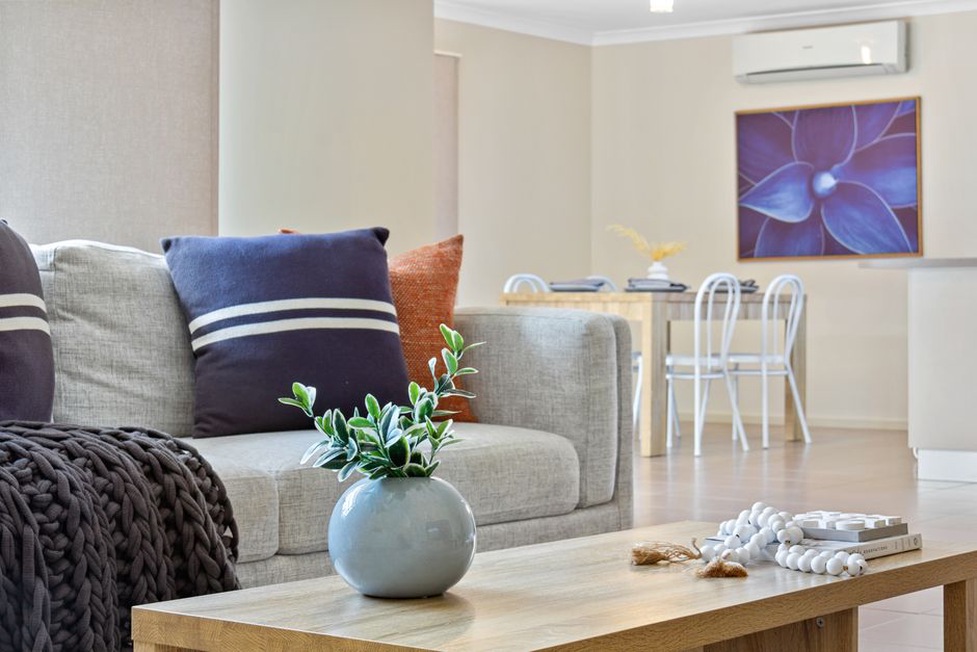
Make changes in an order you can evaluate
If everything changes in one afternoon, it is hard to tell what helped. Clear and clean first, then test the furniture layout, adjust the lighting, and finally refine textiles and wall displays. Take a photo from the same viewpoint after each pass. It is a better reference than memory when a change feels unfamiliar but may actually work well.
Live with a new layout through an ordinary weekday and evening before making anything permanent. Can you reach what you need, clean around the furniture, and use the room without repeatedly shifting objects? Ask other household members about specific difficulties, such as a blocked drawer or an uncomfortable reading chair, rather than whether the room looks nicer.
If something still feels wrong, change one thing. When the seating works but the room feels crowded, keep the seats in place and clear the shelf beside them. If it looks good by day but flat at night, try moving an existing lamp instead of shifting the sofa again. This lets you keep what is working while finding the detail that is not.
Once the arrangement has passed that trial, remove the floor markers. Check that the rug lies flat, drawers open fully, and the lamp cord reaches its outlet without crossing a walkway. A final photo from the doorway will help you restore the layout after cleaning or repairs.