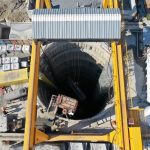
Rutting, repeated patching, and transverse cracking can arise from very different causes: aged asphalt, moisture damage in bound layers, loss of support in the granular base, pumping at joints, or weak and variable subgrade. Applying the same mill-and-overlay treatment to every distressed section may conceal the problem rather than correct it. Reconstruction should begin with a clear understanding of the deterioration’s depth, extent, and cause.
Reconstruction is more than replacing the surface
Pavement rehabilitation ranges from thin surface renewal to full-depth reconstruction. Reconstruction is generally required when defects are structural, widespread, or originate below the surfacing. It may include removal and replacement of asphalt or concrete layers, renewal of unbound materials, in-place stabilization, drainage improvements, and localized treatment of the formation.
Visible distress is not a direct measure of remaining structural capacity. Fatigue cracking may indicate repeated tensile strain in asphalt layers, while local depressions can result from consolidation, washout, leaking utilities, or soft subgrade. On rigid pavements, faulting and pumping often indicate loss of support and water movement at joints. A durable repair must address the load path and water regime, rather than simply restore the surface profile and ride quality.
Condition investigation: moving from symptoms to mechanisms
Reconstruction planning usually combines network-level screening with project-level investigation. Surface surveys record cracking type and extent, rut depth, roughness, texture, and drainage-related defects. They are useful for defining homogeneous sections, but cannot on their own establish layer thickness, moisture condition, or bearing capacity.
Project-level investigations commonly include targeted coring, trial pits, material sampling, deflection testing, and measurements of layer thickness. Ground-penetrating radar can help map thickness changes, voids, and moisture-related anomalies along long corridors when its findings are checked against physical observations. Falling-weight deflectometer data, interpreted with appropriate assumptions about temperature and layer properties, can reveal relative stiffness variation and support back-calculation of structural parameters. Drainage inspections should cover outlets, edge drains, shoulders, ditches, and culverts.
Subsurface variability is a design input, not an inconvenience. The effects of fines, groundwater, frost susceptibility, and settlement on pavement performance are examined in How Soil Conditions Affect Road Pavement Performance. Investigation spacing and depth should reflect the likely failure mechanism, the consequences of disruption, and the variability observed along the alignment.
Using data to define reconstruction limits
A useful advance is the integration of spatial datasets instead of relying on isolated observations. Continuous profile data, imagery, radar records, deflection results, maintenance history, utility records, and drainage mapping can be tied to a common chainage or geographic coordinate system. Engineers can then divide a corridor into treatment lengths with similar structural condition and likely causes of distress.
This approach helps avoid two common mistakes: rebuilding sound pavement beside a failed area, and applying superficial treatment to a short weak zone within an otherwise adequate section. It also supports staged construction planning where traffic loading, access constraints, buried services, or water crossings require particular controls.
Targeted reconstruction methods
The appropriate method depends on the existing pavement structure, material availability, climate, construction window, traffic management constraints, and verified design assumptions. No method performs well outside the conditions for which it was selected.
Full-depth reclamation and in-place stabilization
Full-depth reclamation reprocesses existing asphalt and part of the underlying granular material into a new stabilized layer. Cementitious, lime-based, bituminous, or other stabilizing agents may be chosen after laboratory characterization and mix design. The method can reduce demand for imported aggregate and haulage while producing a more uniform structural platform.
Performance depends on close control of pulverization, additive distribution, moisture, compaction, curing, and finished level. Materials with unsuitable gradation, high plasticity, organic content, or excessive moisture may require a different approach or removal and replacement. Stabilized layers may also be susceptible to shrinkage or reflective cracking if stiffness, curing behaviour, and the overlying pavement layers are not considered together.
Cold recycling of asphalt layers
Cold in-place recycling reprocesses existing asphalt, commonly using foamed bitumen, bituminous emulsion, cement, or a combination of binders. The recycled material is placed as a bound base layer and normally receives a new surfacing course. Retaining material on site and avoiding conventional hot mixing can reduce energy use and truck movements.
Representative samples of reclaimed asphalt and underlying material are essential. Mix design should consider moisture sensitivity, early strength development, curing, and expected loading. Construction quality is strongly influenced by milling depth, binder dosage, moisture conditioning, compaction timing, and protection of the recycled layer before final surfacing.
Partial-depth and full-depth replacement
Where deterioration is localized, selective excavation and replacement may be more appropriate than corridor-wide reconstruction. Full-depth patching removes failed asphalt and compromised base material to sound, well-defined boundaries. Excavation must extend far enough to remove weakened material; replacing only the visibly damaged surface can lead to early failure around the patch perimeter.
On concrete pavements, full-depth slab replacement and localized base repair can restore load transfer and correct faulted or cracked slabs. Saw-cut geometry, dowel alignment where applicable, support conditions, curing, and opening-strength criteria are critical. Repairs must also account for joints, joint sealing, and evidence of pumping or erosion beneath slabs.
Materials that improve circularity without lowering reliability
Reclaimed asphalt pavement, recycled aggregate, technically suitable industrial by-products, and locally available granular materials can reduce demand for virgin resources. Their use involves more than specifying a recycled content. Recycled materials can vary in gradation, binder content, absorption, contamination risk, and moisture behaviour. Source qualification, stockpile management, sampling frequency, and mix verification are needed to turn a variable feedstock into a dependable pavement material.
Warm-mix asphalt technologies may permit lower production and compaction temperatures, supporting longer hauling distances or cooler-weather placement within approved limits. Polymer-modified binders, fibre reinforcement, and improved rejuvenators can improve resistance to particular damage mechanisms, but only when they are compatible with the aggregate, recycled binder, climate, and design loading. Material selection should rest on measurable engineering properties and expected field conditions rather than novelty.
Digital construction control and quality assurance
Machine control, digital terrain models, automated screed guidance, and compaction monitoring can improve control of level, crossfall, thickness, and coverage during reconstruction. They also improve traceability. Independent checks remain necessary: a calibrated sensor cannot correct an inaccurate design surface, poor survey control, or unsuitable material.
Quality assurance should link acceptance testing to the failure risks identified during investigation. Typical controls include:
- verification of removal depth and exposure of unsuitable layers;
- moisture content and density checks for earthworks, granular layers, and recycled mixtures;
- gradation, binder content, and volumetric properties for asphalt mixtures;
- strength, stiffness, curing, and crack control for stabilized layers;
- survey checks for thickness, grade, crossfall, and drainage paths;
- documented inspection of interfaces, joints, tack coats, and utility reinstatements.
Intelligent compaction records can identify areas receiving insufficient or excessive roller coverage, but they need calibration against conventional density or stiffness measurements. Infrared temperature monitoring can reveal thermal segregation during asphalt paving, while core samples remain important for confirming thickness and material condition.
Managing water during and after reconstruction
Water often determines whether reconstruction performs as intended. Open excavations can soften fine-grained subgrades, rainfall can shift moisture away from compaction targets, and poor temporary drainage can contaminate aggregate or destabilize the formation. Construction sequencing should maintain positive drainage at every stage, protect exposed layers, and keep traffic off prepared surfaces.
Permanent drainage details are part of the pavement system. Depending on site conditions, this may include edge drains, filter layers, separator geotextiles, shoulder geometry, sealed interfaces, ditch maintenance, and outlet protection. These features need field verification: an outlet that is buried, blocked, or above the drain elevation offers little functional value.
Balancing durability, disruption, and whole-life performance
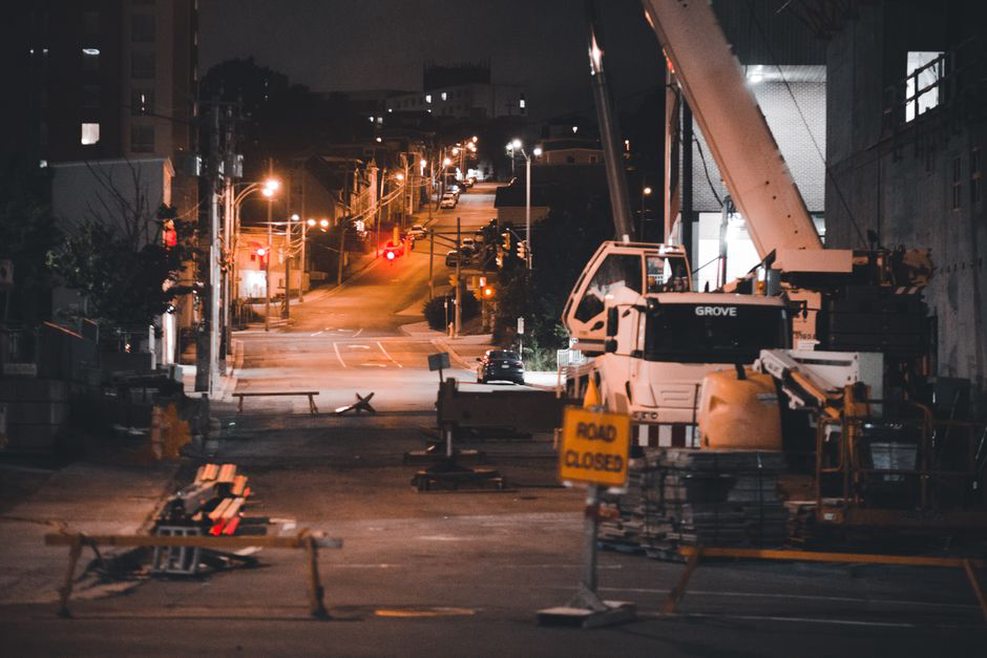
Rapid reconstruction can shorten closure periods, but accelerated schedules may leave less time for drying, curing, temperature control, testing, and correction of defects. The appropriate balance depends on traffic demand, detour resilience, season, material behaviour, and the consequences of opening too early. Night work may reduce user disruption, although it creates added challenges for visibility, temperature management, logistics, and quality supervision.
Whole-life assessment should consider more than initial cost. Relevant factors include expected intervention frequency, residual structural value, haul distances, emissions, construction waste, traffic delay during works, maintenance access, and the cost of later renewal. A recycled solution may be preferable where local material quality and production control are dependable; in other cases, conventional replacement may present less uncertainty.
A practical reconstruction decision sequence
- Map distress, ride quality, drainage features, maintenance records, and traffic loading to identify candidate sections.
- Investigate the pavement and subgrade sufficiently to confirm causes, layer thicknesses, material condition, and spatial variability.
- Define performance objectives for structural capacity, drainage function, ride quality, resilience, construction duration, and future maintenance.
- Develop feasible treatment options and assess their technical risks, construction constraints, material availability, and life-cycle implications.
- Use trial sections or preconstruction trials where recycled or stabilized materials, variable ground, or unfamiliar processes create significant uncertainty.
- Set project-specific hold points and acceptance criteria to verify critical layers before they are concealed.
For a weak, wet segment within a longer rehabilitation project, a useful hold point comes after excavation and before replacement. Inspect the exposed formation, compare its condition with the investigation findings, document unexpected soft pockets or seepage, and revise localized treatment only through the project’s engineering process. That check prevents a new pavement surface from sealing in the defect that caused the failure.