
Lowering asphalt production temperature can save fuel, but a cooler mix still has to coat the aggregate and remain workable until it reaches the required density. Those construction checks matter as much as the material’s laboratory properties. The same test applies to other asphalt innovations: an apparent advantage must hold through production, placement and years of exposure.
Lower-temperature production and greater material reuse
Warm-mix asphalt uses additives or production processes to permit mixing and compaction below the temperatures of a comparable hot mix. Methods include chemical additives, waxes and controlled binder foaming. Lower temperatures can reduce burner fuel use and plant emissions, but the savings depend on plant efficiency, aggregate moisture and the reduction achieved. The selected mixture still needs checks for workability, moisture resistance and density.
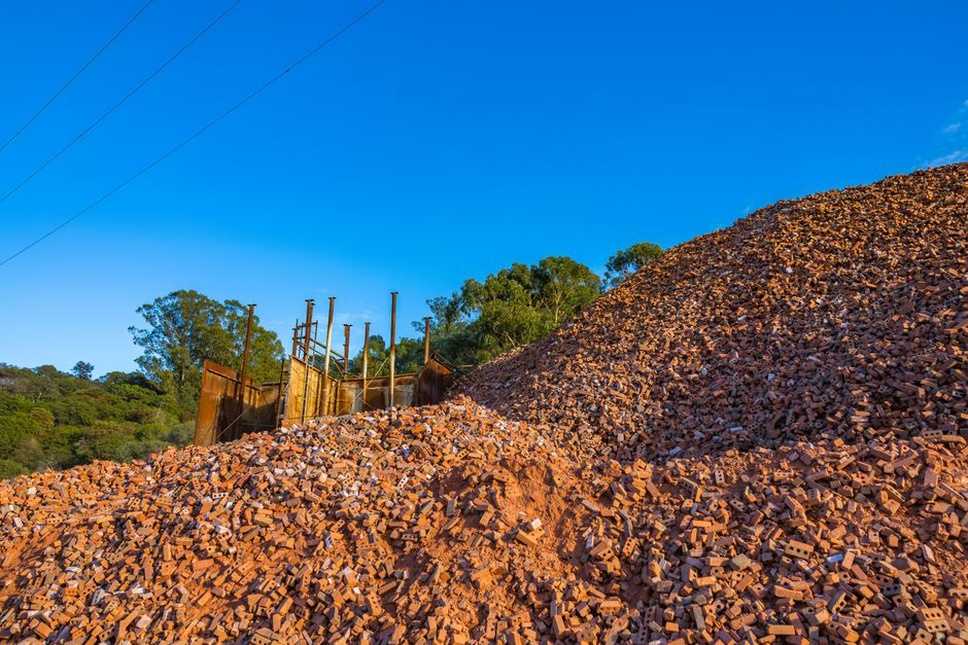
Reclaimed asphalt pavement (RAP) supplies aggregate and aged binder from existing surfaces. Using more RAP can reduce demand for virgin materials, though its aged binder may stiffen the mixture and increase cracking susceptibility. How much of that binder blends effectively with new binder is uncertain. Engineers need to assess stockpile variability, gradation and binder properties rather than treat every tonne of RAP as equivalent.
Recycling agents, often called rejuvenators, can soften the effective binder in RAP-rich mixtures. That does not, by itself, demonstrate restored durability. Excessive softening may increase rutting susceptibility, and further aging may change cracking response. Mixture-level tests should accompany binder tests, particularly when the reclaimed material source changes. Reclaimed asphalt shingles pose a related problem: their binder is typically highly aged, and their composition differs from RAP.
Binders engineered for competing failure modes
Polymer-modified binders can improve elastic recovery and resistance to permanent deformation. The outcome depends on polymer type, compatibility with the base binder, storage conditions and mixing practice. Good laboratory results may not carry through to the pavement if the binder separates in storage or is damaged by excessive processing temperatures.
Crumb rubber from end-of-life tires can modify asphalt binder or be incorporated through certain mixture processes. Besides reusing material, it changes binder elasticity and viscosity—and therefore pumping, mixing and compaction. A rubber-modified mix needs evaluation as a construction system, not just as a binder substitution. Bio-derived binder components and additives are also under study. Because their feedstocks vary, renewable origin alone says little about aging resistance, moisture response or compatibility with conventional binder.
Performance testing must contend with competing risks: rutting under repeated warm-weather loading and cracking after cooling or aging. A binder test cannot capture aggregate structure and air voids along with binder behavior. Tests on compacted mixtures offer a closer check, provided specimens are prepared consistently and the results have a demonstrated relationship to field distress.
Mixture design moves beyond a single acceptance number
Balanced mix design assesses candidate mixtures using laboratory indicators for both rutting and cracking. The trade-off matters when, for example, more recycled binder increases stiffness and rut resistance but reduces cracking tolerance. Agencies use different tests and criteria, so a result needs to be read in the context of its test method and local performance history.
What needs to be controlled at the plant and on site?
- Input variability: Separate and characterize reclaimed material stockpiles so changes in gradation or binder content do not quietly alter the job mixture.
- Production conditions: Track aggregate moisture, temperatures, mixing time and additive dose; each can affect coating or workability.
- Compaction: Check achieved density and its uniformity. Low-density areas can admit water and oxygen even when the laboratory design passes.
- Field response: Record cracking, rutting and surface condition by location rather than relying only on a corridor average. That makes weak batches or construction joints easier to identify.
Mixture testing cannot substitute for assessing the pavement beneath a new layer. A mix that resists cracking in the laboratory may still reflect movement at an existing joint or crack. Nor will a different surface binder resolve persistent water in the foundation. Where an existing pavement has several distress mechanisms, treatment selection needs an investigation of those underlying conditions.
Functional surfaces and experimental capabilities
Porous asphalt and other open-graded surface mixtures can drain water from the tire contact area and affect traffic noise. Their connected voids also create maintenance demands: clogging reduces drainage, while water trapped in an unsuitable underlying structure can cause damage. Surface selection depends on runoff paths, winter maintenance and keeping outlets functional. The distinction between pavement treatment and other noise-control measures is developed in Reducing Road and Rail Noise: Match the Treatment to the Sound Path.
Self-healing asphalt research examines ways to restore some binder cohesion after small cracks form. Approaches include encapsulated agents and induction heating of mixtures containing conductive materials. Laboratory demonstrations are useful, but they do not yet establish dependable repair across a road network. Crack size, heating uniformity, repeated treatment and aging all affect the result. Conductive and sensor-enabled mixtures face another test: whether their added function remains measurable after construction and prolonged traffic.

Evidence needed before wider deployment
A credible field trial compares a novel mixture with a conventional control under similar traffic, climate, pavement structure and construction conditions. It records material sources and plant settings, tests the placed mix and monitors distress over time. Without those records, a difference in performance could reflect compaction or support rather than the material itself. Environmental claims require clear boundaries too: plant fuel savings, reclaimed-material use, additive production, transport and expected service life can point a life-cycle assessment in different directions.
For a RAP-rich trial, engineers could pair each production day’s stockpile and mixture test results with mapped pavement sections. If cracking later concentrates in one section, they can check its RAP source, production temperature and achieved density against the control. The shared mixture design name would not answer that question.