
A road foundation may pass its bearing tests during construction yet lose support after a wet winter. Water entering the subgrade reduces stiffness in some soils; freezing, thawing and drying can also change ground volume. The condition that matters in design is the one the foundation is likely to reach in service, not just the one recorded on test day.
Climate acts through the ground and its boundaries
Rain can enter through shoulders, cracks and unsealed verges. Groundwater may rise into the subgrade, while water from cut slopes or adjacent land can move laterally beneath the road. Heat promotes evaporation and shrinkage; cold can freeze water in susceptible ground. Soil type, drainage, groundwater level, pavement integrity and exposure time determine how much these processes affect the foundation.
The pavement distributes wheel loads into that foundation. As a subgrade softens, the layers above it deflect more under traffic, and repeated deflection can accelerate cracking and rutting even if the surfacing material is sound. Climate-related distress is not necessarily a surface-material problem.
Rainfall, saturation and loss of support
Many fine-grained subgrades lose stiffness as their water content rises. A short storm may have little effect if runoff clears quickly and the foundation stays isolated. Prolonged rain, repeated storms and floods give water more time to infiltrate, keep ditches full and leave little opportunity for drainage before traffic resumes. On submerged sections, upward water pressure or erosion at exposed edges can add to the problem.
The question is where the water goes and how long it remains, not simply how much rain falls. A low-lying cutting with a shallow water table faces a different exposure from a raised embankment under the same rainfall. High downstream water levels can restrict drainage outlets; shoulders can hold water against the pavement edge; and a permeable foundation layer may carry water toward a weak transition instead of away from it.
Seasonal groundwater observations are more informative than a single dry-season reading. Soil classification, moisture-sensitive strength tests and nearby examples of wet-weather distress help show whether proposed foundation properties reflect a plausible service condition. The ground model must account for lateral variation as well as depth: a short pocket of soft soil may govern local performance. The role of field and laboratory evidence in testing that model is covered in Subsurface Surveys for Transport Infrastructure: Testing the Ground Model.
Freezing and thawing require separate checks
Low air temperature alone does not cause frost damage. Frost-susceptible soil must be within reach of freezing conditions and have access to water. Where these conditions coincide, ice lenses can form and lift the pavement unevenly. On thawing, the released water may remain in poorly drained ground with temporarily reduced strength. Heavy traffic during that period can leave deformation that persists after the soil dries.
Frost penetration depends on temperature history and the thermal properties of the pavement and ground; snow cover and local exposure also matter. Limiting frost heave and maintaining support during thaw are separate checks. A layer arrangement that addresses one may not resolve the other, especially near culverts, retaining structures and changes in pavement thickness, where thermal and drainage conditions vary.
Winter temperature records, differential heave, springtime rutting and the depth and type of susceptible soils all help establish the mechanism. Test results after thaw may differ substantially from summer values. Taken together, these observations can distinguish seasonal weakness from a permanent deficiency throughout the foundation.
Heat, drought and expansive ground
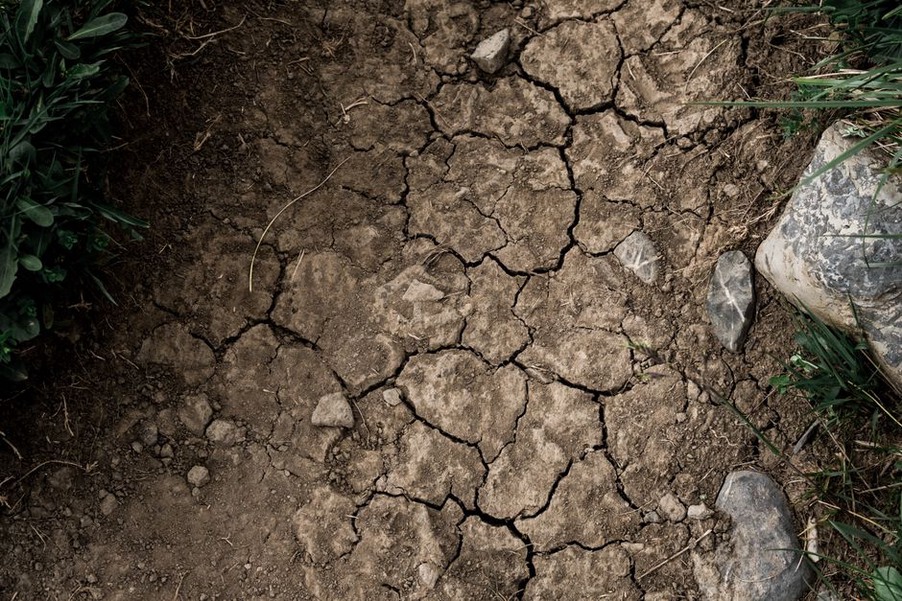
High temperatures affect pavement materials directly, but drying is often the foundation concern. Clay-rich soils can shrink as they lose moisture, causing uneven settlement beneath the road. Movement may be greatest near pavement edges, where vegetation draws water from the ground and evaporation is easier than beneath a sealed carriageway. Cracks caused by that movement can then admit rain, setting up repeated drying and wetting.
Long dry spells followed by intense rain warrant attention where expansive soils are present. Rapid wetting can cause swelling, while moisture changes at different depths and distances from the edge produce uneven movement. Calling a soil “clay” is not enough for an assessment: plasticity, moisture profile, groundwater conditions, vegetation and evidence of earlier movement all matter. Local experience may point to recurring trouble spots, but current site conditions still need checking.
Design for exposure, not a single climate average
Historical climate data are useful, but an average year can hide the conditions that govern performance. Seasonal wetness, prolonged saturation, freeze–thaw sequences, drought and rainfall intensity need to be considered as distinct exposures. Conditions may also change during the road’s intended service period. An assumption about drainage performance or groundwater level may matter more than a small difference in average annual rainfall.
For each exposure, the assessment should link a potential failure mechanism to an assumption that can be checked:
- Ground condition: Identify soil layers whose strength or volume changes materially with moisture or temperature.
- Water pathway: Locate likely entry points, groundwater sources, drainage routes and possible outlet restrictions.
- Critical season: Compare conditions during construction testing with likely wet-season, thaw or drought conditions.
- Consequence: Consider whether local deformation would affect the carriageway, shoulder, drainage line or an interface with a structure.
- Verification: Identify measurements or observations that can confirm the assumed condition during construction and operation.
Responses may involve drainage, foundation layers, earthwork treatment or maintenance access. The choice depends on the ground, traffic, constructability and consequences of failure; none replaces a site-specific engineering assessment. Any drainage provision needs an identifiable discharge route and must remain accessible for inspection and maintenance.
Construction timing and evidence in service
A design based on a particular subgrade condition can be undermined if earthworks are exposed to heavy rain or compacted at an unsuitable moisture content. Construction records should note weather and ground conditions when tests were carried out, including areas reworked after wetting or freezing. Proof testing and laboratory results are most useful when tied to locations and interpreted against the conditions expected in service.
After opening, observed distress can test the original climate assumptions. Repeated edge rutting after wet periods points to a different pathway from cracks that widen during drought. Standing water at an outlet, persistent dampness in a cutting and deformation that returns each spring offer further clues. Before choosing a rehabilitation treatment, the investigation needs to distinguish surface damage from a moisture- or temperature-driven loss of foundation support. That distinction is central to Sustainable Pavement Rehabilitation Starts With the Failure Mechanism.
At a recurring wet-season defect, start by recording the date and extent of deformation alongside recent rainfall, ditch and outlet conditions, and moisture observations at the pavement edge. Repeat the record after the ground dries. The comparison can show whether support loss is seasonal and help locate the next investigation.