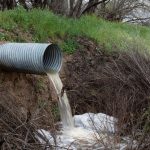
A visible crack, track dip, deck-joint leak, or pavement rut is rarely the failure itself. It is evidence of an underlying process that may involve loading, water, material degradation, construction variability, ground movement, or changed boundary conditions. Treating the symptom as the cause can lead to repairs that appear successful at handover, then fail again after the next wet season, thermal cycle, or period of heavy traffic.
A case study turns an incident into a disciplined engineering investigation. The aim is not simply to apply a label such as “settlement” or “fatigue,” but to reconstruct the sequence that made the defect possible, identify the controlling mechanisms, test competing explanations, and define proportionate intervention and monitoring.
Start with the failure statement, not the presumed cause
The initial problem statement should be observable, bounded, and dated. “The embankment is unstable” is an interpretation. A stronger statement is: “Between chainages X and Y, the rail level has reduced by 18 mm over six weeks, with recurring ballast fouling and surface water observed at the toe following rainfall.” This distinction separates measured facts from hypotheses.
For each case, establish four basic elements:
- Asset and location: structural form, route section, chainage, orientation, nearby drainage, utilities, retaining works, watercourses, and interfaces with adjacent assets.
- Observed condition: defect type, geometry, extent, severity, rate of change, and operating consequences.
- Time history: when the issue was first reported, prior repairs, recent construction, exceptional rainfall, flooding, seismic events, altered loading, or changes in maintenance practice.
- Functional requirement: the affected performance requirement, such as load carrying, ride quality, clearance, drainage, durability, safety margin, or availability.
This approach helps prevent confirmation bias. If investigators assume that a crack is caused by structural overload, they may overlook locked thermal movement, foundation rotation, corrosion-related section loss, or a leaking joint that has degraded a bearing seat.
Build an evidence chain before selecting a remedy
Reliable diagnosis draws on different forms of evidence because every method has limitations. Inspection may reveal patterns but cannot directly establish subsurface conditions. Instrumentation can show movement without explaining its cause. Laboratory testing characterizes samples, yet may not capture field variability. The strongest conclusions emerge when independent evidence points to the same mechanism.

Records and chronology
Existing records are often the quickest route to a credible initial hypothesis. Review as-built drawings, geotechnical baseline information, construction change records, drainage layouts, maintenance logs, previous inspection reports, incident reports, traffic or axle-load data, survey archives, and weather records. Missing records also matter: undocumented fill placement, incomplete drainage-cleaning histories, and uncertain repair materials all increase uncertainty.
A timeline should align changes in condition with possible triggers. A retaining wall displacement that accelerates after a drainage outlet becomes blocked calls for a different initial hypothesis than displacement progressing steadily over several years. Correlation does not establish causation, but it helps determine what to test next.
Field observation and defect mapping
Field teams should map defects rather than simply list them. On a bridge, crack orientation, position relative to supports, staining, spalling, joint condition, and bearing movement may help distinguish flexural, restraint-related, and durability-driven mechanisms. On an earthwork, the form of tension cracks, toe bulging, seepage points, drainage damage, and vegetation disturbance can indicate a plausible movement pattern.
Photographs need scale, orientation, location reference, and date. Repeat photographs from fixed points are particularly useful for tracking crack width, erosion, slope deformation, or leakage. Measurements should state the method and its uncertainty; a 2 mm change may be meaningful, or it may fall within the repeatability of the survey arrangement.
Targeted investigation
Investigations should test the leading hypotheses rather than collect data without a clear purpose. If loss of support beneath a pavement is suspected, the work may combine level survey, drainage inspection, coring, material sampling, and non-destructive assessment. If bridge foundations may be affected by scour, bathymetric or channel survey, hydraulic evidence, foundation records, and underwater inspection may be more informative than a deck-only assessment.
Ground-related failures need particular care because the surface symptom may be displaced from the underlying mechanism. A local road depression may be linked to leaking buried services, voiding, compressible fill, dissolving ground, or consolidation of soft soils. The investigation must extend far enough to account for drainage paths, changes in geology, and adjacent construction activity. The principles used in geotechnical engineering for highway design and long-term performance are useful when developing this ground model.
A structured case study: recurring approach-slab settlement
Consider a highway bridge where drivers report a growing bump at one abutment. Maintenance crews have resurfaced the transition twice, but the differential level returns. The visible failure is an uneven riding surface; the engineering question is why settlement keeps recurring.
| Investigation stage | Evidence | What it may indicate |
|---|---|---|
| Condition survey | Depression concentrated behind one abutment; bridge deck levels stable | Movement is likely in the approach system rather than the superstructure |
| Drainage inspection | Blocked outlet and staining near the backwall | Water may be accumulating behind the abutment |
| Records review | Original works included variable backfill and a later utility trench | Non-uniform stiffness and a preferential water path are plausible |
| Subsurface checks | Moist, softened fill and localized loss of density | Reduced support may be associated with seepage and material deterioration |
| Monitoring | Movement increases after prolonged rainfall | Hydrological loading is a likely trigger or accelerator |
No single observation proves the full mechanism. Taken together, the evidence supports a causal chain: impaired drainage allows water to accumulate; water migrates through heterogeneous backfill and disturbed trench material; local support stiffness decreases; and traffic consolidates and densifies the weakened zones, causing repeated settlement. Resurfacing restores the profile but does not interrupt that chain.
The example also shows the distinction between a trigger and a root condition. A wet season may trigger noticeable movement, while deficient drainage geometry, variable fill, or an unsealed utility crossing are underlying conditions. Both must be considered when assessing risk and selecting corrective work.
Use competing hypotheses rather than a single narrative
For complex cases, prepare a hypothesis register. Each candidate mechanism should identify supporting evidence, contradictory evidence, remaining uncertainty, and the observation that would distinguish it from alternatives. This is more dependable than treating a preliminary observation as a definitive explanation.
For a tunnel-lining crack, credible alternatives may include construction-joint behaviour, shrinkage, localized ground loading, water pressure, corrosion of embedded elements, or nearby excavation. For rail track geometry deterioration, potential mechanisms include ballast degradation, formation softening, pumping, drainage blockage, subgrade settlement, or local transition stiffness. More than one mechanism may be active, and one can mask another.
Check the mechanism against physics and geometry
A diagnosis must be mechanically plausible. Crack patterns should be consistent with stress paths and restraint conditions. Water-related explanations should align with gradients, drainage levels, seepage evidence, and rainfall response. Settlement should correspond to the thickness and compressibility of affected materials, rather than merely to the location of the visible depression.
Analytical models, numerical analyses, and back-calculation can test plausibility, but their outputs depend on their assumptions. A refined model built on poorly constrained ground parameters can create false precision. Sensitivity testing is often more useful: identify the uncertain input with the greatest influence on predicted movement or demand, then direct further investigation toward that variable.
Separate immediate safety decisions from root-cause work
Some incidents require operational controls before diagnosis is complete. These may include escalated inspection, temporary load or speed restrictions, drainage diversion, exclusion zones, shoring, or more frequent monitoring. Record such measures as interim risk controls, not as permanent solutions.
Where monitoring is used, the investigation team should define trigger levels and response actions in advance. A reading is useful only when its significance is clear: which parameter is measured, what baseline applies, what rate of change is concerning, how measurement error is treated, who reviews the data, and what action follows an alert. This is particularly important at sites affected by progressive ground movement or scour.
Document findings so they can be audited and reused
A defensible case study separates facts, interpretations, and decisions. The report should include an asset description, event chronology, inspection and test methods, raw and processed data, limitations, hypothesis assessment, causal model, risk implications, intervention options evaluated by qualified engineers, and a verification plan. It should also explain why rejected hypotheses were set aside.
Failure classifications are useful only when they retain this context. “Drainage failure” may refer to blocked maintenance access, damaged pipework, insufficient capacity, altered catchment flow, poor outlet condition, or loss of filter function. Recording the specific mechanism helps asset managers identify recurring vulnerabilities across a network without assuming that every similar symptom has the same cause.
For bridge cases, defect records should be coordinated with inspection findings on joints, bearings, deck drainage, foundation condition, and structural response. The detailed practices described in bridge inspection methods, testing, monitoring, and condition assessment help place visual observations and instrument data within the full structural system.
Verification is part of the diagnosis
A corrective measure is not confirmed merely because work is complete. Verification should test whether the assumed mechanism has been controlled. If drainage rehabilitation is intended to prevent water-driven softening, relevant evidence may include restored flow paths, inspected outlets, moisture or pore-pressure trends where appropriate, and stable post-work geometry through relevant seasonal conditions. If a structural repair addresses movement-induced cracking, follow-up inspection should confirm that crack behaviour, joint movement, and support conditions match the expected response.
For the approach-slab example, the verification plan could include baseline levels immediately after corrective work, repeat surveys after major rainfall events, inspection of the outlet and trench interface, and a defined review threshold for renewed differential settlement. That threshold converts the lesson from one failure into an operational control for the asset’s remaining service life.